 EN
EN

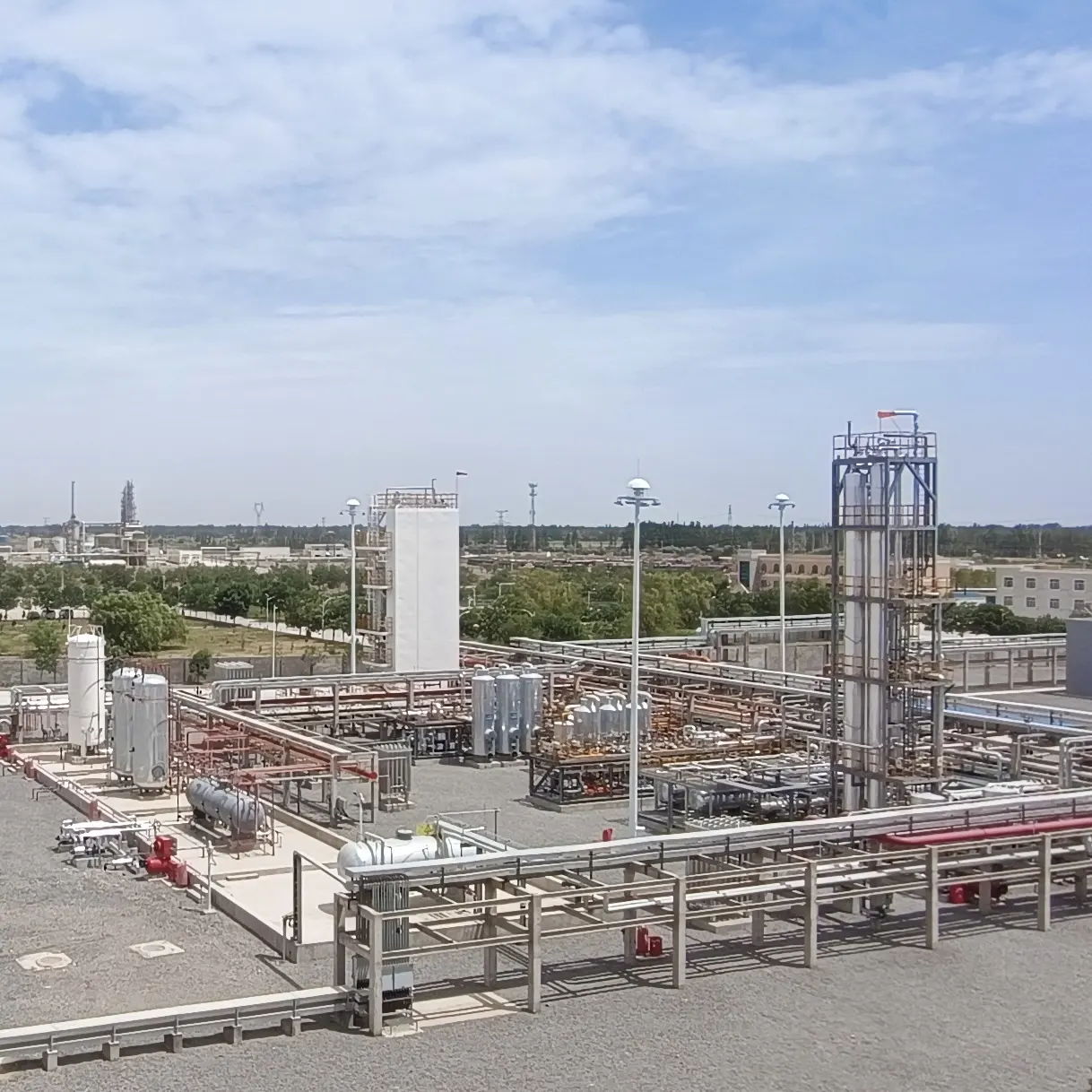
The Economics of Modularization in Gas Processing
The shift toward modular gas processing solutions has accelerated significantly over the past decade, and for good reason. Traditional stick-built plants demand enormous upfront capital, extended construction timelines, and skilled labor availability that simply doesn't exist in many remote production regions. Modular approaches flip that model—fabrication happens in controlled shop environments while site work progresses in parallel, compressing schedules from years into months. A 2023 life-cycle study found that modular equipment can achieve a net present value roughly 89% of traditional equipment costs while dramatically improving production system flexibility. That kind of math gets attention in an industry where every dollar of capex counts.
The real value, however, isn't just about cost. Modular gas processing solutions offer operational agility that fixed plants cannot match. Production rates fluctuate, gas compositions change, and regulatory requirements evolve. A modular architecture allows operators to scale capacity up or down, reconfigure processing trains, or relocate entire units to follow production. That flexibility translates directly into reduced downtime and faster response to market conditions—advantages that show up on the bottom line.
What Modular Construction Actually Changes in the Field
One of the most underappreciated aspects of modular gas processing is what happens during the construction phase itself. On a conventional project, site preparation, foundation work, equipment erection, and piping installation happen sequentially, with each trade waiting on the previous one. Weather delays, labor shortages, and material availability issues compound the problem. Modular construction decouples these activities. While civil crews prepare the site, fabrication teams in workshops simultaneously build process modules, pressure vessels, and piping skids.
Consider a recent project in the Permian Basin where a 160 MMSCFD nitrogen rejection unit was delivered in a modular skidded configuration. The unit arrived on-site pre-assembled, pre-tested, and ready for hookup. Commissioning timelines shrank dramatically compared to field-erected alternatives. That kind of accelerated deployment matters enormously when production is waiting and revenue is being deferred day by day.
The quality argument is equally compelling. Shop fabrication occurs under controlled conditions with consistent welding procedures, proper inspection access, and experienced craftspeople who build the same types of modules repeatedly. Field welding, by contrast, happens in whatever weather exists that day, with variable access and supervision. The result is consistently higher quality in modular fabrication—fewer weld defects, better alignment, and more reliable pressure-containing components.
Operational Load Flexibility and Process Stability
Modular gas processing plants typically handle a wide range of feed conditions without major re-engineering. The operational load adjustment range on well-designed modular systems spans from roughly 30% to 110% of nameplate capacity. That breadth matters because gas wells decline, downstream demand fluctuates, and upstream production rarely matches the perfect steady-state conditions assumed during design.
What does this look like in practice? A gas processing facility treating associated gas from oil production might see feed rates vary by 50% over the course of a field's life. A modular plant with broad turndown capability maintains stable operation across that range, whereas a conventional plant might require bypassing, flaring, or frequent shutdowns to manage off-design conditions. The financial impact is substantial—every day of unplanned downtime represents lost product revenue and potentially penalties for failing to meet delivery commitments.
The intelligent monitoring systems integrated into modern modular plants add another layer of operational security. Real-time parameter tracking, automated control loops, and safety interlock systems catch developing issues before they become failures. That proactive approach to operations management reduces maintenance costs and extends equipment life, particularly important in remote locations where service calls are expensive and slow.
A Practical Case: Revamping an Aging Facility
A midstream operator in West Texas faced a familiar problem. Their existing gas processing facility, built in the 1990s, was struggling to handle changing feed gas composition from newly completed wells. The nitrogen content had crept up from 4% to nearly 12%, pushing the old amine and glycol systems beyond their effective range. The methane product no longer met pipeline specifications, and the operator was facing substantial demurrage charges.
The conventional solution—designing and building a new stick-built nitrogen rejection unit—would have taken 18 months and required a capital commitment that strained the company's balance sheet. Instead, the team evaluated modular gas processing solutions. A skid-mounted nitrogen rejection unit was fabricated off-site while the existing plant continued operating. Installation occurred during a scheduled turnaround, with the modular unit integrated into the existing process train over a three-week window. Total project duration from approval to startup: seven months. The operator avoided the demurrage penalties, maintained production levels throughout the transition, and gained a processing asset that could be relocated or repurposed if field conditions changed again.
That case illustrates the core value proposition of modular approaches—not just lower cost or faster delivery, but the ability to adapt to real-world conditions that defy neat engineering assumptions.
Design Considerations and Technology Integration
Modular gas processing isn't a one-size-fits-all proposition. The specific process requirements dictate the module configuration, and different separation technologies impose different constraints. For natural gas treatment, typical modular trains include amine-based acid gas removal, molecular sieve dehydration, and cryogenic hydrocarbon recovery. Each of these unit operations has its own footprint, utility requirements, and integration challenges.
The key design consideration is balancing module size against transportability. Overdimensional modules require specialized shipping and handling, which can erase the cost advantages of shop fabrication. Smart modular design breaks the process into transportable chunks while minimizing inter-module piping and instrumentation connections. Every interconnection point is a potential leak source and a commissioning headache, so the best designs maximize what happens inside each module and minimize what happens between them.
Technology selection also matters. Some processes—particularly cryogenic distillation—require precise thermal integration that can be challenging to achieve in modular form. The cold box, heat exchangers, and distillation columns must be arranged to minimize heat leak and pressure drop while remaining shippable. Experienced fabricators have developed standardized module designs that address these challenges, but customization is often required for unusual feed compositions or product specifications.
Why Modular Solutions Are Gaining Traction
The momentum behind modular gas processing solutions reflects broader trends in the energy industry. Shale development has shifted production patterns toward smaller, more numerous well pads rather than a few giant fields. Pipeline infrastructure hasn't always kept pace, and processing capacity often needs to be deployed quickly to avoid flaring or production curtailment. Modular plants fit these conditions perfectly—they can be deployed rapidly, scaled to match production, and redeployed when wells decline.
Environmental considerations also favor modular approaches. Shop fabrication generates less waste and allows for better material management than field construction. The reduced site disturbance minimizes environmental impact in sensitive areas. And the ability to process gas closer to the wellhead reduces methane emissions from venting and flaring, addressing a growing regulatory and stakeholder concern.
The economic case remains the primary driver, however. Faster project execution means earlier revenue generation. Lower total installed cost improves project returns. Operational flexibility reduces risk. These are not abstract benefits—they show up in project economics and operator confidence.
For companies evaluating their next gas processing investment, modular solutions deserve serious consideration. The technology has matured, the supply chain is established, and the track record is growing. Firms like Greenfir have built substantial expertise in modular cryogenic equipment fabrication, with engineering teams that have delivered projects across multiple continents. That experience base translates into reliable execution and predictable outcomes—exactly what project owners need when committing capital in a volatile market.