 EN
EN

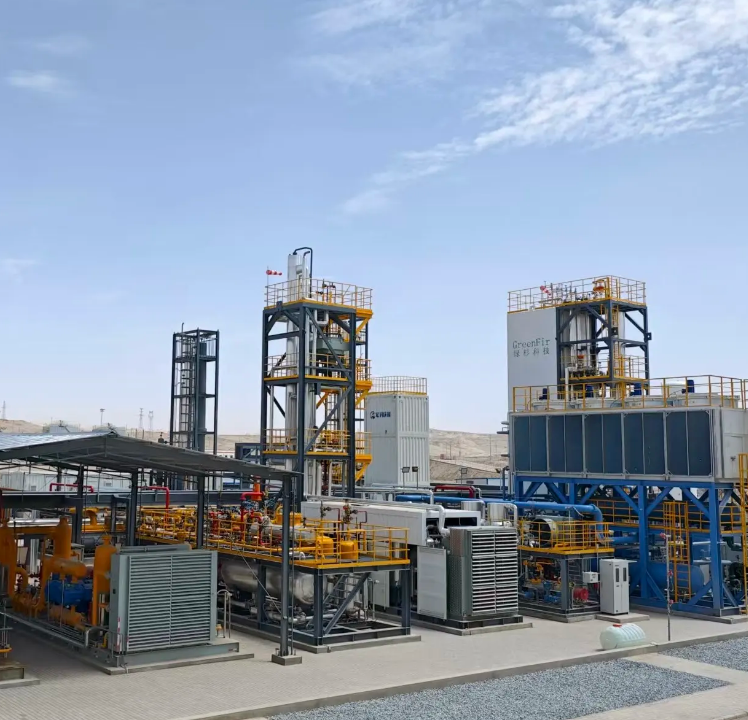
The Core Mechanism Behind LNG Liquefaction
Liquefied natural gas production hinges on one fundamental operation: pulling heat out of methane until it becomes a liquid at roughly -162°C. The cryogenic expansion process is the engine that makes this happen. It's not a single piece of equipment or a standalone step — it's a thermodynamic strategy that runs through the entire liquefaction train.
At its simplest, the process takes a high-pressure gas stream and expands it across a restriction or through a turboexpander. The expansion drops the temperature, and that cold stream then serves as the refrigerant for the next stage. The cascade of expansions and heat exchanges progressively chills the feed gas until it reaches liquefaction conditions.
The nitrogen rejection unit (NRU) is a critical application of this principle. When natural gas contains excessive nitrogen — which has no heating value and takes up space in the LNG cargo — the NRU separates it out using cryogenic distillation. The process exploits expansion and condensation to separate nitrogen from LNG without using chemicals. The configuration varies depending on the nitrogen load, ranging from simple controlled flash to more sophisticated stripper or distillation tower setups.
This matters because pipeline gas specifications and LNG export contracts both have strict limits on nitrogen content. Without an effective NRU, the LNG either fails to meet spec or the producer ships less energy per cubic meter than they could. Either way, the economics take a hit.
Turboexpanders vs. Joule-Thomson Valves: A Practical Trade-Off
The cryogenic expansion can be achieved through two primary mechanisms: the Joule-Thomson valve and the turboexpander. Both drop the pressure and temperature of the gas, but they do it differently, and the choice between them has real implications for plant performance.
A Joule-Thomson valve is simple, cheap, and has no moving parts. Gas expands across the valve, and the temperature drops due to the Joule-Thomson effect. The catch is that the expansion is isenthalpic — there's no work extracted from the pressure drop. All the energy goes into cooling the gas, but the efficiency is limited.
A turboexpander, by contrast, extracts work from the expanding gas. The expansion is closer to isentropic, meaning more of the pressure energy gets converted into useful work (usually driving a compressor on the same shaft) while still achieving the temperature drop. The isentropic efficiency of these units typically falls in the 60-70% range depending on the design and operating conditions. That extracted work can offset some of the parasitic load from other compressors in the train.
The trade-off is complexity and cost. A turboexpander is a precision machine with tight clearances, high-speed bearings, and specialized seals. It requires maintenance that a JT valve simply doesn't. For smaller plants or applications where the pressure drop is modest, the JT valve often wins on total cost of ownership. For baseload LNG trains where efficiency gains translate directly into higher production, the turboexpander pays for itself over time.
Where Cryogenic Expansion Shows Up in the LNG Train
The cryogenic expansion principle appears in multiple places throughout a typical LNG liquefaction train. Understanding where and why helps clarify why the overall process works the way it does.
The main cryogenic heat exchanger (MCHE) is the heart of most baseload LNG plants. Refrigerant — typically a mixed refrigerant or pure nitrogen — is compressed, cooled, and then expanded to cryogenic temperatures before entering the cold side of the MCHE. That cold refrigerant absorbs heat from the feed gas on the warm side, causing the methane to liquefy. The expansion step happens in a turboexpander for the refrigerant loop, and the cold expanded stream then cycles back through the exchanger.
In nitrogen rejection applications, the expansion creates the low temperatures needed for distillation. The feed gas is partially liquefied, and the liquid fraction — now enriched in methane — goes to the bottom of the distillation column while the nitrogen-rich vapor rises to the top. The reflux that drives this separation comes from expanded and liquefied nitrogen, which is then revaporized to provide additional cooling.
Some smaller LNG plants use an all-nitrogen expander cycle, where nitrogen serves as both the refrigerant and the working fluid. The nitrogen is compressed, cooled against incoming feed, expanded through a turboexpander, and then used to liquefy the methane in a simple heat exchanger. The cycle is straightforward and works well for smaller capacities where the complexity of a mixed refrigerant system isn't justified.
A Real-World Look at Nitrogen Rejection Challenges
A nitrogen rejection unit sounds straightforward in theory. In practice, it's one of the more temperamental parts of an LNG plant.
During a project in western Canada a few years ago, an operator brought online a new NRU that had been engineered to handle feed gas with about 8% nitrogen. The design basis was sound, the equipment was properly specified, and the EPC contractor had solid experience with cryogenic distillation. But the actual feed composition turned out to be more variable than the upstream reservoir models had predicted. Nitrogen content spiked to nearly 11% during certain production phases.
The NRU struggled to keep up. The additional nitrogen load pushed the distillation column into what operators call "flooding" — the vapor flow became high enough that liquid couldn't drain properly through the trays. The result was poor separation, with too much methane going out the overhead vent and too much nitrogen staying in the bottom product. The plant had to reduce feed rates to keep the LNG within spec, effectively throttling production.
The fix involved adding a second turboexpander to the refrigeration loop and re-routing some of the column reflux. It worked, but it cost the operator several months of lost production and a capital outlay that hadn't been in the original budget.
The lesson here is that cryogenic expansion processes are sensitive to feed variability. A contractor that understands this will build flexibility into the design — oversizing certain equipment, adding turndown capability, and including bypasses that allow for operational adjustments. A contractor that treats the process as a fixed recipe will deliver a plant that works beautifully on paper but struggles in the real world.
Efficiency Considerations and What the Numbers Actually Mean
There's a lot of talk in the LNG industry about process efficiency, but the numbers don't always mean what people think they mean.
Cryogenic expansion processes can achieve significant improvements in liquefaction efficiency when properly optimized. Research has shown that optimized turboexpander designs can increase isentropic efficiency by roughly 5% over conventional mean-line approaches. In the context of a baseload LNG train, that translates into measurable production gains. Some estimates suggest LNG production gains of 5-7% through improved expander performance.
But those numbers come with caveats. The efficiency gain depends heavily on the specific operating conditions — inlet pressure, gas composition, ambient temperature, and the configuration of the rest of the train. A 5% improvement in expander isentropic efficiency doesn't mean a 5% increase in overall plant throughput. The actual impact is smaller and varies from one installation to another.
| Expansion Method | Relative Complexity | Maintenance Requirements | Typical Application |
|---|---|---|---|
| Joule-Thomson valve | Low | Minimal | Small plants, moderate pressure drops |
| Turboexpander (single-stage) | Medium | Moderate | Mid-sized plants, NGL recovery |
| Turboexpander (multi-stage) | High | High | Baseload LNG, large nitrogen rejection |
The other consideration is reliability. A turboexpander that goes down takes the refrigeration loop with it. In a single-train LNG plant, that means the entire production stops. For this reason, many operators carry spare rotor assemblies and have exchange agreements in place with the manufacturer. The cost of that redundancy needs to be factored into the lifecycle economics, not just the first-cost comparison between a JT valve and a turboexpander.
Why the Process Choice Matters for Long-Term Operations
The cryogenic expansion approach selected during the design phase shapes the operating experience for the next 20 to 30 years. A plant designed around simple JT valves will be cheaper to build and easier to maintain, but it will consume more power per ton of LNG produced. A plant built around turboexpanders will have higher capital cost and more complex maintenance, but it will produce more LNG from the same feedgas volume.
There's no universally correct answer. The right choice depends on the specific project economics — the cost of power, the value of incremental LNG production, the availability of skilled maintenance technicians, and the operator's risk tolerance for unplanned downtime.
What matters is that the EPC contractor understands the trade-offs and can explain them clearly. A contractor that pushes turboexpanders for every project because they sound more advanced is doing the owner a disservice. Likewise, a contractor that defaults to JT valves on every project because they're simpler is leaving money on the table that could have been captured through better efficiency.
The best approach is a design that matches the process complexity to the project's specific circumstances. For projects where feed composition is well understood and stable, a simpler expansion scheme may be perfectly adequate. For projects with variable feed or where power costs are high, the additional investment in turboexpanders and more sophisticated refrigeration cycles usually pays off.
Cryogenic expansion is not a one-size-fits-all technology. It's a toolkit of options that need to be matched to the application. The contractors who understand that — and who have the practical experience to make the right call — are the ones worth working with. Greenfir brings that kind of practical engineering judgment to cryogenic gas processing projects, backed by ASME U-stamp certification and a design center with deep roots in the domestic cryogenic equipment industry.
Table of Contents
- The Core Mechanism Behind LNG Liquefaction
- Turboexpanders vs. Joule-Thomson Valves: A Practical Trade-Off
- Where Cryogenic Expansion Shows Up in the LNG Train
- A Real-World Look at Nitrogen Rejection Challenges
- Efficiency Considerations and What the Numbers Actually Mean
- Why the Process Choice Matters for Long-Term Operations