 EN

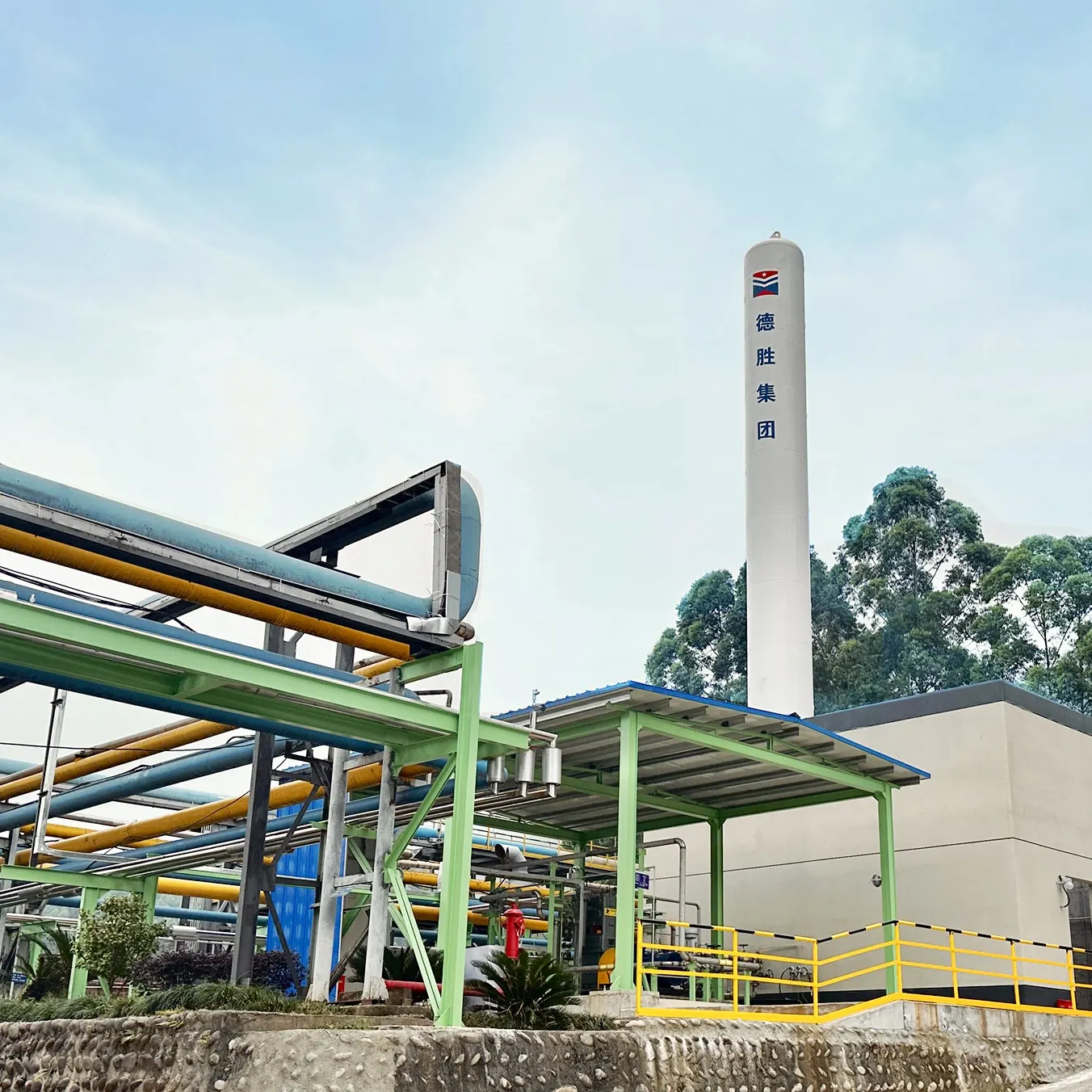
Air is mostly nitrogen and oxygen. The rest, roughly one percent, is argon, with neon, krypton, and xenon present at parts-per-million or parts-per-billion levels. Pulling those trace fractions out of an air separation unit is an exercise in patience and refrigeration. The reward is a set of gases with properties that no synthetic substitute can match: chemical inertness, sharp emission spectra, high density, and predictable behavior across extreme temperature ranges.
The global rare gas market was valued at roughly USD 3.7 billion in 2025, with projections pointing toward USD 5.8 billion by 2035 at a compound annual growth rate near 4.4 percent. Those numbers undersell the strategic weight of these gases. A chip fab cannot run a deep ultraviolet lithography tool without neon. A stainless steel mill cannot hit its carbon and sulfur targets without argon. A hospital cannot run certain MRI protocols without helium, and a window manufacturer cannot hit a high R-value without krypton. The applications are narrow but the dependencies run deep.
Neon Is the Quiet Backbone of DUV Lithography
Neon gets less attention than helium, but its role in semiconductor manufacturing is hard to overstate. Deep ultraviolet lithography, the patterning step behind the majority of advanced logic and memory chips, relies on excimer lasers. The gas mixture inside those lasers is more than 96 percent neon for both the argon fluoride 193 nm and krypton fluoride 248 nm wavelengths. Neon functions as a buffer gas. Its low atomic mass and high ionization energy allow the laser to generate stable, high-energy ultraviolet pulses without contaminating the cavity or disturbing the discharge.
The purity requirement is punishing. Semiconductor-grade neon typically needs to reach 6N, or 99.9999 percent, with impurities controlled at the parts-per-billion level. Anything less shows up as wavelength instability or energy drift, and a drifting laser translates directly into overlay errors on the wafer. Supply disruptions in recent years pushed neon prices sharply higher and prompted fabs to qualify recycling systems and alternative sources, but the fundamental gas chemistry has not changed. The buffer gas still has to be neon, and it still has to be exceptionally clean.
| Gas | Dominant industrial role | Key property driving the application | Purity or handling demand |
|---|---|---|---|
| Neon | Buffer gas in DUV excimer lasers | Low atomic mass, high ionization energy, intense UV discharge | 6N+ for semiconductor lithography |
| Argon | Shielding and stirring gas in metallurgy | Chemical inertness, high density | Standard industrial purity sufficient for most melt treatment |
| Krypton | Filler gas in insulated glazing | Low thermal conductivity, heavier than air | Purity less critical than moisture removal |
| Xenon | Contrast agent and high-intensity lighting | High radiodensity, lipid solubility, dense arc spectrum | Medical and lighting grades require tight impurity control |
Argon Does the Heavy Lifting in Welding and Steel Refining
Argon is the workhorse of the group by volume. Welding consumes it in large quantities as a shielding gas, particularly for stainless steel, aluminum, and other alloys that cannot tolerate oxygen or nitrogen pickup at the molten pool. The inert blanket prevents nitride and oxide formation, which would otherwise degrade corrosion resistance and toughness. In vacuum induction melting of specialty alloys, argon protective gas usage can reach several cubic meters per tonne of alloy depending on furnace design and melt practice.
Steelmaking is the other major argon sink. Argon oxygen decarburization, or AOD, uses argon as a dilution gas to lower the partial pressure of oxygen during carbon removal. That lets the process oxidize carbon without oxidizing as much chromium, which is the whole point when producing stainless steel. Typical AOD argon consumption runs in the range of 9 to 12 normal cubic meters per tonne of steel, with best practice numbers in the lower part of that band. Argon also serves as a stirring gas in ladle metallurgy, homogenizing temperature and composition while helping flush dissolved gases and solid inclusions.
Krypton and Xenon Fill the Gaps Where Performance Beats Cost
Krypton and xenon are expensive enough that their applications tend to be chosen when nothing cheaper delivers the same result. Krypton is used as a filler gas in double and triple pane insulated windows. Its lower thermal conductivity compared to air or argon improves the U-factor of the glazing unit, which matters in cold climates and high-performance building envelopes. The cost premium over argon limits its use to premium window lines, but the energy performance difference is measurable.
Xenon has a more varied portfolio. Its high radiodensity makes it useful as an inhaled contrast agent for CT imaging of cerebral blood flow, where a xenon oxygen mixture allows functional assessment of brain perfusion without radioactive tracers. Xenon also has anesthetic properties at sufficient concentration, though cost limits routine use in that role. In lighting, xenon short arc lamps produce a dense, broad-spectrum output used in cinema projection, automotive high-intensity discharge headlamps, and specialized searchlights where color rendering and intensity matter. Xenon ion propulsion is another niche but growing application in satellite station keeping and deep space missions.
What the Air Separation Unit Actually Has to Do
The engineering challenge behind all of these applications starts in the cold box. Rare gases are recovered as byproducts of large oxygen plants, and the recovery rates are not generous. One documented air separation facility processing 1.5 million standard cubic feet of air per plant contained roughly 1.1 ppm krypton and 0.086 ppm xenon in the feed. The design recovery for the combined krypton and xenon product was around 25 percent based on processed air, meaning three quarters of the available rare gas stayed in the main product or waste streams.
That low recovery is not a sign of poor operation. It reflects the thermodynamics of trace component separation at cryogenic temperatures. The krypton xenon concentrate is typically withdrawn from a secondary column and then upgraded through additional distillation or adsorption steps. Neon recovery is similarly constrained because it concentrates in the low-pressure column overhead and must be stripped from the nitrogen stream before it leaves the cold box. Units that chase every last ppm of rare gas end up spending more refrigeration energy than the product is worth. The design point is an economic compromise, not a purity contest.
Safety Is Not About the Gas Being Toxic, It Is About the Air Disappearing
None of these gases are classified as toxic. The hazard is oxygen displacement. A release of argon, neon, krypton, or xenon in an enclosed space can drop the oxygen concentration below the 19.5 percent threshold that supports normal cognitive function, and the transition from "slightly lightheaded" to "unconscious" can happen faster than expected. Compressed Gas Association guidance calls for ventilation, oxygen monitoring in confined areas, and backflow prevention on piping systems connected to these gases.
The operational reality is that rare gas systems often live in back corners of plants, near cryogenic equipment, or inside analyzer houses where the gas is used as a carrier or purge. Those locations are exactly where ventilation gets overlooked. A krypton window fill line leaking into a poorly ventilated service corridor is not a dramatic event, but it is an oxygen-deficient atmosphere waiting for someone to walk into it. Atmospheric monitoring and alarm systems are the difference between a minor leak and a serious incident.
Where Manufacturing Discipline Shows Up in a Rare Gas Project
Rare gas systems reward attention to the details that do not show up in a process flow diagram. Cryogenic piping layout, valve placement for isolation during maintenance, sample point accessibility, and material compatibility with high-purity service all affect whether the unit can actually deliver specification gas year after year. A recovery skid that looks elegant on paper can become a maintenance headache if the cold box internals cannot be accessed without cutting pipe.
Jianyang Greenfir New Energy Equipment builds gas processing and purification equipment with fabrication and quality control practices aimed at the long service life these systems demand. Rare gas recovery is not a high-volume business, and the equipment that supports it needs to hold purity and handle cryogenic conditions without constant intervention. Material traceability, clean fabrication, and a supply chain that can support spare parts after commissioning matter more than a glossy datasheet. For operators planning a rare gas recovery addition or a purification upgrade, the questions worth asking are usually about layout, isolation, and maintainability rather than the headline recovery percentage. Those are the details that determine whether the gas coming out the other end is worth the refrigeration it took to separate it.
Table of Contents
- Neon Is the Quiet Backbone of DUV Lithography
- Argon Does the Heavy Lifting in Welding and Steel Refining
- Krypton and Xenon Fill the Gaps Where Performance Beats Cost
- What the Air Separation Unit Actually Has to Do
- Safety Is Not About the Gas Being Toxic, It Is About the Air Disappearing
- Where Manufacturing Discipline Shows Up in a Rare Gas Project