 EN

Why Amine Units Still Dominate Sour Gas Service
Walk into almost any gas plant handling hydrogen sulfide and the odds are strong that an amine treater sits at the front end of the flowsheet. The chemistry has been around for decades, yet operators keep coming back to it because it is one of the few commercial routes that can push H₂S down to single-digit ppmv levels while tolerating the swings that come with real feed gas. The amine-based sweetening process works by bringing sour gas into countercurrent contact with a lean aqueous amine solution in an absorber. Acid gases dissolve into the liquid, the treated gas leaves overhead, and the rich amine goes to a regenerator where steam strips the H₂S and CO₂ back out. The lean amine is cooled, filtered, and returned to the absorber.
What makes the process worth writing about is not the basic loop. It is the gap between how the chemistry behaves on paper and how the unit behaves after a few years of service. That gap is where most operational headaches live, and it is where careful design decisions pay off or fall short.
Selectivity Is the Real Lever, Not Just Solvent Strength
Not all amines behave the same way toward H₂S and CO₂. Primary amines like MEA react quickly with both acid gases. Secondary amines like DEA fall somewhere in the middle. Tertiary amines, MDEA being the workhorse, react rapidly with H₂S but only slowly with CO₂. That kinetic difference is the basis for selective sweetening, where H₂S is removed while a portion of the CO₂ slips through. The distinction matters because CO₂ removal is often not the primary objective. In Claus feed enrichment or treating gas that will later go to a CO₂ pipeline, keeping CO₂ in the treated stream can reduce acid gas volume and downstream sulfur recovery load.
The tradeoff is that selectivity comes at the cost of reactivity toward CO₂. A unit designed for deep CO₂ removal cannot simply switch to a highly selective MDEA formulation and expect the same treated gas specification. That sounds obvious, but operating teams sometimes inherit a solvent change from a previous project and wonder why the CO₂ slip has drifted above the contractual limit.
| Solvent type | H₂S reactivity | CO₂ reactivity | Typical regeneration energy profile | Common service role |
|---|---|---|---|---|
| MEA | High | High | Highest reboiler duty among the three | Tight specs, smaller units |
| DEA | Moderate to high | Moderate | Between MEA and MDEA | General sweetening, retrofits |
| MDEA | High | Low (kinetically limited) | Lowest regeneration energy among the three | Selective H₂S removal, high acid gas loading |
The energy column is not a minor detail. Studies comparing solvent regeneration show MDEA requiring less reboiler duty than MEA or DEA, largely because the CO₂ that does not react also does not need to be stripped back out of the solution. In an industrial retrofit where a DEA-based unit moved toward an MDEA/DEA blend, circulation rate dropped by roughly eleven to nineteen percent depending on blend ratio, with steam consumption falling in a similar direction.
When the Unit Starts Foaming, Everything Else Gets Expensive
Foaming is the operational problem that separates a clean amine unit from a chronic underperformer. A foaming absorber loses contacting efficiency, treated gas H₂S creeps up, and amine carries over into downstream equipment. A foaming regenerator strips poorly, lean loading rises, and the absorber has to compensate with more circulation or more steam. Industry reviews of amine plant failures point to feed contamination as the dominant cause of foaming, with inlet impurities and surface-active components responsible for the large majority of incidents. Degradation products from high-temperature operation make it worse because they accumulate in the solution and there is no simple sidestream step that removes all of them.
In one liquid treating facility processing off-specification condensate, the amine system ran for several years without major issues before copper strip corrosion failures began appearing in the product. The feed arrived by truck at varying H₂S concentrations and carried oilfield chemicals and methanol into the unit. Iron sulfide contamination and filtration limitations compounded the problem, and the system had to be brought back under control through water management on the regenerator overhead and a closer look at where the contaminants were entering. The lesson is not that amine units are fragile. It is that the front-end separation and filtration train deserves as much engineering attention as the absorber internals.
Corrosion and Heat Stable Salts: The Slow Damage That Sets the Maintenance Calendar
H₂S and CO₂ are corrosive when wet, and the amine loop is wet by definition. Carbon steel is the default material for much of the circuit, which makes lean loading control and temperature management critical. When acid gas breaks out in the reboiler rather than in the regenerator stripping section, localized pitting can take hold on the reboiler tubes and lower regenerator shell. That damage is not always visible from the control room. It shows up during turnarounds as wall loss, tube failures, or unexplained iron in the circulating solution.
Heat stable amine salts form when stronger acids than H₂S and CO₂ accumulate in the solvent. These salts tie up amine, reduce active solvent concentration, and contribute to corrosion. Reclaiming or neutralizing the solution is part of the long-term operating strategy, whether through ion exchange, electrodialysis, or a slipstream reclaimer. Units that ignore salt management often find themselves adding fresh amine to hold specification, which masks the underlying accumulation instead of solving it.
A Realistic View of Where Amine Sweetening Fits and Where It Struggles
Amine treating is not the right answer for every sour gas problem. Very small gas volumes with moderate H₂S can sometimes be handled with scavengers or solid bed media at a lower total cost. High CO₂ content with low H₂S may favor membrane or physical solvent routes depending on the product gas requirements. And when the treated gas specification is extremely tight on total sulfur, amine sweetening alone may need a polishing step downstream.
The honest limitation is operating complexity. An amine unit rewards attention to filtration, lean loading, temperature profile, and solvent quality. A well-run unit can stay online for years with predictable performance. A neglected one will plug, foam, corrode, and consume steam in ways that are difficult to diagnose from monthly reports alone. That is not a reason to avoid the technology. It is a reason to specify it with enough instrumentation and sampling points to see problems early.
Designing for the Bad Days, Not Just the Design Case
The units that age well tend to share a few design habits. They have inlet separation sized for upset conditions, not just steady-state composition. They include filtration with a realistic particle removal target and a plan for monitoring differential pressure. They carry enough lean amine cooling capacity to hold absorber temperature within a range that favors H₂S absorption over CO₂ co-absorption. They also include sample points across the loop so that lean loading, rich loading, and iron content can be trended rather than guessed.
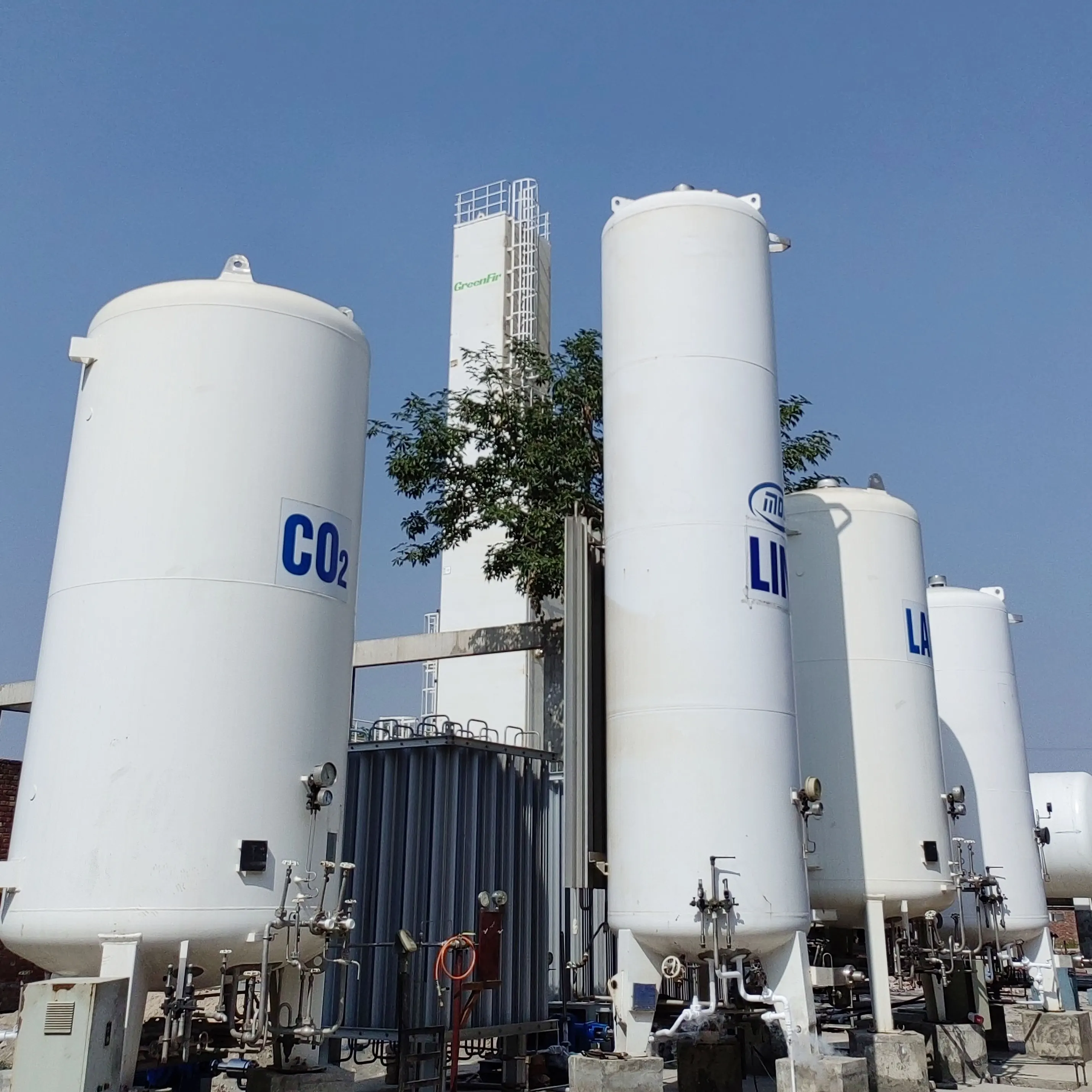
This is where equipment manufacturing discipline matters as much as process design. Jianyang Greenfir New Energy Equipment builds gas processing and purification systems with an eye toward the practical maintenance access and layout details that keep an amine unit serviceable over its life. Fabrication quality, material traceability, and a supply chain that can support spare parts after commissioning are not the glamorous parts of a sweetening project. They are the parts that determine whether the unit still looks like the design basis five years after start-up. For operators weighing a new treater or a revamp, the conversation is usually less about which amine is on the datasheet and more about whether the hardware will hold up when the feed gets dirty and the steam budget gets tight.
Table of Contents
- Why Amine Units Still Dominate Sour Gas Service
- Selectivity Is the Real Lever, Not Just Solvent Strength
- When the Unit Starts Foaming, Everything Else Gets Expensive
- Corrosion and Heat Stable Salts: The Slow Damage That Sets the Maintenance Calendar
- A Realistic View of Where Amine Sweetening Fits and Where It Struggles
- Designing for the Bad Days, Not Just the Design Case