 EN
EN

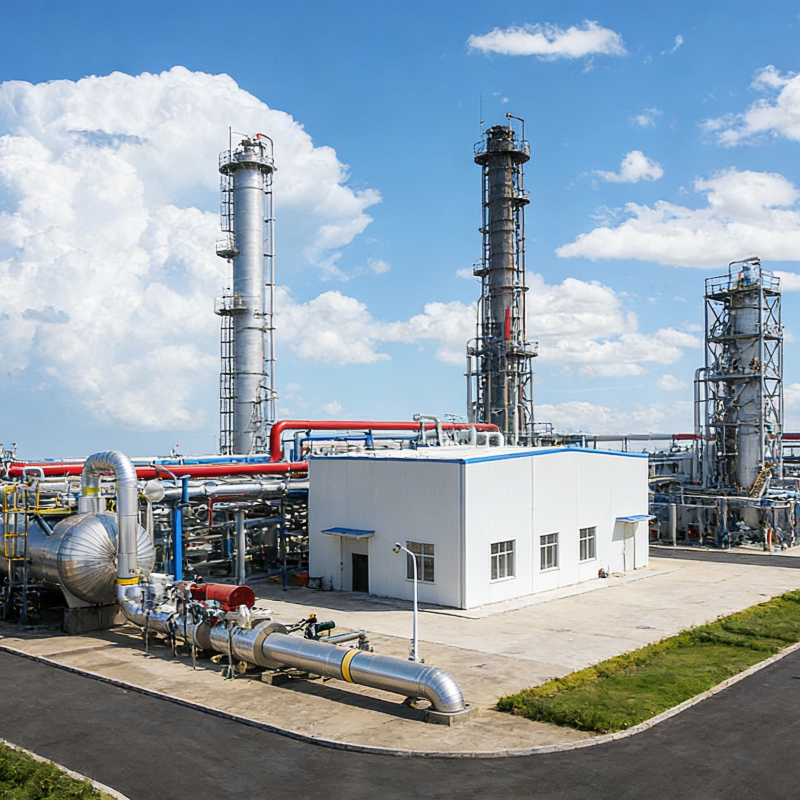
What Natural Gas Conditioning Systems Do and Where They’re Used
Natural gas conditioning systems serve as the essential first step in preparing raw gas for safe transport, combustion, or further processing.
Core Function: Removing water, condensates, particulates, and hydrocarbon liquids to meet pipeline and engine specs
Raw natural gas from the wellhead contains contaminants—including water vapor, liquid hydrocarbons (condensates), fine solids like sand or dust, and heavier hydrocarbon liquids—that must be removed before the gas is usable. Water can form hydrates that block valves and pipelines; condensates and particulates erode compressor blades and foul burner tips. Conditioning systems use physical separation methods—knockout drums, scrubbers, and filter/separators—to remove bulk liquids and solids. Absolute filter/separators then capture particles down to 0.3 microns. The result is consistent, specification-compliant fuel gas that meets pipeline tariff requirements and engine manufacturers’ intake standards—preventing costly downtime and safety hazards.
Critical deployment sites: compressor stations, drilling and frac rigs, power generation units, and instrument air systems
These systems are installed wherever natural gas serves as a fuel or process gas. Compressor stations along gathering and transmission lines rely on conditioned gas to power reciprocating engines—any quality drop risks knock, misfire, or accelerated wear. Drilling and hydraulic fracturing rigs depend on it for generators and fracturing pumps; even brief upsets can halt operations costing thousands of dollars per hour. Power generation units—whether gas turbines or reciprocating engines in utility and cogeneration plants—require stable, dry fuel to sustain efficiency and low emissions. Instrument air systems also benefit: conditioned gas feeds pneumatic controls and safety shutdowns, preventing moisture-induced failures in critical valves. Deploying the right conditioning skid at each site ensures uptime, safety, and compliance with emission limits.
Why Fuel Gas Quality Directly Impacts Engine and Turbine Reliability
How moisture and liquid carryover cause combustion instability, valve sticking, and hot-section corrosion
Unprocessed natural gas containing moisture and hydrocarbon liquids severely compromises combustion efficiency. Vaporized droplets entering the combustion chamber create localized cooling zones that disrupt flame propagation—leading to misfires and pressure fluctuations exceeding 15 psi, well beyond safe thresholds for lean-burn engines. Valve assemblies are especially vulnerable: condensed liquids wash away lubricants, increasing friction coefficients by 0.3–0.5 (Tribology International, 2022). This promotes micro-welding events that seize stems during high-frequency operation. Corrosion accelerates when sulfur compounds combine with water vapor to form sulfuric acid, attacking turbine blades. Blade thickness loss exceeding 0.5 mm reduces aerodynamic efficiency by 9% and cuts service life by 22,000 hours (ASME Turbo Expo, 2023).
Field evidence: 73% of turbine derates tied to dew point noncompliance (EPA NGV Report, 2023)
Operational data confirms the direct link between conditioning failures and performance penalties. The EPA’s 2023 study of 47 natural gas power generation sites found that units operating below pipeline dew point specifications (–20°F/–29°C) experienced 73% more derating incidents. These derates caused an average output reduction of 18.7 MW per turbine, translating to $740k in annual revenue loss per unit (Ponemon Institute, 2023). Sites without adequate natural gas conditioning systems showed 3.2 times more unscheduled maintenance events related to hot-section corrosion. The data underscores that maintaining fuel gas purity isn’t optional—it’s foundational to thermal plant economics.
Key Natural Gas Conditioning Technologies and Their Operational Trade-offs
Pressure swing adsorption (PSA) for precise H₂S/CO₂ removal and BTU stabilization
Pressure swing adsorption (PSA) stands out among natural gas conditioning systems for its ability to remove hydrogen sulfide and carbon dioxide to single-digit ppm levels while stabilizing BTU content. Using solid adsorbent beds that cycle between adsorption and regeneration without liquid solvents, PSA is well suited for remote locations where chemical handling poses logistical or environmental concerns. It delivers consistent gas quality despite feed composition fluctuations, reducing downstream combustion issues. Field data from midstream facilities show PSA can reduce H₂S from 200 ppm to below 4 ppm in a single pass—meeting pipeline specifications without generating chemical waste. Trade-offs include higher capital costs versus basic separators and the need for precise pressure control. Adsorbent life typically spans five to seven years, and automated swing cycles minimize operator intervention. For lean gas streams, PSA also adjusts heating value by modulating CO₂ removal—making it a versatile tool for fuel gas conditioning that integrates seamlessly with automated monitoring systems.
NGL recovery integration for value capture and VOC emissions reduction in gathering systems
Integrating natural gas liquids (NGL) recovery into gathering systems delivers dual benefits: capturing valuable ethane, propane, and butane while lowering the heating value and VOC content of the residue gas. By chilling or expanding the gas stream, operators condense heavier hydrocarbons before the gas enters the pipeline or engine. This not only generates revenue from NGL sales but also prevents liquid carryover that causes knock in reciprocating engines and flame instability in turbines. For example, a typical gathering system processing 30 MMscf/d of rich gas can recover over 5,000 barrels of NGL per month—significantly offsetting conditioning costs. The trade-off includes added complexity: refrigeration or turboexpander equipment increases footprint and maintenance demands. Yet in rich-gas plays, the payback from NGL sales often justifies the investment, making this integration a practical choice for optimized gas conditioning and emissions management.
PSA vs. amine scrubbing: comparing footprint, regeneration energy, and fuel gas consistency
When comparing PSA to amine scrubbing for gas conditioning, three dimensions stand out: footprint, regeneration energy, and fuel gas consistency. PSA systems occupy roughly half the footprint of equivalent amine units—a critical advantage on space-constrained drilling rigs or offshore platforms. Regeneration in PSA relies on pressure swing and consumes minimal thermal energy, whereas amine scrubbing requires a reboiler that continuously heats solvent to strip acid gases—a process accounting for up to 30% of total plant steam demand. On consistency, PSA delivers a drier, more stable gas with fewer BTEX emissions, though it is more sensitive to inlet contaminants like heavy hydrocarbons and particulates, which can foul adsorbent beds. Amine scrubbing handles variable feed conditions more robustly but risks foaming and degradation if not properly maintained. Additionally, amine systems require continuous chemical makeup and produce a waste stream requiring treatment, whereas PSA regenerates using only purge gas. Over a ten-year period, lifecycle costs often favor PSA for smaller capacities, while amine remains competitive for high-volume, sour gas applications. The choice ultimately hinges on site-specific factors including space, energy cost, and desired outlet purity.
FAQ
What are natural gas conditioning systems?
These systems prepare raw natural gas by removing water, particulates, condensates, and heavy hydrocarbons to make it suitable for transport, combustion, or further processing.
Where are natural gas conditioning systems used?
They are deployed at compressor stations, drilling rigs, hydraulic fracturing sites, power generation units, and instrument air systems.
Why is fuel gas quality crucial for engines and turbines?
Impurities in fuel gas cause combustion instability, valve sticking, and hot-section corrosion, leading to derates, higher maintenance costs, and reduced service life.
How does PSA compare to amine scrubbing?
PSA uses adsorbent beds and has a smaller footprint and lower regeneration energy needs, while amine scrubbing handles varied feed conditions better but requires more maintenance and produces waste.
What are the benefits of integrating NGL recovery?
It captures valuable natural gas liquids while reducing VOC emissions and lowering residue gas heating value, improving efficiency and mitigating emissions issues.