 EN
EN

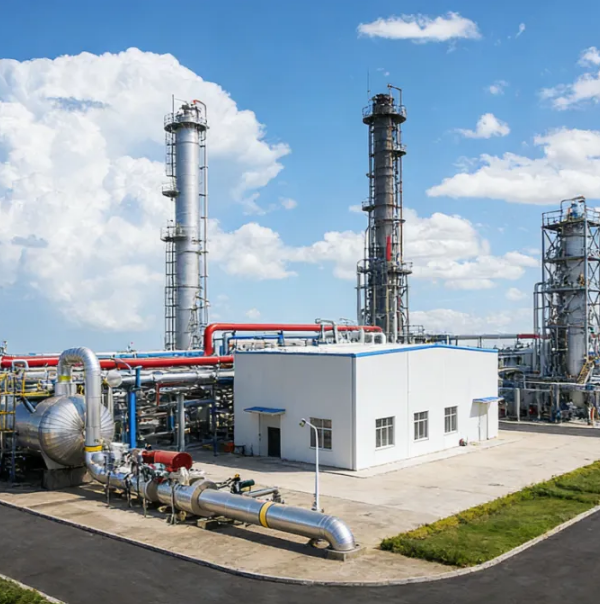
The Reality of Sour Gas: Why Sulfur Removal Is Non-Negotiable
Raw natural gas straight out of the ground is rarely pipeline-ready. Depending on the reservoir, it can carry hydrogen sulfide concentrations anywhere from a few parts per million up to double-digit percentages. Hydrogen sulfide is corrosive, toxic, and foul-smelling—but the real headache starts when it hits processing equipment. It eats carbon steel, poisons catalysts, and turns maintenance budgets into black holes. One midstream operator in the Permian Basin learned this the hard way: after six months of running sour gas through an untreated facility, they replaced over two miles of piping and shut down production for three weeks. The lesson stuck. Sulfur removal isn't optional; it's the first line of defense in gas processing.
The industry has spent decades refining how to pull H₂S and other sulfur compounds out of gas streams. Today's toolkit ranges from chemical absorption to solid-bed adsorption, each with its own sweet spot in terms of feed composition, flow rate, and downstream requirements.
Amine Treating: The Workhorse of the Industry
For most gas processing applications, amine-based absorption remains the default choice. The chemistry is straightforward: an aqueous amine solution contacts the sour gas in an absorber tower, and the amine selectively grabs H₂S (and often CO₂) out of the vapor phase. The rich amine then flows to a regenerator where heat strips the acid gases out, producing a lean amine stream that cycles back to the absorber.
Methyldiethanolamine (MDEA) has become the go-to solvent for selective H₂S removal, particularly when CO₂ slip is desirable. Unlike primary or secondary amines, MDEA reacts slowly with CO₂—which means operators can tune the system to pull out H₂S while leaving most of the CO₂ in the product gas. One Gulf Coast gas plant running a 40% MDEA solution achieved outlet H₂S below 4 ppm while slipping over 70% of the incoming CO₂. That kind of selectivity matters when the gas is headed to a downstream process that can tolerate CO₂ but not sulfur.
The trade-off? Regeneration energy. Amine systems are energy hogs. Reboiler duty typically runs 1,200 to 1,500 Btu per gallon of amine circulated, and for a large plant, that adds up to serious operating costs. Temperature control is also critical—amine selectivity deteriorates rapidly once lean amine temperature exceeds 45°C. In hot climates, that often means installing chillers, which adds capital cost and complexity.
Solid Bed Adsorption: When Precision Matters
For applications requiring H₂S down to sub-ppm levels—think LNG feed pretreatment or fuel cell applications—amine systems sometimes can't get tight enough. That's where solid bed adsorption comes in. Zinc oxide beds are the classic solution: H₂S reacts with ZnO to form zinc sulfide, which stays put in the bed until it's spent. The process is dead simple, requires no liquids handling, and delivers outlet H₂S below 1 ppm consistently.
But there's a catch. Solid beds are consumables. Once the zinc oxide is fully sulfided, the bed needs to be replaced or regenerated, which means downtime. A large LNG export facility in Qatar operates multiple ZnO guard beds in parallel, swapping them out on a scheduled rotation so the liquefaction train never sees a sulfur spike. The economics work out when the value of the treated gas justifies the media replacement cost—but for lower-value applications, amine treating usually wins on operating expense.
Membrane Separation and Emerging Alternatives
Membrane systems have carved out a niche in bulk sulfur removal, particularly for CO₂-rich streams where the partial pressure differential drives separation. Polymer membranes with selective layers can knock H₂S from several percent down to around 100 to 200 ppm in a single pass. The appeal is all about simplicity: no chemicals, no heat, minimal moving parts. A Permian operator running a membrane skid on a 30 MMscfd stream reported 40% lower operating costs compared to the amine unit it replaced.
That said, membranes aren't a silver bullet. They struggle with heavy hydrocarbons that can swell or degrade the polymer matrix. Feed pretreatment to remove liquids and particulates is mandatory, and membrane performance declines over time as the selective layer ages. For most applications, membranes work best as a rough-cut step ahead of a polishing amine or adsorption system.
| Technology | Typical Outlet H₂S | Relative CAPEX | Relative OPEX | Best Application |
|---|---|---|---|---|
| Amine (MDEA) | 4–50 ppm | Medium | High | Bulk removal, CO₂ slip desired |
| Zinc Oxide Bed | <1 ppm | Low-Medium | Medium | Polishing, LNG feed |
| Membrane | 100–200 ppm | Low | Low | Bulk removal, remote sites |
| Claus + TGTU | 99.9% recovery | High | High | Sulfur recovery, environmental compliance |
Tail Gas Treating: Pushing Recovery Past 99.9%
Here's a number that surprises a lot of people: a typical Claus sulfur recovery unit with two to three reactors only achieves 93 to 98% sulfur recovery. That leftover sulfur in the tail gas isn't just an environmental problem—it's lost product. Tail gas treating units (TGTUs) bridge that gap by hydrogenating the remaining sulfur compounds back to H₂S, then running that stream through a selective amine absorber.
The numbers are compelling. With a TGTU in place, overall sulfur recovery can push past 99.9%. A refinery on the U.S. Gulf Coast upgraded its existing Claus unit with a TGTU and cut SO₂ emissions by over 90% while recovering an additional 12 tons of sulfur per day—product that had literally been going up the stack. The payback period came in under 18 months, driven largely by sulfur sales and avoided emissions credits.
The key to TGTU performance is solvent selection. Generic MDEA works, but proprietary formulations designed specifically for tail gas applications maintain H₂S selectivity even at elevated temperatures—up to 50°C lean amine—which eliminates the need for costly chillers. For plants in hot climates or those with limited utility capacity, that's a game-changer.
Making the Right Call: Selection Criteria That Matter
Choosing a sulfur removal technology isn't about picking the "best" option—it's about matching the technology to the specific feed and operating envelope. Here's what actually drives the decision:
Feed sulfur concentration. High H₂S (above 5%) usually points toward amine treating with a Claus unit for sulfur recovery. Low H₂S (below 100 ppm) might justify a simple solid-bed adsorber.
Flow rate. Amine systems scale economically; membranes and solid beds have more fixed cost per unit of capacity.
CO₂ co-absorption. If CO₂ slip is valuable, MDEA-based systems have an edge. If CO₂ must also be removed, a blended amine or physical solvent might be better.
Product specification. LNG feed demands sub-ppm H₂S. Pipeline gas might tolerate 4 to 10 ppm. The tighter the spec, the more you'll pay.
Environmental regulations. In regions with strict SO₂ limits, a Claus + TGTU combination is practically mandatory.
One thing experienced operators will tell you: don't over-engineer the solution. A mid-sized gas plant in West Texas spent two years designing a complex amine-plus-membrane hybrid system, only to scrap it after startup because the feed composition turned out to be more stable than expected. A simple MDEA unit would have done the job at half the capital cost. Sometimes the best technology is the one that's been proven for fifty years.
Quality and Execution Matter as Much as the Technology
The chemistry is well understood. The equipment is off-the-shelf. What separates successful sulfur removal projects from the ones that bleed money is execution—fabrication quality, proper commissioning, and operator training. A poorly welded absorber can leak amine solution into the product gas. An undersized reboiler means regeneration never quite finishes, and the lean amine loads up, breaking through H₂S to the outlet. These aren't theoretical problems; they show up on startups across the industry every year.
For operators looking to minimize these execution risks, working with a fabricator that understands the entire gas processing train—from inlet separation to sulfur recovery—makes a tangible difference. Companies like GreenFir bring integrated manufacturing capabilities and rigorous quality control to skid-mounted gas processing equipment, helping project teams avoid the integration headaches that plague multi-vendor procurements. When the sulfur removal skid shows up ready to run, the startup goes smoother, and the gas stays on-spec from day one.
Table of Contents
- The Reality of Sour Gas: Why Sulfur Removal Is Non-Negotiable
- Amine Treating: The Workhorse of the Industry
- Solid Bed Adsorption: When Precision Matters
- Membrane Separation and Emerging Alternatives
- Tail Gas Treating: Pushing Recovery Past 99.9%
- Making the Right Call: Selection Criteria That Matter
- Quality and Execution Matter as Much as the Technology