 EN
EN

The Long Road from Reservoir to Pipeline
Getting natural gas from the reservoir into a transmission pipeline isn't a single event—it's a journey that typically spans three to five years, sometimes longer. Between the discovery well and the first molecule of sales gas sits a complex sequence of engineering, procurement, construction, and commissioning that consumes hundreds of millions of dollars and thousands of man-hours. And yet, the projects that succeed aren't necessarily the ones with the best reservoir or the deepest pockets. They're the ones that get the front-end work right.
The gas processing project lifecycle follows a well-established progression from conceptual study through operations. Understanding each phase—what gets decided, when, and by whom—separates projects that deliver on time and on budget from the ones that bleed contingency and miss startup windows.
Front-End Loading: Where Projects Win or Lose
Front-end loading (FEL) is the single most important determinant of project success. The logic is simple: decisions made early have outsized impact on cost and schedule, and they're cheap to change. Decisions made late are expensive to reverse. The industry standard divides FEL into three distinct phases.
FEL 1 – Conceptual Study. This phase answers the fundamental question: does this project make sense? Engineers evaluate multiple development scenarios, screen technologies, and produce order-of-magnitude cost estimates accurate to roughly ±30 to 50%. A typical FEL 1 package includes a high-level process flow diagram, equipment list, and site selection analysis. The goal isn't precision—it's direction. If the numbers don't work at this stage, they're not going to work later.
FEL 2 – Pre-Feasibility. Once the concept passes the first gate, the team digs deeper. Feed composition gets confirmed through actual sampling. Major equipment gets sized. The plot plan starts taking shape. Cost estimates tighten to ±15 to 25%. This is also when the project team starts engaging with technology licensors and potential EPC contractors. A common mistake at this stage? Rushing. Skimping on FEL 2 work inevitably shows up as change orders during detailed engineering.
FEL 3 – FEED (Front-End Engineering Design). This is where the project gets real. Detailed engineering begins in earnest. Piping and instrumentation diagrams (P&IDs) are developed. Equipment datasheets are finalized. The cost estimate comes in at ±10 to 15%. By the end of FEL 3, the project team should have a complete enough design to support a fixed-price EPC bid. The critical point: FEL 3 is the last chance to make major design changes without crushing the schedule. Once steel gets ordered, changes get expensive fast.
| Phase | Key Deliverables | Cost Accuracy | Typical Duration |
|---|---|---|---|
| FEL 1 – Conceptual | Process flow diagram, high-level cost | ±30–50% | 3–6 months |
| FEL 2 – Pre-Feasibility | Equipment sizing, plot plan | ±15–25% | 6–12 months |
| FEL 3 – FEED | P&IDs, datasheets, EPC bid package | ±10–15% | 12–18 months |
Detailed Engineering and Procurement: The Long Tail
With FEED complete, the project transitions to detailed engineering and procurement. This phase eats up the largest share of project man-hours—often 40 to 50% of total engineering effort. Every pipe run gets modeled. Every instrument gets specified. Every valve gets a datasheet and a purchase order.
Procurement runs in parallel, and this is where schedule compression often happens. Long-lead items—compressors, amine contactors, cryogenic heat exchangers—get ordered early, sometimes before detailed engineering is fully finished. That creates risk: if the design changes after equipment is ordered, the project eats rework costs and delays. The best-run projects manage this by freezing critical design packages before placing long-lead orders.
One lesson from a Rocky Mountain gas processing project: the team ordered the main refrigeration compressor during detailed engineering based on preliminary heat and material balance numbers. When the final balance came in 8% higher, the compressor was undersized. The solution? A $2 million field modification and a four-month schedule slip. The compressor should have waited another six weeks for final numbers.
Construction and Mechanical Completion: Turning Paper into Steel
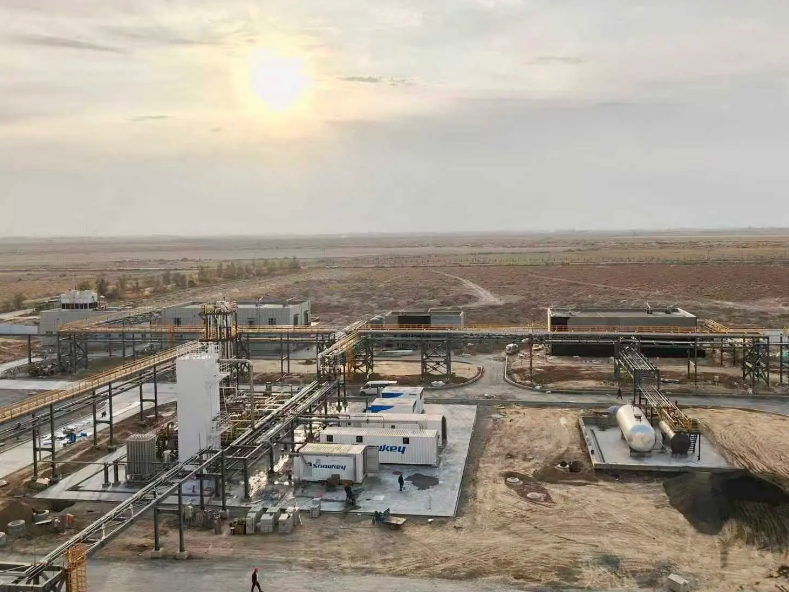
Construction is where the project becomes visible—and where things go wrong most publicly. For a grassroots gas processing facility, construction typically accounts for 50 to 60% of total project cost and 40 to 50% of the schedule.
Modular construction has changed the game for many projects. By fabricating equipment skids in controlled shop environments rather than in the field, project teams can compress schedules, improve quality, and reduce site labor costs. A 2024 study found that modular execution can reduce overall project schedule by 15 to 25% compared to stick-built construction. The trade-off is logistics: modules have to be transportable, which limits size, and site preparation needs to be complete before the modules arrive.
Mechanical completion—when all equipment is installed and all piping is connected—doesn't mean the project is done. It just means the construction crew can start packing up. The real test comes next.
Commissioning, Startup, and Performance Testing
Commissioning is the phase that separates experienced project teams from amateurs. It's the systematic process of verifying that every system works as designed, from instrument loops to safety shutdowns to the control system logic. A well-executed commissioning plan can take three to six months for a mid-sized gas plant. A poorly executed one can stretch to a year or more—and that's before counting the cost of lost production.
Startup is the moment of truth. Feed gas enters the plant for the first time. Operators work through the startup sequence, bringing each unit online in the correct order. The amine system gets circulated. The dehydration unit gets activated. The refrigeration system gets chilled down. And somewhere in that sequence, something almost always doesn't work the way the P&ID said it would.
Performance testing follows startup. For 72 hours or 30 days—depending on the contract—the plant runs at nameplate capacity while engineers document every data point. If the plant hits its guaranteed performance numbers, the project team celebrates. If it doesn't, they start troubleshooting, and the EPC contractor starts worrying about liquidated damages.
Operations and Continuous Improvement
Once performance testing passes, the project officially transitions to operations. But the lifecycle doesn't end there. Over the facility's 20- to 30-year operating life, the operations team will debottleneck, retrofit, and optimize. Turnarounds happen every three to five years for major maintenance. New technologies get evaluated. And eventually, when the reservoir declines or the economics shift, the plant gets mothballed or decommissioned.
The best project teams build for operability from day one. That means designing in accessibility for maintenance, specifying reliable instrumentation, and training operators during commissioning—not after. A gas plant in Oklahoma that followed this approach achieved 98% on-stream availability in its first year of operation, compared to the industry average of around 92% for new facilities.
The Fabrication Partner's Role in Lifecycle Success
The project lifecycle is long, and most of the risk sits in the gap between engineering and construction. That's where fabrication quality matters most. A skid that shows up with misaligned piping, improperly torqued flanges, or incomplete wiring diagrams will burn through commissioning budget and schedule faster than almost any other issue.
Working with a fabricator that understands the full project lifecycle—not just the welding and assembly—helps close that gap. GreenFir's approach integrates engineering review, shop fabrication, and pre-commissioning testing into a single workflow, so the equipment arriving on-site is ready to integrate with minimal field rework. For project teams managing tight schedules and thinner margins, that kind of execution reliability makes the difference between a successful startup and a costly lesson.
Table of Contents
- The Long Road from Reservoir to Pipeline
- Front-End Loading: Where Projects Win or Lose
- Detailed Engineering and Procurement: The Long Tail
- Construction and Mechanical Completion: Turning Paper into Steel
- Commissioning, Startup, and Performance Testing
- Operations and Continuous Improvement
- The Fabrication Partner's Role in Lifecycle Success