 EN
EN

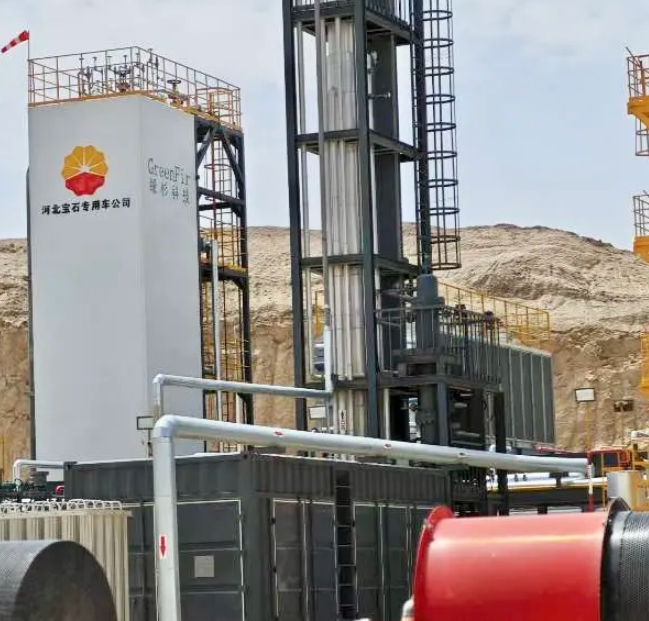
The Shift Toward Modular LNG
Ten years ago, building an LNG plant meant clearing a large site, pouring concrete foundations, and spending two to three years on field construction. Today, a growing segment of the industry is doing it differently. Skid-mounted LNG plants—where the entire liquefaction train is fabricated in a shop, transported to site, and bolted down—have moved from niche solution to mainstream option.
The driver isn't complicated. Traditional stick-built LNG projects face cost overruns, schedule delays, and labor shortages. Modular execution addresses all three. By moving fabrication off-site into controlled environments, project teams gain predictability, quality, and speed. For remote gas fields, stranded assets, and markets that need LNG fast, skid-mounted plants are often the only practical answer.
What a Skid-Mounted LNG Plant Actually Looks Like
A skid-mounted LNG plant isn't a single piece of equipment—it's an integrated system packaged onto structural steel frames designed for transport. The typical configuration includes feed gas pretreatment (amine treating, dehydration, mercury removal), liquefaction (usually a nitrogen expander or mixed refrigerant cycle), storage, and loading.
The modular design approach breaks the plant into transportable modules, each sized to fit within shipping constraints—typically 40 feet long, 10 feet wide, and 10 feet tall for overland transport, or larger for ocean shipment. Modules arrive at site with piping, instrumentation, and electrical wiring already installed and tested. Site work shrinks to foundation preparation, module placement, and interconnection. One 100,000 Nm³/day skid-mounted plant in Sichuan was commissioned in less than six months from module delivery—a timeline that would have been unthinkable with conventional construction.
Cost and Schedule Advantages That Actually Matter
The numbers tell the story. Modular construction can reduce overall project schedule by 15 to 25% compared to conventional methods. For a typical small-scale LNG project, that translates to six to twelve months of schedule compression—which means earlier revenue generation and shorter financing periods.
Cost savings come from multiple angles. Shop fabrication labor rates are often lower than field rates, especially when considering the infrastructure required to support a remote construction camp. Productivity in a controlled shop environment is higher—no weather delays, no material staging issues, no craft labor shortages. Quality is better because the same crew builds the same modules repeatedly, developing efficiencies that field crews can't match.
| Factor | Conventional Construction | Modular Skid-Mounted |
|---|---|---|
| Schedule | 24–36 months | 12–24 months |
| Cost Certainty | ±15–20% | ±5–10% |
| Site Labor | High | Low |
| Quality Control | Field-dependent | Factory-controlled |
| Weather Impact | Significant | Minimal |
One operator in the Eagle Ford shale evaluated both approaches for a 50,000-gallon-per-day LNG plant. The modular option came in 18% lower on total installed cost and offered a six-month earlier startup. The decision was straightforward.
Where Skid-Mounted Plants Shine—and Where They Don't
Skid-mounted plants excel in specific scenarios. Remote locations with limited infrastructure are ideal—no need to house and feed a large construction crew for two years. Stranded gas assets that would otherwise be flared become monetizable. Temporary or pilot projects benefit from the ability to relocate the plant to another site when the first project ends.
But modular isn't always the answer. For very large baseload LNG facilities—think 5 million tons per year and above—the economies of scale favor stick-built construction. The modules would be too large to transport, and the site labor cost advantage of a single massive project outweighs the productivity benefits of shop fabrication.
There's also the transport constraint. Modules have to fit within the available shipping envelope. That means some equipment—particularly large fractionation columns or cryogenic cold boxes—might need to be split into multiple modules and reassembled on-site, which adds complexity. A project team in Western Australia learned this lesson when a cold box module arrived 6 inches wider than the transport corridor allowed. The solution involved road closures, police escorts, and a six-figure cost overrun.
Technology Choices in Small-Scale LNG
The liquefaction process itself varies across skid-mounted plants, but two cycles dominate the small-scale space.
Nitrogen expander cycles are popular for their simplicity and operational flexibility. Nitrogen is compressed, cooled, expanded to generate refrigeration, and recycled. The cycle is non-flammable, which simplifies safety systems, and it handles feed composition changes well. The downside? Efficiency. Nitrogen cycles consume more power per unit of LNG produced compared to mixed refrigerant systems.
Mixed refrigerant cycles—particularly Single Mixed Refrigerant (SMR)—offer better thermodynamic efficiency. By using a blend of hydrocarbons and nitrogen, the refrigerant can match the cooling curve of natural gas more closely, reducing exergy loss. The trade-off is complexity: refrigerant composition must be carefully managed, and the system is less tolerant of feed gas variations.
For most skid-mounted applications in the 10,000 to 100,000 Nm³/day range, nitrogen expander cycles are the default choice. They're simpler to operate, easier to control, and more forgiving of the operational realities that come with remote sites and less-experienced crews.
Skid Design and Fabrication: The Devil in the Details
Here's where the rubber meets the road. A skid-mounted LNG plant is only as good as its fabrication quality. Piping stress analysis has to account for transportation loads, not just operating conditions. Instrumentation has to survive road vibrations. Electrical wiring needs to be routed to avoid damage during lifting and setting.
The best skid fabricators design for transport from the start. That means considering module weight distribution for crane lifting, structural bracing for road travel, and access points for field interconnection. Pre-commissioning in the shop is another differentiator—a skid that arrives with instruments already calibrated and loops already tested saves weeks of field commissioning time.
A project in the Permian Basin used two different fabricators for identical skids. One arrived with all instrumentation pre-calibrated and documented; the other arrived with loose wires, unlabeled cables, and instruments that needed full re-calibration. The first plant started up in three weeks; the second took ten. The fabrication cost difference was less than 5%—the startup time difference was enormous.
Why Fabrication Quality Determines Project Success
Skid-mounted LNG plants compress the project schedule by moving work off-site, but that compression only works if the off-site work is done right. A module that requires significant field rework defeats the purpose of modularization. Poor welding, misaligned flanges, or incorrect instrument wiring don't just cost money—they burn the very schedule savings that made modular attractive in the first place.
For project owners evaluating skid-mounted solutions, the fabricator's track record matters more than the technology licensor's name. A proven fabricator with rigorous quality control, experienced project management, and a history of on-time delivery reduces project risk in ways that no amount of engineering can replace. Companies like GreenFir have built their reputation on exactly this kind of execution reliability—delivering skid-mounted gas processing equipment that arrives on-site ready to run, with minimal field rework and predictable startup timelines.
Table of Contents
- The Shift Toward Modular LNG
- What a Skid-Mounted LNG Plant Actually Looks Like
- Cost and Schedule Advantages That Actually Matter
- Where Skid-Mounted Plants Shine—and Where They Don't
- Technology Choices in Small-Scale LNG
- Skid Design and Fabrication: The Devil in the Details
- Why Fabrication Quality Determines Project Success