 EN
EN

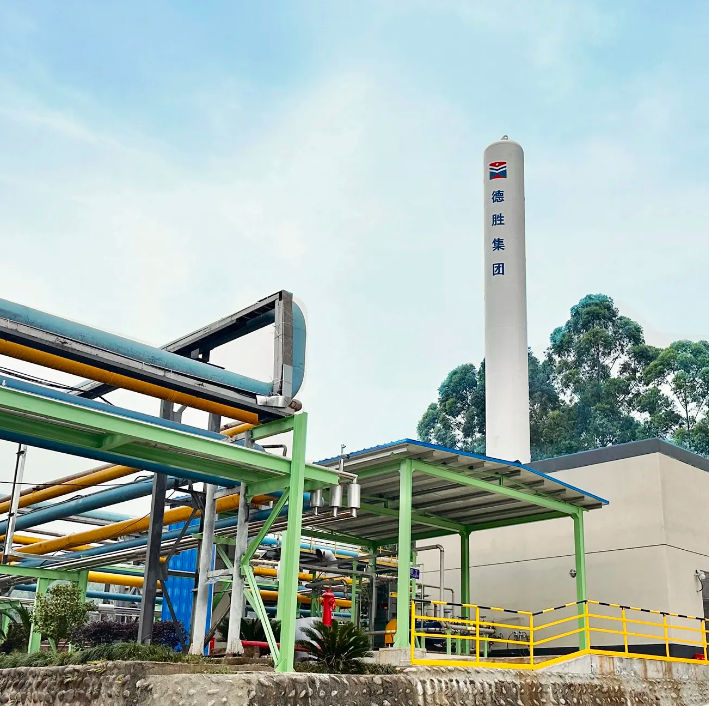
The Challenge of Keeping Things Cold
Liquefied natural gas, liquid nitrogen, liquid oxygen—these aren't commodities you can store in a standard atmospheric tank. At temperatures below -150°C, the rules change. Materials become brittle. Insulation becomes critical. And the product itself wants to boil away continuously. Cryogenic storage tanks are the engineering response to these challenges, and they've evolved over decades into some of the most sophisticated pressure vessels in the industrial world.
The scale is staggering. A single large LNG storage tank can hold 160,000 cubic meters of liquid—enough to supply a mid-sized city for days. At the other end of the spectrum, a 50-cubic-meter liquid nitrogen tank might serve a single hospital or electronics manufacturing plant. But regardless of size, the underlying physics and engineering principles are the same.
Tank Types: From Single Containment to Membrane
Cryogenic storage tanks come in several configurations, each with different safety philosophies and cost profiles.
Single containment tanks are the most basic design. A single-wall or double-wall tank holds the cryogenic liquid, and if a leak occurs, the liquid is expected to be contained by an external berm or dike. These are the least expensive option but require significant real estate for the containment area.
Double containment tanks add a secondary wall around the primary tank. If the inner tank leaks, the outer wall catches the liquid and provides a vapor-tight seal. This eliminates the need for a large berm and reduces the land footprint.
Full containment tanks represent the current state of the art for large LNG storage. Both the inner and outer tanks are designed to contain liquid, and the outer tank also provides vapor-tight containment. In the event of an inner tank failure, the outer tank holds the entire contents safely. These tanks are the most expensive but offer the highest level of safety and are required by many regulators for large-scale storage.
Membrane tanks use a thin stainless steel membrane supported by insulation and an outer concrete shell. Originally developed for LNG carriers, this design has moved onshore and offers excellent containment with lower material weight than full containment designs.
The Standards That Govern Cryogenic Storage
Cryogenic storage tanks don't get built without a thick stack of standards behind them. The key documents include:
API 625 – The primary standard for LNG storage tank design and construction, covering everything from materials to testing
EN 14620 – European standard for full-containment LNG tank construction
NFPA 59A – Safety standard covering fire protection, spacing, and hazard prevention
BS 7777 / EEMUA – Guidance for refrigerated storage tank design
API 625 is the most widely recognized global standard. It specifies design pressure, materials, insulation requirements, and testing protocols. Compliance with API 625 isn't optional for most large projects—it's written into the insurance policies and lending agreements.
| Standard | Scope | Primary Application |
|---|---|---|
| API 625 | Design and construction | LNG storage tanks |
| EN 14620 | Full-containment construction | European LNG projects |
| NFPA 59A | Safety and fire protection | All cryogenic facilities |
| ASTM F3562 | Thermal insulation systems | Type C LNG tanks |
Boil-Off: The Inevitable Loss
Here's a fact that surprises newcomers to cryogenic storage: the product inside the tank is always boiling. Even with the best insulation, heat leaks into the tank, and some of the liquid vaporizes. This is called boil-off gas (BOG), and managing it is one of the operator's primary responsibilities.
The industry-standard acceptable boil-off rate for LNG storage tanks is typically ≤0.2% of tank volume per day. Large full-containment tanks can achieve lower rates—0.05% to 0.08% per day—because the surface-area-to-volume ratio improves with size. A 160,000-cubic-meter tank boiling off at 0.08% per day loses about 128 cubic meters of LNG daily. That's not a trivial amount—it's enough gas to heat several thousand homes.
So what happens to the boil-off gas? In most terminals, it's collected and either reliquefied or sent to the plant fuel gas system. In smaller installations, it might be flared or vented (though environmental regulations increasingly restrict this). The economics of BOG management are significant: every cubic meter of LNG that boils off is product that doesn't get sold.
Insulation: The Real Hero
The performance of a cryogenic storage tank stands or falls on its insulation system. For LNG tanks, the insulation typically consists of expanded perlite—a lightweight volcanic glass that packs between the inner and outer walls—or polyurethane foam for smaller tanks. Vacuum insulation is used for some liquid nitrogen and liquid oxygen tanks, where space is at a premium and the temperature differential is extreme.
Perlite insulation in a large LNG tank can be several feet thick. The challenge isn't just thermal performance—it's settling. Perlite settles over time, creating voids at the top of the insulation space where heat can bypass the insulation. Modern designs include settling indicators and provisions for topping up perlite during tank outages.
One often-overlooked aspect is the insulation around tank penetrations—piping, instrumentation, and manways. These are the weak points where heat finds its way in. A poorly insulated penetration can create a cold spot on the outer tank, leading to ice formation, corrosion, and eventually structural issues. The best tank designs treat penetrations with the same rigor as the main tank walls.
Material Selection: The Low-Temperature Challenge
Carbon steel becomes brittle at cryogenic temperatures. That's a problem because most industrial storage tanks are made of carbon steel. The solution is to use materials that maintain toughness at -162°C and below.
For LNG tanks, the inner tank is typically made of 9% nickel steel or aluminum alloy. 9% nickel steel is the workhorse—it retains impact toughness down to -196°C and is weldable with proper procedures. Aluminum alloys are lighter and have excellent low-temperature properties but are more expensive and require specialized welding techniques.
The outer tank, in contrast, is usually carbon steel or reinforced concrete. It doesn't see cryogenic temperatures directly—the insulation keeps it warm—but it does need to withstand the hydrostatic pressure of the inner tank contents in the event of a leak.
Operational Realities: What the Manuals Don't Tell You
Cryogenic storage tanks are remarkably reliable, but they're not maintenance-free. The most common operational issue is thermal stratification—temperature gradients within the liquid that can lead to rapid pressure build-up if not managed. Operators monitor tank temperatures at multiple elevations and use mixing devices or circulation pumps to maintain uniform temperature.
Another reality: filling and emptying a cryogenic tank creates thermal stress. The inner tank expands and contracts with temperature changes, and the piping connections must accommodate this movement. Bellows and expansion loops are standard, but they need inspection and occasional replacement. A liquid nitrogen facility in the Midwest learned this the hard way when a bellows failed during a fill operation, releasing cold gas and causing a six-week outage.
The Fabrication and Construction Challenge
Building a cryogenic storage tank is not like building a standard pressure vessel. The tolerances are tighter. The welding procedures are more demanding. And the inspection requirements are more rigorous. A single weld defect in the inner tank can compromise the entire containment system.
For project owners, the choice of fabricator matters enormously. A fabricator with experience in cryogenic service understands the specialized welding procedures, the non-destructive testing requirements, and the critical importance of cleanliness during fabrication. Companies like GreenFir that have built a track record in cryogenic equipment fabrication bring that experience to every tank project—reducing the risk of field issues and ensuring the tank performs as designed from the first fill.
Table of Contents
- The Challenge of Keeping Things Cold
- Tank Types: From Single Containment to Membrane
- The Standards That Govern Cryogenic Storage
- Boil-Off: The Inevitable Loss
- Insulation: The Real Hero
- Material Selection: The Low-Temperature Challenge
- Operational Realities: What the Manuals Don't Tell You
- The Fabrication and Construction Challenge