 EN
EN

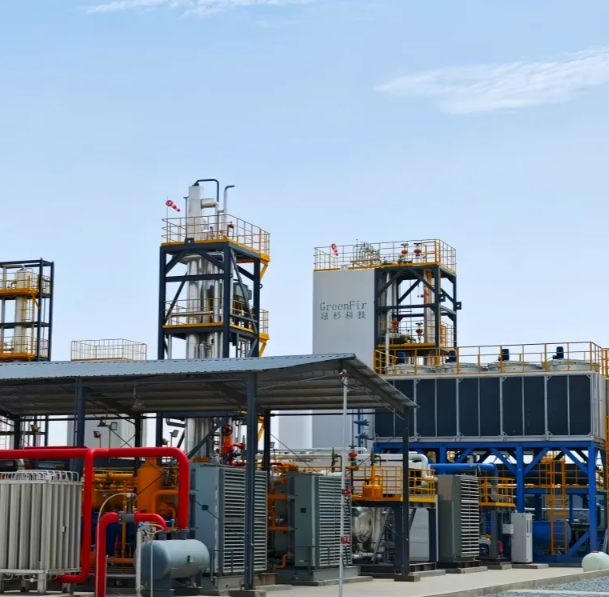
The Final Step in the LNG Supply Chain
Liquefied natural gas travels thousands of miles across oceans in specially designed carriers, kept at -162°C in cryogenic tanks. But the vast majority of natural gas consumers don't burn liquid—they burn gas. Somewhere between the LNG carrier and the burner tip, that liquid has to turn back into vapor. That's the regasification process, and it's the final critical step in the LNG supply chain.
The scale is impressive. A single large regasification terminal can process over 1 billion cubic feet of natural gas per day—enough to supply several million homes. The equipment is massive, the thermodynamics are demanding, and the economics are high-stakes. Every hour of downtime at a regasification terminal costs the operator hundreds of thousands of dollars in lost capacity charges.
The Core Process: From Liquid to Gas
The regasification process itself is conceptually simple, but operationally complex. LNG arrives at the terminal at approximately -162°C and near atmospheric pressure. To turn it into pipeline-quality gas, the operator must do two things: raise the pressure and add heat.
The pressure raise comes first. LNG is pumped from the storage tanks through a series of pumps—first low-pressure pumps that feed the main cryogenic pumps, then high-pressure pumps that boost the pressure to pipeline levels, typically around 80 to 100 bar. At these pressures, the LNG remains liquid as long as it stays cold. Pumping LNG at cryogenic temperatures requires specialized equipment: the pumps are submerged in the liquid to keep them cold, and the seals have to handle both extreme cold and high pressure.
The heat comes second. High-pressure LNG passes through vaporizers where it's warmed to roughly 5 to 10°C, turning back into gas. The gas then flows through a metering station, odorization (if required), and into the transmission pipeline.
Vaporizer Technologies: The Heart of the Terminal
The vaporizer is the single most important piece of equipment in a regasification terminal. Three main technologies dominate the market, each with different operating characteristics.
Open Rack Vaporizers (ORVs) use seawater as the heat source. Seawater is pumped over a bank of finned tubes carrying high-pressure LNG. The water warms the LNG, which vaporizes and exits the tubes as gas. ORVs are simple, reliable, and have low operating costs because seawater is free. The downside? They require a large seawater intake and discharge, which has environmental permitting implications. They also only work where seawater temperatures are warm enough—typically above 5°C.
Submerged Combustion Vaporizers (SCVs) burn a portion of the natural gas to generate heat, which is transferred to the LNG through a water bath. SCVs are compact and can operate in any climate—they don't depend on seawater temperature. The trade-off is fuel consumption: SCVs burn about 1.5 to 2% of the gas they vaporize. That's product that doesn't get sold.
Intermediate Fluid Vaporizers (IFVs) use a intermediate heat transfer fluid—often propane or a glycol-water mixture—to transfer heat from a source (seawater or combustion) to the LNG. This provides operational flexibility and protects the LNG from direct contact with the heat source, but adds complexity and cost.
| Vaporizer Type | Heat Source | Fuel Consumption | Climate Suitability | Environmental Impact |
|---|---|---|---|---|
| Open Rack (ORV) | Seawater | None | Warm water only | Seawater intake |
| Submerged Combustion (SCV) | Gas combustion | 1.5–2% | All climates | CO₂ emissions |
| Intermediate Fluid (IFV) | Seawater or combustion | Varies | Flexible | Moderate |
The Rise of Floating Storage and Regasification Units
Not all regasification happens on land. Floating Storage and Regasification Units (FSRUs) have transformed the LNG import market over the past decade. An FSRU is essentially a regasification terminal built on a ship—LNG storage tanks, vaporizers, and gas export systems all located on a floating hull.
The numbers tell the story. By the end of 2023, 51 FSRUs were operating globally, up from 30 in 2020—a 70% increase in three years. The global FSRU market was valued at $903 million in 2024 and is projected to reach $1.78 billion by 2033.
What's driving the growth? Speed and cost. A traditional onshore regasification terminal takes five to seven years to permit and build. An FSRU can be operational in 18 to 24 months. Germany's experience in 2022 is a case in point: after Russian pipeline gas was cut off, the country commissioned five FSRUs within 18 months, avoiding the multi-year timeline of building onshore terminals.
FSRUs aren't without drawbacks. They're more expensive to operate than onshore terminals—the fuel consumption for propulsion and the cost of vessel maintenance add up. They also have limited storage capacity compared to large onshore tanks. But for markets that need LNG quickly, or where land is scarce or politically difficult to acquire, FSRUs are often the only practical solution.
Cold Energy Recovery: The Untapped Opportunity
Here's something that doesn't get discussed enough: LNG contains a massive amount of "cold energy"—the refrigeration content that was put into it at the liquefaction plant. When LNG is vaporized, that cold is typically wasted into seawater or the atmosphere. But it doesn't have to be.
Several terminals around the world have started recovering this cold energy for other uses. In Japan, where LNG imports are massive, cold energy is used for air separation (producing liquid oxygen and nitrogen), low-temperature CO₂ capture, and even cooling data centers. The economics are compelling: the cold energy in LNG is worth roughly $2 to $5 per MMBtu, depending on the local electricity price and the application.
The challenge is integration. Cold energy recovery requires a nearby industrial user that can use the cold, or a power generation system that can convert the temperature differential into electricity. Not every terminal has that option. But for those that do, cold energy recovery can offset a meaningful portion of the terminal's operating costs.
Operational Risks and Reliability Considerations
Regasification terminals are high-reliability facilities—they have to be. A terminal that can't deliver gas when the grid needs it faces not just financial penalties but regulatory scrutiny and reputational damage.
The biggest operational risk is vaporizer freeze-up. If the LNG flow is too high for the heat input, the vaporizer can ice up, reducing heat transfer and potentially blocking the tubes. Operators manage this by controlling LNG flow rate, monitoring vaporizer outlet temperature, and in some cases, using anti-icing additives.
Another risk is thermal shock. The temperature swing from -162°C to 5°C creates significant thermal stress in piping and equipment. Proper warm-up and cool-down procedures are critical. A terminal in Spain learned this lesson when a cold LNG line was opened too quickly during startup, causing a pipe support to fracture from differential thermal expansion. The repair took two weeks and cost over $1 million.
The Role of Fabrication Quality in Terminal Reliability
The equipment in a regasification terminal operates at the extremes—cryogenic temperatures on one side, high pressure on the other, and rapid temperature changes during startup and shutdown. That's a demanding environment for any piece of equipment, and fabrication quality matters enormously.
Poor welding in cryogenic piping can lead to brittle fracture. Inadequate insulation on cold lines can cause ice formation and corrosion. Improperly installed instrumentation can give false readings, leading operators to make bad decisions. These aren't theoretical concerns—they show up in the field, and they cost money.
For project owners and operators, working with a fabricator that has deep experience in cryogenic and high-pressure applications reduces these risks. Companies like GreenFir that have built a reputation for quality fabrication and rigorous testing across the gas processing value chain bring that same standard to regasification equipment. When the vaporizers arrive on-site ready to run, and the piping holds pressure without leaks, the terminal starts up on schedule and stays online when it matters most.
Table of Contents
- The Final Step in the LNG Supply Chain
- The Core Process: From Liquid to Gas
- Vaporizer Technologies: The Heart of the Terminal
- The Rise of Floating Storage and Regasification Units
- Cold Energy Recovery: The Untapped Opportunity
- Operational Risks and Reliability Considerations
- The Role of Fabrication Quality in Terminal Reliability