 EN
EN

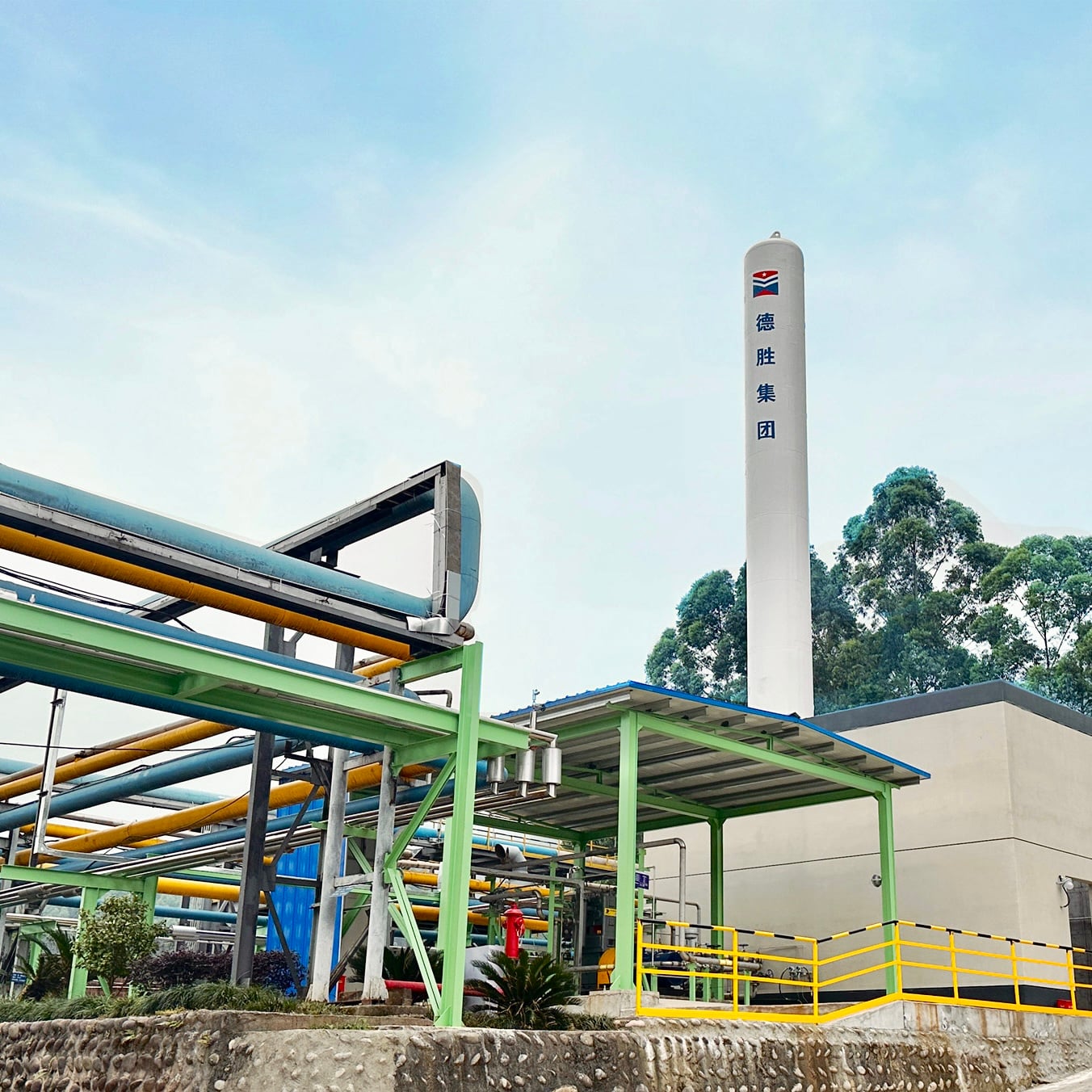
The Shift That’s Reshaping Natural Gas Processing
Natural gas has spent the better part of the last decade in a strange position—too clean for the coal camp, too dirty for the renewables crowd. But the numbers tell a different story. The International Energy Agency’s Gas 2025 report examines a global market where demand and production reached record levels in 2025, with LNG terminals and contracts coming online at a pace that surprised even seasoned forecasters. The global natural gas power generation market alone is projected to hit roughly $97 billion in 2025 and grow to $122.5 billion by 2030, according to MarketsandMarkets. That is not a sector in decline. That is a sector in transition.
The real question is not whether natural gas will remain part of the energy mix, but how it will be processed, purified, and delivered. Green energy gas solutions are no longer about replacing natural gas with something else. They are about making natural gas cleaner, more efficient, and more compatible with the broader push toward decarbonization. That means better purification, smarter liquefaction, and tighter integration with carbon capture and renewable gases like hydrogen and biomethane.
What “Green” Actually Means in a Gas Plant Context
There is a tendency to treat “green” as a binary condition—either a solution is sustainable or it is not. In practice, it is a spectrum. For gas processing, the greenest barrel of gas is the one that never gets flared. The next best is the one that gets processed with minimal energy loss and maximal product recovery. Then there is the question of what happens to the CO₂ that gets pulled out during purification.
Amine-based sweetening units have been pulling acid gases out of raw natural gas for decades. The conventional approach vents that CO₂. Newer configurations route it to sequestration or enhanced oil recovery. The difference in emissions profile is not marginal—it is orders of magnitude. One mid-sized gas processing plant can generate anywhere from 50,000 to over 200,000 tons of CO₂ annually from acid gas removal alone, depending on feed composition and throughput. Capturing and utilizing that stream changes the arithmetic entirely.
Then there is the equipment side. Cryogenic processes for natural gas liquefaction are energy-intensive by nature. But the gap between a well-optimized LNG train and a poorly designed one can be 15 to 20 percent in specific power consumption. That is not a theoretical number. That is the difference between a project that pencils out and one that does not.
A Real-World Project: The Southern Chemical Plant Retrofit
Consider a chemical plant in the southern part of China that had been running a conventional gas sweetening unit for nearly a decade. The unit worked—it met product specs, kept the downstream crackers happy, and passed regulatory inspections. But the owner noticed something troubling. Feed gas composition had shifted slightly over the years, with higher CO₂ content and trace amounts of heavier hydrocarbons that the original design had not anticipated. The amine circulation rate kept creeping up. So did the regeneration energy demand.
The team brought in a specialist to run a full process simulation using Aspen HYSYS. What came back was eye-opening. The existing unit was operating at about 12 percent lower thermal efficiency than it could have been, simply because the design basis no longer matched reality. Retrofitting the amine system with a better solvent formulation and reconfiguring the heat integration saved roughly 8 percent on the plant’s overall fuel gas consumption. That translated into about $1.2 million annually in avoided fuel costs at current gas prices. The project paid for itself in under three years—not because the technology was exotic, but because the solution was right-sized for the actual operating conditions.
That is the kind of outcome that does not make headlines but makes balance sheets look a lot better. And it is exactly what green energy gas solutions look like on the ground: incremental, data-driven, and relentlessly practical.
The Technology Stack That Actually Delivers
Talking about green gas solutions without talking about specific technologies is like discussing a recipe without mentioning ingredients. Here is what the current toolkit looks like for plants that want to move the needle:
| Technology Area | Key Enablers | Typical Impact |
|---|---|---|
| Gas Purification | Amine systems with advanced solvents, membrane separation, pressure swing adsorption | Higher CO₂ removal efficiency, lower regeneration energy |
| Liquefaction | Mixed refrigerant cycles, expander-based processes, variable-speed drives | Reduced specific power consumption |
| Gas-to-Chemicals | Methanol synthesis, GTL, direct conversion routes | Higher value product slate from same feed |
| Carbon Management | Amine-based post-combustion capture, physical solvent processes | CO₂ ready for sequestration or utilization |
| Digital Optimization | Real-time process simulation, APC, predictive maintenance | Lower downtime, better energy tracking |
The industry has moved past the era of one-size-fits-all process design. A 5 MMscfd stranded-gas project in a remote location has completely different economics and constraints than a 500 MMscfd baseload LNG export terminal. The equipment that works for one will bankrupt the other. That is why the conversation has shifted from “what technology is best” to “what technology fits this feed, this location, and this offtake arrangement.”
Certifications Matter More Than Most People Think
There is a common misconception that certifications like ASME, CE, and EAC are just paperwork—hoops to jump through for regulatory compliance. In reality, they are a shorthand for manufacturing discipline. A pressure vessel that carries an ASME U-Stamp has been designed, fabricated, inspected, and tested to a standard that is recognized across most of the industrialized world. That matters when a plant is being built in a jurisdiction where the local inspection authority does not have the capacity to verify every weld.
CE marking matters for equipment entering the European market. EAC certification is the gatekeeper for the Eurasian Economic Union. A supplier that holds all three has demonstrated that its quality management system can satisfy multiple regulatory regimes simultaneously. That is not trivial. It requires documented procedures, third-party inspections, and a culture of traceability that many fabricators simply do not maintain.
For a project owner, the presence of these certifications reduces the due diligence burden significantly. It does not eliminate the need for site inspections or independent testing, but it does provide a baseline level of confidence that the equipment will perform as specified.
The Real Cost of Getting It Wrong
There is a project in Southeast Asia that serves as a cautionary tale. A mid-sized LNG plant was awarded to an EPC contractor that had plenty of experience in oil refining but almost none in cryogenic gas processing. The bid was competitive—about 11 percent lower than the next closest offer. The owner went with the low bidder.
The project ran over schedule by 19 months. The cost overrun was north of 40 percent. The final plant achieved only 92 percent of its nameplate capacity during performance testing. The operator spent the next two years chasing bottlenecks and retrofitting undersized equipment. By the time the plant was finally running at design capacity, the gas supply agreement had already been renegotiated twice.
That is the hidden cost of green energy gas solutions that are not actually solutions—they are just equipment that happens to process gas. The difference between a plant that works and a plant that works well is not in the P&ID. It is in the engineering judgment that goes into selecting the right process configuration, the right equipment sizing, and the right operating philosophy from day one.
What to Look for in a Partner
The technical side of green gas solutions is only half the equation. The other half is the organization behind the equipment. A supplier with in-house engineering capabilities can troubleshoot process issues without waiting for a third-party consultant. A manufacturer with its own fabrication facility can control quality from raw material receiving to final hydrotest. A company that holds ISO 9001, ISO 14001, and ISO 45001 certifications has built management systems that cover quality, environment, and occupational health—not because regulators require it, but because good operations demand it.
The firms that consistently deliver better outcomes tend to share a few characteristics: they have deep process engineering expertise, they maintain direct control over manufacturing, and they have a track record of projects that actually started up on time and met performance guarantees. That last point is harder to verify than it should be, but it is also the most telling.
GreenFir operates with that exact combination—in-house design, owned manufacturing facilities, and internationally recognized certifications including ASME, CE, and EAC. The firm has built its reputation on delivering gas processing solutions that balance technical performance with commercial realism, serving markets from Southeast Asia to the Middle East with equipment that is engineered to last.
Table of Contents
- The Shift That’s Reshaping Natural Gas Processing
- What “Green” Actually Means in a Gas Plant Context
- A Real-World Project: The Southern Chemical Plant Retrofit
- The Technology Stack That Actually Delivers
- Certifications Matter More Than Most People Think
- The Real Cost of Getting It Wrong
- What to Look for in a Partner