 EN
EN

The Stakes Have Never Been Higher
A gas plant is not a piece of equipment. It is a multi-million-dollar ecosystem of rotating machinery, heat exchangers, columns, piping, and control systems, all working in concert. And the entity responsible for bringing that ecosystem to life is the EPC contractor—engineering, procurement, and construction.
The global oil and gas EPC market was valued at roughly $54.5 billion in 2024 and is projected to reach $83 billion by 2034. Offshore EPC contract awards alone are expected to total $54 billion in 2025. With that much capital in motion, the difference between choosing the right contractor and the wrong one is measured in tens of millions of dollars, years of delayed production, and operational headaches that linger for decades.
Yet the selection process at many owner organizations remains surprisingly casual. A request for proposal goes out. A few bids come back. The lowest number gets the nod. Then the problems start.
This guide is not about how to run a tender. It is about what actually matters when evaluating EPC contractors for gas processing projects—based on what has worked, what has failed, and what the data shows.
Track Record Is Not a Resume
Every contractor has a website full of glossy project photos. Every contractor has a list of past clients. But track record is not about having done projects. It is about having done similar projects under similar conditions.
A contractor that has built twenty grassroots refineries may struggle with a cryogenic LNG plant. The skill sets overlap, but the critical details—thermal contraction, cooldown procedures, mixed refrigerant composition control—are different. The International Energy Agency’s Global LNG Capacity Tracker recorded over 100 billion cubic meters per year of new liquefaction capacity sanctioned in 2025 alone, the highest on record. That means a lot of contractors are suddenly busy, and a lot of owners are scrambling to find experienced ones.
The smart question to ask is not “how many projects have you done” but “how many projects have you done that are this size, this feedstock, and this product slate.” A contractor that has delivered three 2 MMTPA LNG trains in the last five years is a very different proposition from one that has delivered one 0.5 MMTPA train a decade ago.
The Certification Check That Separates Pretenders from Contenders
Certifications are not marketing fluff. They are third-party validation of a contractor’s systems. For gas processing equipment, the key credentials are ASME U-Stamp for pressure vessels, CE marking for European market access, and EAC certification for the Eurasian Economic Union.
But there is a deeper layer. A contractor that holds ISO 9001:2015 for quality management, ISO 14001:2015 for environmental management, and ISO 45001:2018 for occupational health and safety has built a management infrastructure that goes beyond regulatory minimums. These standards require documented procedures, internal audits, corrective action processes, and management review. They are not easy to maintain. They are also not optional for any contractor that wants to be taken seriously on international projects.
One area that frequently gets overlooked is welding certification. ASME Section IX governs welding qualifications, and the difference between a shop that tracks every welder’s certification expiry and one that treats it as a paperwork exercise shows up in the quality of the finished vessel. A single failed weld in a cryogenic service can cost more to repair than the entire inspection budget for the project.
The Governance Gap: Why Low Bids Turn into High Costs
There is a well-documented pattern in EPC contracting: the lowest bid often becomes the highest cost project. This is not because low-bidding contractors are incompetent. It is because the scope definition at the time of bidding is rarely complete enough to support accurate pricing.
Effective contractor selection governance requires a gated assurance review at the selection decision itself, not only at final investment decision. That means evaluating whether the scope definition justifies the chosen contract form before the contract is signed. Too many owners rush through the selection phase to hit a project schedule, only to discover that the contractor’s price was based on assumptions that do not match reality.
The result is a cascade of change orders. Every change order carries overhead, delay, and friction. By the time the plant is built, the “low bid” has evaporated, and the owner is left with a project that cost more and took longer than any of the higher initial bids would have.
A practical way to test for this is to ask the contractor for a detailed breakdown of assumptions underlying the bid—utility costs, labor productivity rates, material escalation factors, and contingency percentages. If the contractor cannot or will not provide these, that is a red flag. If the assumptions are reasonable and the price is still low, that is worth investigating further.
The Real-World Test: A Mid-Sized LNG Project in Southeast Asia
There is a project that illustrates these dynamics perfectly. A mid-sized LNG liquefaction plant was being developed in Southeast Asia. The owner shortlisted three EPC contractors. Contractor A had deep LNG experience, a strong balance sheet, and a reputation for delivering on schedule. Contractor B had done similar projects but had a mixed track record on cost control. Contractor C had never built an LNG plant but had extensive experience in downstream petrochemicals and came in 14 percent lower than Contractor A.
The owner chose Contractor C. The reasoning was straightforward: the process technology was licensed from a major vendor, so how hard could it be?
The project went 22 months over schedule. The final cost overrun was 47 percent. The plant achieved only 89 percent of its nameplate capacity in the first year of operation. The operator had to bring in a separate technical services firm to troubleshoot the liquefaction cycle, which cost another $8 million. The licensed process technology was fine. The problem was that Contractor C did not have the cryogenic-specific engineering expertise to integrate the licensed package with the balance of plant effectively.
That is the difference between a contractor that has done it and one that thinks it can. The premium for proven experience is not a markup—it is insurance.
The Numbers That Actually Matter in Contractor Evaluation
When comparing EPC contractors, there are a few metrics that cut through the marketing language:
| Evaluation Area | What to Look For | Why It Matters |
|---|---|---|
| Relevant Project Count | Number of similar projects completed in last 5 years | Demonstrates current capability, not historical |
| Schedule Performance | Actual vs. planned completion on last 3 projects | Reveals estimating discipline and execution rigor |
| Cost Performance | Final vs. bid cost on last 3 projects | Shows whether change orders are the norm |
| Safety Record | TRIR, LTIR over last 3 years | Leading indicator of site discipline |
| Certification Status | ASME, CE, EAC, ISO triple-stack | Verifies systems and third-party oversight |
| In-House Engineering | % of engineering performed internally vs. subcontracted | Indicates control over design quality |
These are not theoretical metrics. They are verifiable. A serious contractor will provide them. A contractor that hedges or offers excuses is telling the owner something important.
The Hidden Value of Manufacturing Integration
There is a structural difference between EPC contractors that fabricate their own critical equipment and those that subcontract everything. The integrated model offers distinct advantages. When the engineering team and the manufacturing workshop are located in the same facility, design changes can be implemented smoothly without the hindrance of cross-organizational communication.. Quality control is consistent because it is the same team from raw material to final assembly. Schedule coordination is tighter because there is no third-party fabricator with its own competing priorities.
A contractor with an in-house factory also has direct visibility into material costs, lead times, and fabrication bottlenecks. That translates into more accurate bids and fewer surprises during execution. For gas processing equipment—where pressure vessels, heat exchangers, and cold boxes are often the critical path items—this integration is not a nice-to-have. It is a competitive advantage.
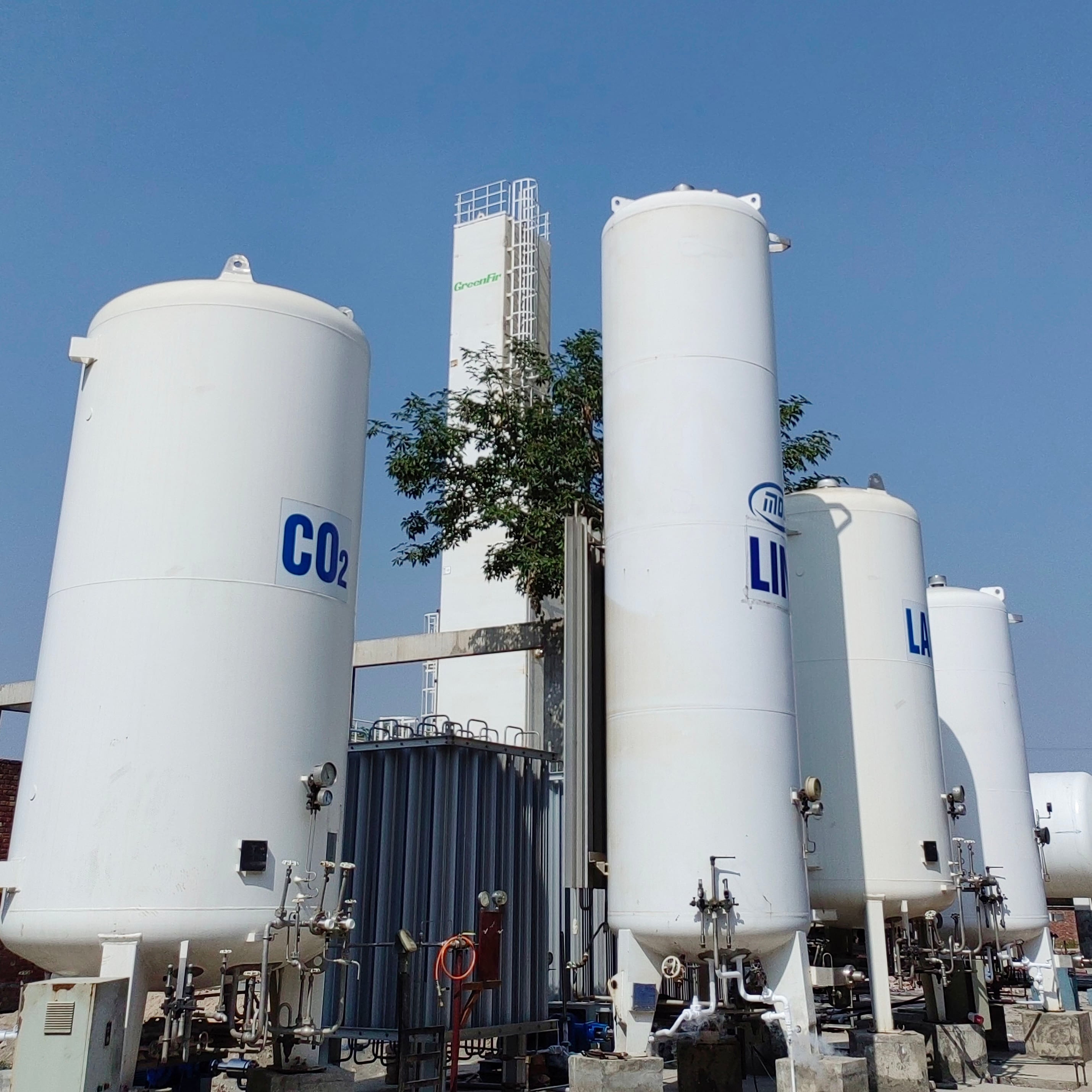
GreenFir operates exactly this model, with an in-house design center and manufacturing facility spanning 27,000 square meters. The firm holds ASME U-Stamp certification and maintains ISO 9001, ISO 14001, and ISO 45001 management systems, enabling direct control over quality from engineering through fabrication. For project owners evaluating EPC partners, that kind of vertical integration reduces risk in ways that no amount of contract language can replicate.
Table of Contents
- The Stakes Have Never Been Higher
- Track Record Is Not a Resume
- The Certification Check That Separates Pretenders from Contenders
- The Governance Gap: Why Low Bids Turn into High Costs
- The Real-World Test: A Mid-Sized LNG Project in Southeast Asia
- The Numbers That Actually Matter in Contractor Evaluation
- The Hidden Value of Manufacturing Integration