 EN
EN

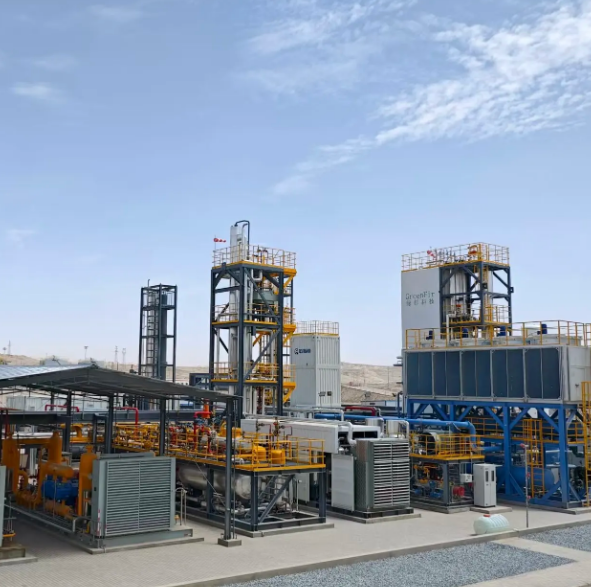
The Cold That Keeps Getting Wasted
Liquefied natural gas arrives at import terminals at around -162°C. That is a tremendous amount of refrigeration capacity—cold energy that took significant compression work to create in the first place. Yet the vast majority of LNG terminals simply vaporize the liquid using seawater or ambient air heaters, dumping that cold straight into the environment. It is not uncommon to see facilities treating this energy as nothing more than a byproduct to be disposed of, when in fact it represents one of the most underutilized energy streams in the entire industrial gas sector.
The numbers tell a stark story. A typical large-scale LNG receiving terminal processing several million tonnes per year releases cold energy equivalent to tens of megawatts of power generation capacity. That energy did not come cheap—liquefaction consumes roughly 8% to 10% of the natural gas feed as parasitic load. Letting that cold simply dissipate is, from an exergy perspective, leaving money on the table.
What Makes LNG Cold Energy So Valuable
Cryogenic temperatures are expensive to produce. Air separation, ethylene production, cold storage, and even data center cooling all require refrigeration at various temperature levels. LNG regasification offers a ready-made cryogenic sink that can serve these processes directly.
The temperature profile matters. As LNG warms from -162°C to ambient, it can support multiple cascading applications across different temperature bands. The deepest cold—below -100°C—is ideal for cryogenic air separation, where oxygen, nitrogen, and argon are produced as liquids. Intermediate temperatures around -50°C to -80°C can drive organic Rankine cycles for power generation or support cold storage facilities. Warmer recovery near 0°C works for building air conditioning or industrial process cooling.
The technical challenge lies in matching the temperature glide of the regasification process with the thermal requirements of the downstream application. Heat exchangers must handle two-phase flow, significant temperature differences, and the potential for freezing of moisture or CO₂ from the air side. These are not trivial engineering problems, but they are well understood and solvable with proper design.
Where Cold Recovery Actually Works in Practice
Air separation has emerged as the most commercially compelling application for LNG cold recovery. The temperature requirements align beautifully—cryogenic ASUs operate right in the temperature range where LNG releases the bulk of its cold energy. Studies have demonstrated that integrating an LNG regasification train with a cryogenic ASU can achieve an overall exergetic efficiency exceeding 90%. The specific energy consumption in such integrated configurations has been reported at roughly 0.022 kWh per kilogram of air processed—a figure that compares favorably with standalone ASU operations.
Recent project developments reflect growing commercial interest. A significant LNG cold-energy air separation project recently broke ground at a major receiving terminal in eastern China, with a daily liquid production capacity of approximately 660 tonnes. The plant integrates the LNG vaporization system directly with the air separation cold box, using the regasification cold to liquefy oxygen, nitrogen, and argon without additional refrigeration compression. The capital investment for such integration runs into hundreds of millions of RMB, but the operating cost advantage over conventional ASUs is substantial.
Beyond air separation, cold recovery has found traction in power generation. Organic Rankine cycle systems using suitable working fluids can convert low-grade cold into electricity. One cascade utilization project recently reported an annual power generation of 26 million kWh from LNG cold energy alone. The economics depend heavily on electricity pricing and the availability of a heat source for the ORC bottoming cycle, but in the right contexts, these systems pay back within reasonable timeframes.
The Operational Reality Check
Any honest discussion of LNG cold recovery has to acknowledge the practical constraints. Not every terminal is suitable. The economics only work when there is a consistent, baseload demand for the cold—air separation plants cannot cycle on and off with LNG sendout fluctuations. Terminals that operate as peaking facilities, with highly variable regasification rates, present significant integration challenges.
There are also technical limits to how much cold can be practically recovered. Heat exchanger fouling, particularly on the air side where moisture can freeze out, requires careful process control. The pressure drop through the cold recovery train adds to the LNG pump work. And the integration itself introduces complexity to the terminal operations—something operators are understandably cautious about.
| Aspect | Standalone ASU | LNG-Integrated ASU |
|---|---|---|
| Refrigeration source | Mechanical compressors | LNG regasification cold |
| Power consumption per ton liquid | Higher | Lower by a meaningful margin |
| System complexity | Conventional | Higher integration requirements |
| Site constraints | Flexible siting | Must be co-located with LNG terminal |
| Operational flexibility | Independent | Tied to LNG sendout schedule |
The table above captures the fundamental trade-off. Integration delivers genuine operating cost advantages but at the cost of siting flexibility and operational independence. For terminals with stable, predictable sendout profiles—often those serving large industrial or utility baseload customers—the case is compelling. For peaking terminals, less so.
A Field Case Worth Examining
A project in Southeast Asia illustrates both the promise and the pitfalls. The terminal in question had a relatively steady sendout of around 30 million standard cubic feet per day, serving a cluster of industrial customers. The project team evaluated multiple cold recovery pathways and ultimately settled on a two-stage approach: deep cold to an adjacent ASU for liquid oxygen and nitrogen production, and intermediate cold to a district cooling system serving nearby commercial buildings.
The ASU integration worked as designed, delivering liquid products with purity specifications meeting industrial standards. The district cooling portion, however, encountered issues. The temperature glide of the LNG regasification did not match the cooling load profile as closely as the initial models predicted. The project required additional buffer storage and a secondary refrigerant loop to smooth out the mismatches. The lesson was straightforward: cold recovery looks excellent on a heat balance diagram, but the devil is in the dynamic matching of supply and demand.
Where the Industry Is Headed
The regulatory environment is shifting in favor of cold recovery. Carbon pricing mechanisms and energy efficiency mandates are making waste heat and cold recovery more attractive from a compliance perspective. The International Energy Agency has highlighted the role of efficiency measures across the LNG value chain in reducing overall emissions intensity. Cold recovery does not directly reduce CO₂ emissions at the combustion stack, but it displaces electrical consumption that would otherwise come from the grid—and in many regions, that grid power is still fossil-fuel based.
Equipment manufacturers have responded with more standardized offerings. Skid-mounted cold recovery units with pre-engineered heat exchanger trains and control systems are increasingly available, reducing the engineering burden on terminal operators. The technology is moving from custom-engineered solutions toward more modular, repeatable designs.
One area worth watching is the integration of cold recovery with carbon capture. Some recent proposals have combined LNG cold energy utilization with the Allam cycle—a oxy-fuel combustion process that produces a pure CO₂ stream amenable to sequestration. The cold from LNG regasification can support the air separation for oxygen production and also assist in CO₂ liquefaction for transport. The synergies are real, though the systems are complex and capital-intensive.
For operators evaluating cold recovery, the starting point should be a honest assessment of the sendout profile, the local energy market, and the availability of suitable off-takers for the cold. Not every site will pencil out. But for those that do, the operating cost advantages and the environmental benefits make a strong case.
Companies like GreenFir have built a track record in delivering cryogenic process equipment that supports these integration strategies. With ASME and CE certifications and a global project portfolio spanning multiple continents, the manufacturing capability and quality control systems exist to support the next wave of cold recovery installations. The engineering know-how is there; the question is whether project economics and regulatory pressure will converge to drive broader adoption.