 EN
EN

The Trace Elements That Command Premium Prices
Krypton and xenon are not exactly household names. But in certain corners of industry, they command prices that make gold look almost pedestrian. The reason is simple: they are extraordinarily scarce in the atmosphere. Krypton sits at about 1.1 parts per million in ambient air. Xenon is even rarer at 0.086 parts per million. To put that in perspective, processing a million cubic meters of air yields only about a cubic meter of krypton and a fraction of that in xenon.
Yet these gases are indispensable. Krypton fills energy-efficient windows, provides the inert atmosphere for certain specialized lighting, and finds use in high-performance insulation. Xenon is the propellant of choice for ion thrusters in satellite propulsion, the working gas in excimer lasers for semiconductor manufacturing, and the detection medium in dark matter experiments where purity requirements border on the absurd.
Recovering these trace components from air is not optional—it is economically necessary because their value justifies the complexity. But the recovery process itself is one of the most demanding cryogenic distillation operations in existence.
Why Ordinary Distillation Won't Work
The fundamental challenge is concentration. Ambient air is mostly nitrogen and oxygen, with argon as the next most abundant minor component. Krypton and xenon are so dilute that they do not even register in the main distillation columns of a conventional air separation unit. They simply follow the oxygen stream, accumulating in the liquid oxygen bottoms.
To recover them, the process must start with a liquid oxygen stream drawn from the main ASU. This stream contains the krypton and xenon in enriched concentrations—still tiny, but at least measurable. The extraction cold box then removes atmospheric contaminants like nitrous oxide and hydrocarbons that would otherwise cause problems downstream.
The distillation itself happens in multiple stages. The first set of columns enriches the rare gases from parts-per-million levels up to a raw concentrate. This crude mixture typically contains a few percent of krypton and xenon combined, along with oxygen and other carryover. From there, an upgrader section performs the final purification.
The difficulty lies in the relative volatility of these components. Krypton and xenon have boiling points close to oxygen, which means separation requires many theoretical stages and high reflux ratios. The columns are tall, the pressure drops are carefully managed, and the temperature control must be precise. This is not a forgiving process.
The Column Configuration That Does the Job
A typical rare gas recovery train consists of multiple distillation columns arranged in series. The pre-concentration columns operate at moderate pressure and handle the bulk of the enrichment. The feed—liquid oxygen from the ASU—enters the first column, where oxygen and lighter components are stripped overhead while krypton and xenon concentrate in the bottom.
From the pre-concentrator, the bottoms stream moves to a krypton/xenon column where the two rare gases are separated from each other. This is where the process gets particularly tricky because krypton and xenon have different volatilities, but the separation factor is not large. The column must operate with high efficiency and tight temperature control.
The final stage is the purification column, which removes residual oxygen and any hydrocarbon traces. The product leaving this column can achieve purities above 98% for the combined rare gas stream, typically breaking down to roughly 91% krypton, 7% xenon, and the balance oxygen. From there, the gases are compressed into cylinders for final isolation and packaging.
The entire train operates inside a cold box filled with insulating material—perlite or similar—to minimize heat leak. All the valves, piping, and instrumentation must be rated for cryogenic service. The mechanical design must account for thermal contraction, differential expansion, and the fact that any significant heat leak will degrade separation performance.
Where the Economics Actually Pencil Out
Not every ASU is a candidate for rare gas recovery. The economics only work at scale. Industry sources suggest that an ASU processing more than 3,000 to 4,000 tonnes per day is the threshold where recovery becomes economically attractive. Below that, the capital cost of the recovery train and the ongoing operating expenses simply cannot be justified by the product value.
The reasoning is straightforward. The recovery equipment adds significantly to the ASU capital cost—the columns, the cold box, the instrumentation, the specialized control systems. It also increases the parasitic load on the main ASU, because the rare gas extraction draws liquid oxygen that would otherwise be product, and the refrigeration required for the distillation columns adds to the overall energy consumption.
For large ASUs serving mega-scale industrial complexes, however, the math changes. The incremental capital cost is spread over a much larger product base, and the rare gas revenue stream provides a meaningful boost to the overall project economics. Some operators view the rare gas recovery train as a separate business unit within the larger ASU operation—and in some cases, the rare gas revenue can significantly improve the overall return on investment.
A Real-World Installation Worth Studying
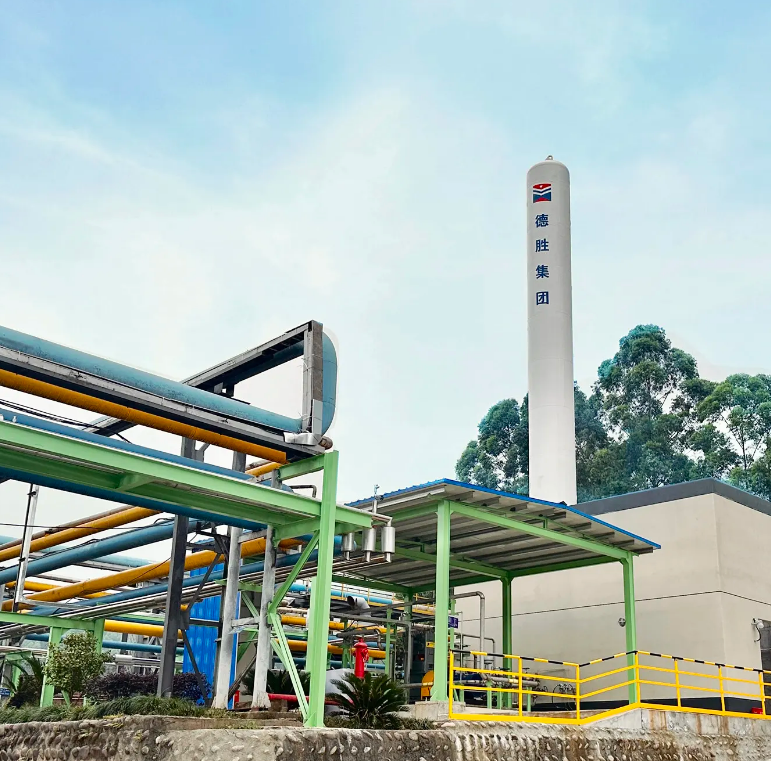
A facility in East Asia provides a useful case study. The host ASU processes roughly 4,000 tonnes of air per day, supplying oxygen and nitrogen to a steelmaking complex and a chemicals park. The rare gas recovery train was added as a second-phase investment after the main ASU had been operating for several years.
The installation faced several challenges. The feed oxygen stream to the recovery train had to be withdrawn from a specific point in the ASU cold box, which required a planned shutdown and modifications to the existing piping. The new cold box was erected adjacent to the existing structure, but the integration of controls and interlocks required careful coordination between the recovery train vendor and the ASU operating team.
The recovery train itself uses a three-column configuration: a pre-concentrator, a krypton/xenon splitter, and a final purifier. The system operates continuously, with product purity sampled regularly to ensure specifications are met. The operators report that the main operational challenge is managing the hydrocarbon content in the feed—if the upstream ASU's CO₂ and N₂O removal systems are not performing perfectly, the recovery train's purifier can be overwhelmed.
The facility now produces krypton and xenon at commercial-grade purities, with the product sold into the specialty gas market. The payback period on the recovery train investment was reported to be within the range that justified the decision, though the operator acknowledges that the project would not have been viable at a smaller scale.
Limitations That Matter
There are constraints that any realistic assessment must acknowledge. The feed composition matters—if the ambient air contains unusual levels of hydrocarbons or other trace contaminants, the purification burden increases. The recovery efficiency is not 100%; some rare gas is inevitably lost in the various column bottoms and overhead streams.
| Aspect | Large ASU (4,000 tpd) | Medium ASU (2,000-4,000 tpd) |
|---|---|---|
| Rare gas recovery economics | Generally attractive | Marginal at best |
| Capital intensity | High but spread over large base | High relative to product value |
| Operational complexity | Significant | Significant |
| Payback period | Typically acceptable | Often too long |
| Technical risk | Manageable with good design | Higher due to scale constraints |
The product purity requirements also matter. Some applications demand ultra-high purity levels—dark matter detection, for instance, requires krypton concentrations in xenon below 10⁻¹² mol/mol. Achieving that level of purity requires additional processing steps beyond the standard recovery train, adding cost and complexity.
There is also the question of market access. Rare gases are not commodity products; they are sold through specialized supply chains with long-term contracts and stringent quality specifications. A facility that produces rare gases but lacks the commercial infrastructure to sell them may find itself holding inventory rather than generating revenue.
The Technology Trajectory
The fundamental distillation technology for rare gas recovery has been stable for decades. The columns, the thermodynamics, the separation principles—these are well understood and not changing dramatically. What is evolving is the integration and optimization.
Modern control systems allow much tighter temperature and pressure control than was possible even a decade ago. Advanced sensors provide real-time composition data that enables feedforward control strategies. The result is improved recovery efficiency and more consistent product quality.
There is also movement toward modular, skid-mounted designs that reduce site installation time and simplify the integration with the host ASU. Factory testing and pre-commissioning can identify issues before the equipment arrives on site, reducing the risk and duration of shutdowns.
The economic drivers remain strong. Specialty gas demand is growing across multiple sectors—semiconductors, aerospace, healthcare, and research. The supply of rare gases from traditional sources is constrained, which supports pricing. For operators of large ASUs, adding rare gas recovery is becoming an increasingly standard part of the project scope.
GreenFir has supplied cryogenic distillation equipment for rare gas applications across multiple projects, with fabrication capabilities that meet ASME and CE standards and a track record of delivering to demanding schedules. The engineering and manufacturing infrastructure exists to support these specialized columns; the question for any project is whether the scale and market conditions justify the investment.