 EN
EN

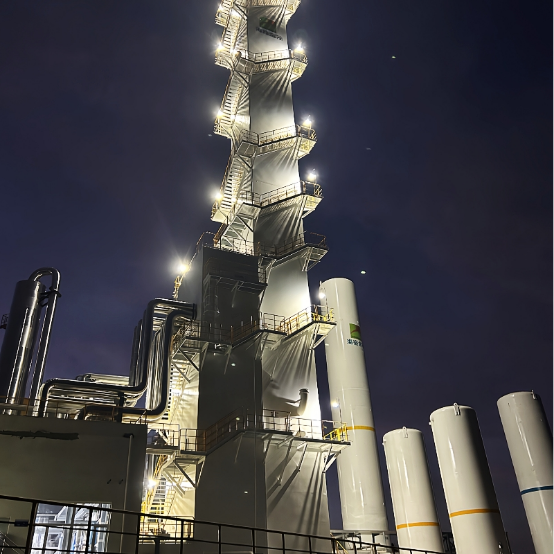
How Cryogenic Air Separation Units Work: A Step-by-Step Process Flow
Air Compression and Purification: Removing CO₂, Moisture, and Hydrocarbons
Air from the surrounding environment gets drawn into these multi stage compressors where it's compressed up to around 0.6 to 0.8 MPa pressure levels. After compression, the air moves through what are called molecular sieve beds. These special materials grab onto things like carbon dioxide, moisture, and various hydrocarbons. Getting rid of these contaminants is really important because otherwise we'd get ice buildup and corrosion problems later on in those cold parts of the system. Most modern air separation units actually employ something called temperature swing adsorption technology. The setup typically includes two towers working together. While one tower is busy cleaning the air, the second one is being regenerated either by blowing waste nitrogen through it or heating the material to release trapped impurities.
Deep Cooling and Liquefaction via Expansion Turbines and Joule–Thomson Effect
Purified and compressed air gets cooled down first in those big heat exchangers by running it through cold product streams coming back from elsewhere in the system. Temperatures drop to around minus 175 degrees Celsius after this step. The actual liquefaction happens mainly inside turboexpanders these are pretty efficient machines where gas expands quickly, turning pressure energy into mechanical work at the same time as cooling things down thanks to what's called the Joule-Thomson effect. Nitrogen boils at about minus 196 degrees while oxygen boils at minus 183, so their different boiling points help separate them out into phases before we even get to the distillation stage.
Cryogenic Distillation in the Linde Double Column: Separating Oxygen, Nitrogen, and Argon Streams
When liquefied air moves into what's known as a dual-column distillation setup, it marks one of the key components in today's air separation units. Inside the high pressure column operating around 5 to 6 bar pressure levels, nitrogen tends to rise up as vapor while the oxygen rich liquid makes its way down. This liquid then gets released into the lower pressure column at approximately 1.2 to 1.3 bar where the actual separation happens through carefully controlled reflux conditions. Argon stands out because it boils at around minus 186 degrees Celsius, so it naturally accumulates in a special section positioned between these two columns. The whole process running continuously produces oxygen that's about 99.5 percent pure and nitrogen reaching purity levels of nearly 99.999 percent. These standards meet requirements set by ISO 8573-1 and have become standard practice in various industries including healthcare facilities, metal processing plants, and semiconductor manufacturing operations.
Key Equipment in Modern Air Separation Units: Cold Box and Heat Integration
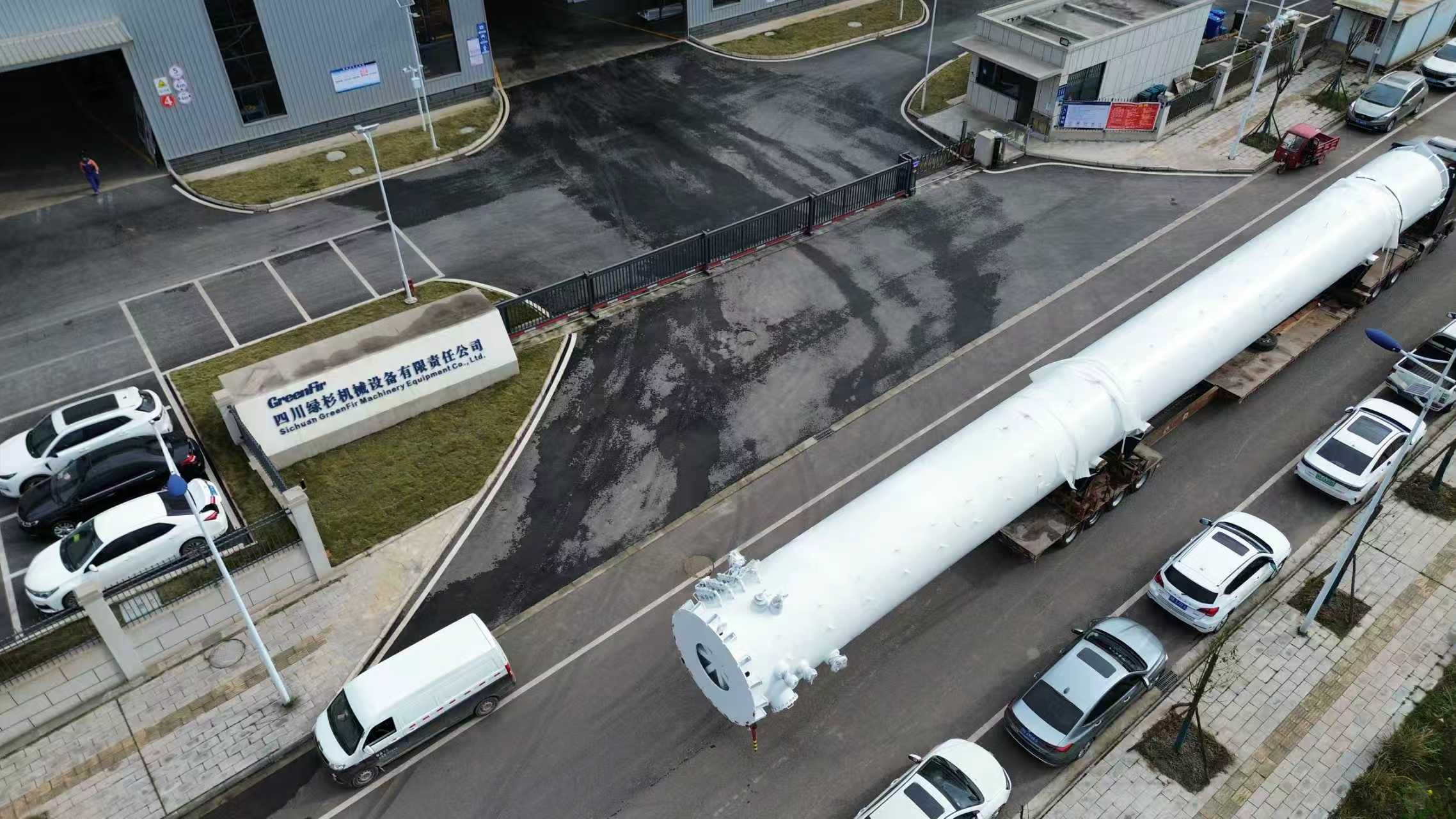
Cold Box Design: Compact Integration of Columns, Heat Exchangers, and Piping
At the core of an air separation unit sits what we call the cold box, basically a heavily insulated chamber that holds everything together inside one big vacuum jacket. Inside this space, distillation towers stand alongside those specialized brazed aluminum heat exchangers and all sorts of cryogenic pipes running through. The whole setup is pretty clever actually. Because everything's packed so tightly together, there's much less chance of unwanted heat getting in, which matters a lot when temperatures drop below minus 180 degrees Celsius. Maintenance teams love this design too since fixing things takes about 30% less time compared to older systems where components were spread out everywhere. Made primarily from tough stainless steel mixed with some aluminum alloys, these boxes handle expansion and contraction differences naturally. Most importantly, they keep oxygen, nitrogen, and argon streams separate throughout the entire process, ensuring nothing gets mixed up and operations stay reliable year after year.
Main Heat Exchanger Networks and Energy Recovery Strategies
Today's air separation units depend heavily on sophisticated heat exchange systems that capture valuable refrigeration from waste nitrogen and cold product streams. The counter current flow design works pretty cleverly too it cools down the incoming air stream at the same time it warms up what's going out, getting those temperature differences down to around 3 degrees Celsius. This impressive feat is mainly thanks to these new generation brazed aluminum exchangers that have come along recently. Looking at real world performance, these modern setups typically slash overall energy use somewhere between 40 to 50 percent when compared with older models. For big industrial operations running multiple shifts a day, this translates into savings of roughly $2.8 million each year on operating costs alone, based on figures collected through the US Department of Energy's Industrial Technologies initiative back in 2022.
Why Cryogenics? Boiling Point Differences Enable High-Purity Gas Production
Cryogenic air separation is still basically the only way industry gets those super pure gases like oxygen, nitrogen, and argon at scale. The process works because these gases have different boiling points, which allows manufacturers to separate them out pretty cleanly with purities often going above 99.5%. Standards bodies like ASTM and ISO back this up with their D1946 and 8573-1 specifications. When we look at actual numbers, nitrogen boils at around -196 degrees Celsius, argon at about -186, and oxygen hits the boil point at roughly -183. These tiny temperature differences matter a lot in practice, since they determine how each gas separates during the liquefaction process followed by fractional distillation. Want to see exactly why this works? Check out the table that follows for all the important thermodynamic details behind this selective separation technique.
| Gas | Boiling Point | Expansion Ratio (Liquid–Gas) |
|---|---|---|
| Nitrogen | -196°C | 710x |
| Oxygen | -183°C | 875x |
| Argon | -186°C | 860x |
This dramatic volume reduction 710–875 also enables efficient storage and transport of liquefied gases, making cryogenics indispensable for sectors requiring consistent, high-specification supply, including semiconductor manufacturing, aerospace, and hospital oxygen systems.
FAQ Section
What is cryogenic air separation?
Cryogenic air separation is a process used to produce high-purity gases like oxygen, nitrogen, and argon by exploiting differences in their boiling points and separating them through liquefaction and distillation.
How does the cold box design benefit air separation units?
The cold box design offers benefits such as compact integration of equipment, reducing heat leakage, and simplifying maintenance, which improves reliability and efficiency.
Why are different boiling points important in cryogenic air separation?
Different boiling points allow gases to be separated effectively during the liquefaction process, leading to high-purity production.
What are the main applications of cryogenic air separation units?
These units are crucial for industries such as semiconductor manufacturing, aerospace, and healthcare, where consistent supply of high-purity gases is essential.