 EN
EN

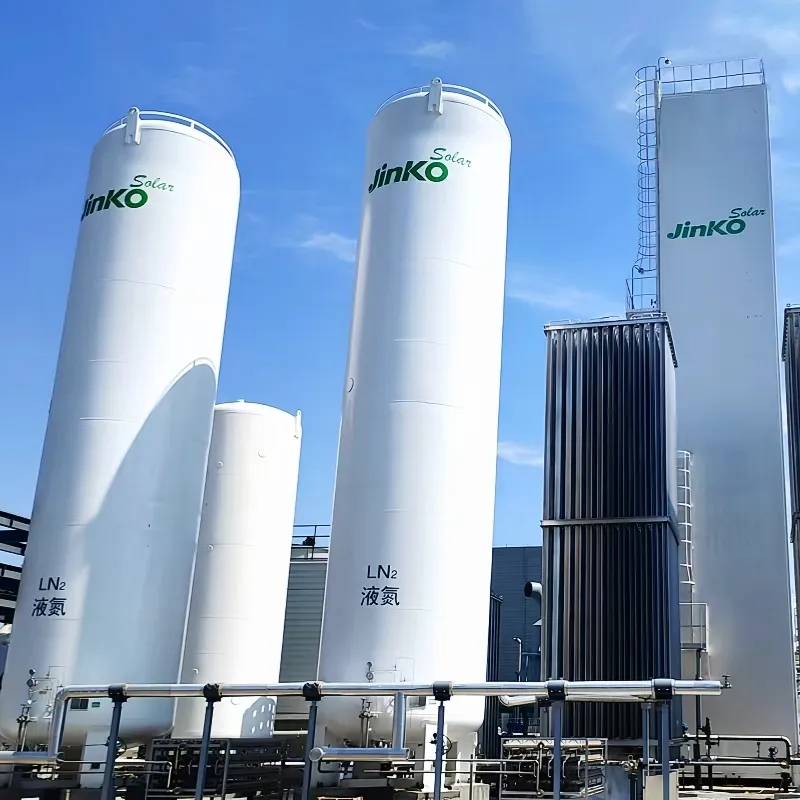
Thermodynamic Foundations and Inherent Energy Limits
The Carnot–Pinch bottleneck in cryogenic distillation technology
Cryogenic distillation faces fundamental thermodynamic barriers that define its minimum energy consumption. The Carnot efficiency limit governs all heat-driven separation processes, establishing an unbreakable ceiling on work recovery—no equipment redesign can surpass it. In air separation units (ASUs), this constraint is especially acute: refrigeration cycles must bridge extreme temperature spans, from ambient intake to below –196°C. Simultaneously, pinch analysis reveals unavoidable temperature crossovers in heat exchanger networks—points where hot and cold streams cannot exchange heat without violating the minimum approach temperature (ΔTmin). Together, the Carnot boundary and pinch constraints create an irreducible energy floor. For large-scale oxygen production, this theoretical minimum accounts for over 40% of total energy input—meaning even best-in-class ASUs operate well above the thermodynamic ideal. Optimization efforts must therefore focus on approaching, not exceeding, these immutable limits.
Phase equilibrium constraints at low temperatures and their impact on separation work
At cryogenic temperatures, vapor-liquid equilibrium (VLE) behavior imposes steep energy penalties. As temperature drops toward component boiling points, relative volatility between nitrogen and oxygen narrows dramatically—from ~1.4 at ambient conditions to just 1.08 at –180°C. This convergence exponentially increases the minimum reflux ratio required for effective separation, demanding taller columns with more theoretical stages and significantly higher reboiler duty per unit of product. Non-ideal mixing effects also intensify, inducing azeotropic-like behavior that necessitates specialized column configurations (e.g., side reboilers or intermediate recondensers). These phase equilibrium constraints compound the Carnot–Pinch limitations, making cryogenic distillation inherently more energy-intensive than ambient-temperature separations. Designing efficient distillation cascades for industrial gas production requires explicit accounting for these low-temperature thermodynamic realities.
Heat Integration Strategies for Maximum Cold Stream Recovery
Multi-stream heat exchangers and pinch-based cold stream utilization
The largest single opportunity for energy savings in cryogenic distillation lies in recovering cold energy otherwise lost to ambient discharge. Multi-stream plate-fin heat exchangers integrate multiple hot and cold process streams into a single compact unit—reducing thermal losses, shell count, and pressure drop compared to conventional shell-and-tube designs. Pinch analysis identifies the system’s limiting ΔTmin, enabling engineers to match hot and cold streams with precision across the network. When applied rigorously, this method captures up to 30% of the refrigeration load that would otherwise be discarded. The result is lower compressor duty in ASUs, reduced electrical consumption, and stable product purity—all without capital-intensive upgrades. A well-executed pinch study ensures every usable degree of cold is exploited before reaching the final waste stream.
Avoiding exergy destruction: When over-integration undermines cryogenic distillation technology efficiency
Over-integration—pushing heat recovery beyond the thermodynamically optimal point—can backfire. Excessive coupling of streams reduces operational flexibility, amplifying sensitivity to feed composition shifts, ambient temperature swings, or flow disturbances. This rigidity leads to increased exergy destruction: irreversible losses that raise net energy demand. In cryogenic systems, over-integration also raises the risk of temperature crossovers, forcing supplemental refrigeration to maintain separation integrity. The optimal design balances recovery and resilience—capturing maximum cold while preserving sufficient margin to absorb transient upsets. Engineers achieve this by mapping exergy flows, conducting parametric sensitivity studies, and validating designs against real-world operating envelopes. Such discipline maintains high thermodynamic performance without sacrificing reliability.
Compression, Expansion, and Refrigeration Optimization in Air Separation
The compression train consumes the majority of an air separation unit’s (ASU) electrical power—making its optimization the highest-leverage energy-efficiency opportunity. Main air compressors and refrigeration boosters often run at fixed pressure setpoints, missing significant savings. By dynamically optimizing key decision variables—such as compressor outlet pressure, interstage cooling levels, and mass flow distribution—engineers can reduce specific power consumption by 5–8%. This is achieved by aligning compression work precisely with real-time refrigeration demand, eliminating wasteful over-compression followed by throttling. These principles are well established in natural gas liquefaction; they transfer directly to ASUs, where fine-tuning expander inlet pressure and refrigerant condensation/evaporation pressures delivers measurable gains without compromising purity.
Hardware-level improvements further unlock efficiency. Conventional Joule–Thomson valves dissipate pressure energy as heat through irreversible throttling. Replacing them with two-phase or liquid expanders recovers a portion of that exergy as shaft work—reducing net compression load. Field retrofits show energy reductions of 3–6%. Similarly, integrating multi-level precooling—inspired by propane-precooled mixed-refrigerant (C3/MR) liquefaction cycles—lowers main compressor discharge temperature and power draw. These mechanical upgrades deliver maximum value when paired with digital control: model predictive control (MPC) adjusts refrigerant composition, flow rates, and pressure setpoints in real time, keeping operation consistently near thermodynamic equilibrium and minimizing exergy destruction. For plants targeting peak efficiency, combining compressor setpoint optimization with expander retrofit remains among the most cost-effective strategies available.
Digital Optimization: Advanced Control for Real-Time Energy Efficiency
Real-time digital control transforms energy management in cryogenic distillation—shifting from reactive correction to proactive, physics-informed adjustment. By continuously monitoring temperature, pressure, flow, and composition, advanced control systems detect deviations within seconds and compute optimal responses without human delay. This responsiveness reduces energy waste, tightens product specifications, and improves long-term equipment reliability.
Model predictive control of reflux, pressure, and temperature profiles in cryogenic distillation technology
Model predictive control (MPC) uses first-principles or data-driven dynamic models of the distillation column to forecast behavior and prescribe coordinated adjustments. In cryogenic distillation, MPC simultaneously regulates reflux rate, column pressure, and tray temperature profiles to sustain product purity while minimizing reboiler duty and compressor load. For instance, when feed nitrogen concentration rises unexpectedly, MPC recalculates optimal reflux in under five seconds—preventing energy-intensive over-purification. Field deployments demonstrate 5–10% reductions in specific energy consumption versus conventional PID control. Its core advantage lies in handling the strong, nonlinear interactions inherent in low-temperature separations—maintaining stability near thermodynamic limits without oscillation or overshoot. The outcome is consistent, efficient operation that sustains separation fidelity while cutting unnecessary heating and cooling cycles.
FAQ
What is the Carnot–Pinch bottleneck in cryogenic distillation?
The Carnot–Pinch bottleneck refers to the fundamental thermodynamic limitations in cryogenic distillation, governed by the Carnot efficiency limit and pinch analysis. These constraints set a minimum energy consumption threshold and prevent processes from exceeding thermodynamic efficiency ideals.
Why is cryogenic distillation energy-intensive?
Cryogenic distillation is energy-intensive due to low-temperature vapor-liquid equilibrium (VLE) constraints, which demand taller distillation columns, more theoretical stages, and higher reboiler duties. Additionally, non-ideal mixing effects and azeotropic-like behavior further increase energy requirements.
How does heat integration reduce energy losses in cryogenic distillation?
Heat integration involves using multi-stream heat exchangers and pinch analysis to recover cold energy that would otherwise be wasted. This approach improves thermal efficiency, reducing compressor duty and electrical consumption with minimal capital upgrades.
What risks are associated with over-integration in cryogenic systems?
Over-integration can reduce operational flexibility, amplify exergy destruction, and increase sensitivity to external conditions, leading to inefficiencies and higher energy demands. Proper balance is essential to maintain both recovery and system resilience.
How can digital control improve energy efficiency in cryogenic distillation?
Advanced digital control, like Model Predictive Control (MPC), continuously monitors and optimizes distillation operations in real-time. By regulating variables such as reflux rate, pressure, and tray temperatures, MPC minimizes energy waste, enhances reliability, and ensures stable product quality.
Table of Contents
- Thermodynamic Foundations and Inherent Energy Limits
- Heat Integration Strategies for Maximum Cold Stream Recovery
- Compression, Expansion, and Refrigeration Optimization in Air Separation
- Digital Optimization: Advanced Control for Real-Time Energy Efficiency
-
FAQ
- What is the Carnot–Pinch bottleneck in cryogenic distillation?
- Why is cryogenic distillation energy-intensive?
- How does heat integration reduce energy losses in cryogenic distillation?
- What risks are associated with over-integration in cryogenic systems?
- How can digital control improve energy efficiency in cryogenic distillation?