 EN
EN

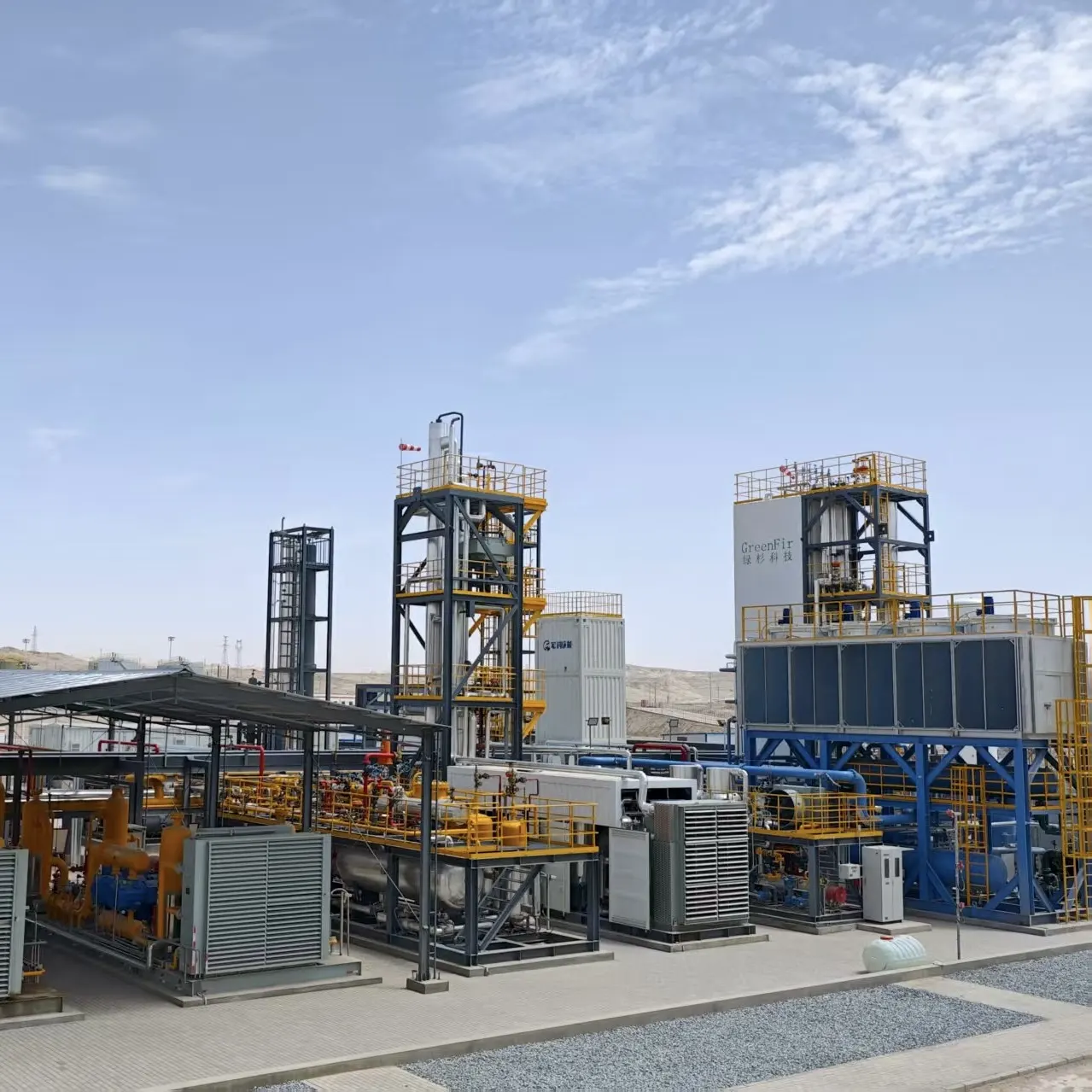
Essential CNG/LNG Equipment for Dual-Fuel Fueling Stations
Cryogenic Pumps, Vaporizers, and Dispensers: Function and Performance Specifications
Cryogenic pumps form the backbone of LNG transfer in dual-fuel stations, maintaining temperatures below −162°C while delivering consistent flow rates—often exceeding 50 L/min at pressures up to 350 bar. Vaporizers then convert LNG into gaseous fuel for CNG-compatible applications, using ambient air or heated water to achieve vaporization capacities ranging from 500 to 5,000 kg/h based on station demand. Island-mounted dispensers must safely handle both liquid and gaseous fuels, integrating mass flow meters with ±0.5% accuracy and automatic shutoff valves to prevent overfilling. All components must operate reliably across ambient extremes of −40°C to +50°C. To withstand daily thermal cycling and avoid brittle fracture, manufacturers specify austenitic stainless steels and other cryogenically qualified materials per ASTM A312 and ISO 21028 standards.
System Integration Requirements for Seamless CNG/LNG Equipment Coexistence
Dual-fuel stations require unified control of two thermodynamically distinct fuel paths. A programmable logic controller (PLC) serves as the central integration hub—orchestrating pump start-up sequences, vaporizer activation, and dispenser selection without disrupting concurrent CNG and LNG transactions. Piping layouts must physically separate cryogenic liquid and high-pressure gas circuits to eliminate cross-contamination risk. The emergency shutdown (ESD) system must detect leaks in either circuit and isolate both phases within seconds. All equipment shares a common electrical ground and complies with hazardous-area classification standards (e.g., NEC Class I, Division 1). Successful integration hinges on open-protocol interoperability—Modbus RTU or TCP/IP is preferred—to enable centralized remote monitoring of temperature, pressure, and flow from a single dashboard.
Vacuum-Insulated Piping: Ensuring Thermal Efficiency in LNG Transfer
Material Standards, Insulation Design, and Regulatory Compliance (ISO 21028, EN 13480)
Double-walled vacuum-insulated piping minimizes heat ingress via a high-vacuum annulus between the inner process tube and outer jacket, achieving effective thermal conductivity of just 0.001–0.005 W/m·K—up to ten times more efficient than foam- or perlite-insulated alternatives. ISO 21028 governs design and testing for cryogenic service down to −196°C, while EN 13480 addresses mechanical integrity, pressure containment, and fatigue resistance for industrial piping systems. Seamless austenitic stainless-steel tubing per ASTM A312 ensures corrosion resistance and structural reliability under repeated thermal cycling. Advanced insulation design includes multi-layer radiation shields (MLI) and non-evaporable getter materials to preserve vacuum quality over decades of operation.
Real-World Heat Leak Metrics and Impact on Overall System Efficiency
A well-maintained vacuum-insulated LNG line exhibits heat leak rates of 8–12 W/m at ambient conditions—less than half the 30–50 W/m typical of vacuum-jacketed foam systems. Over a 100-meter run, this difference reduces thermal load by ~2–3 kW, directly lowering boil-off gas (BOG) generation. In dual-fuel infrastructure, every 1% reduction in BOG improves overall station efficiency by approximately 0.5%, deferring reliquefaction energy costs and extending hold-time for stored LNG. Routine vacuum integrity verification—using thermal imaging and pressure decay testing—ensures sustained performance and supports long-term safety and operational reliability.
Safety-Critical Design and Operational Protocols for CNG/LNG Equipment
Mitigating BLEVE and Overpressure Risks Through Redundant Relief and Monitoring
Boiling Liquid Expanding Vapor Explosion (BLEVE) remains a critical hazard in LNG handling. Industry best practice mandates redundant pressure relief systems—including primary and secondary relief valves with independent triggering mechanisms—designed and certified per ASME BPVC Section VIII, Div. 1. Continuous monitoring employs triple-redundant sensors tracking pressure differentials and thermal gradients, initiating automatic shutdown at 90% of maximum allowable working pressure. When combined with ultrasonic leak detection and thermal imaging, such layered safeguards reduce overpressure incident likelihood by 78%, according to NFPA 2023 guidance. This multi-barrier strategy prevents single-point failures from escalating during rapid phase transitions or fire exposure.
Balancing Automation Reliability with Human Oversight in Emergency Response
Automated emergency shutdown (ESD) systems deliver sub-2-second isolation of compromised sections upon detecting methane concentrations above threshold—but complex incidents require human validation. AI-powered diagnostics classify event severity (Level 1–4) in real time, while control room personnel confirm scope and context using synchronized visual feeds, sensor correlations, and historical trend analysis. Quarterly scenario-based drills—including simulated sensor degradation and weather-affected readings—maintain operator readiness; facilities using integrated simulation training report a 63% reduction in false-positive ESD activations, per U.S. DOT 2023 data. This balanced approach preserves automation’s speed and precision while anchoring decision-making in human judgment where ambiguity exists.
FAQ
What are the key components of dual-fuel fueling stations?
The key components include cryogenic pumps for LNG transfer, vaporizers to convert LNG to gaseous fuel, and dispensers for handling both liquid and gaseous fuels. All components are designed to operate in extreme temperature ranges and comply with strict material standards.
Why is vacuum-insulated piping important for LNG transfer?
Vacuum-insulated piping minimizes heat ingress, improving thermal efficiency and reducing boil-off gas (BOG). It ensures long-term reliability and significant energy cost savings compared to conventional insulation methods.
How can BLEVE and overpressure risks be mitigated?
These risks can be mitigated by implementing redundant pressure relief systems, triple-redundant sensors, and automatic shutdown mechanisms. Regular monitoring and adherence to ASME and NFPA standards further enhance safety.
What role does automation play in emergency response at these stations?
Automation provides rapid emergency shutdown capabilities, classifying incidents in real time. However, human oversight ensures accurate decision-making during complex situations, maintaining operational safety and reliability.
How does open-protocol interoperability benefit station operation?
Open-protocol interoperability, such as Modbus RTU or TCP/IP, enables centralized remote monitoring of all critical parameters like temperature, pressure, and flow from a single dashboard, facilitating seamless system integration.
Table of Contents
- Essential CNG/LNG Equipment for Dual-Fuel Fueling Stations
- Vacuum-Insulated Piping: Ensuring Thermal Efficiency in LNG Transfer
- Safety-Critical Design and Operational Protocols for CNG/LNG Equipment
-
FAQ
- What are the key components of dual-fuel fueling stations?
- Why is vacuum-insulated piping important for LNG transfer?
- How can BLEVE and overpressure risks be mitigated?
- What role does automation play in emergency response at these stations?
- How does open-protocol interoperability benefit station operation?