 EN
EN

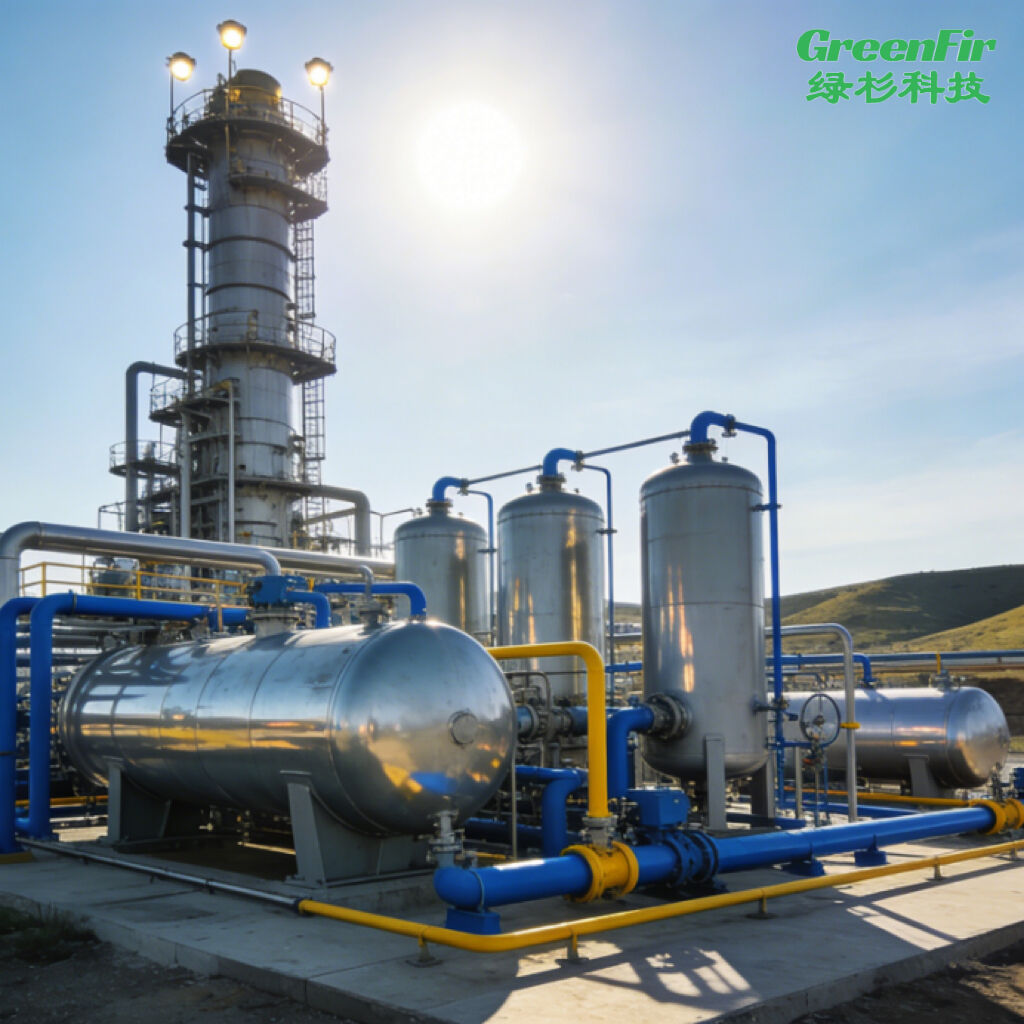
What Are Turnkey Gas Plant Solutions?
From concept to commissioning: The end-to-end scope of turnkey gas plant solutions
Turnkey gas plant solutions deliver complete operational readiness through integrated project management—from feasibility studies and detailed engineering to equipment procurement, construction, performance testing, and handover. Providers assume single-point accountability for regulatory compliance, safety protocols, and commissioning, eliminating interface gaps between phases. This ensures guaranteed performance metrics at startup and reduces execution risk for operators. By harmonizing gas sweetening, dehydration, compression, and NGL recovery systems within standardized, technology-agnostic designs, the model optimizes capital expenditure while ensuring interoperability across process units.
How modular design and prefabrication cut project timelines by 30–50%
Modularization accelerates deployment by shifting construction to controlled fabrication facilities. Pre-assembled, pre-tested process skids—including amine sweetening units, glycol dehydration towers, and compressor packages—undergo rigorous QA/QC before shipment. This enables parallel site preparation and off-site manufacturing, cutting installation labor by up to 60% versus stick-built approaches. Field data shows modular projects achieve mechanical completion an average of 47% faster (Energy Global, 2023), with weather-related delays reduced by 80%. Standardized safety features, integrated emissions controls, and functional pre-commissioning further de-risk field integration and shorten time-to-revenue.
Core Process Units in Turnkey Gas Plant Solutions
Sweetening, dehydration, NGL recovery, and compression: Interdependent functions driving reliability
Turnkey gas plant solutions integrate four core, sequential process units—sweetening, dehydration, NGL recovery, and compression—that collectively ensure gas purity, pipeline integrity, and commercial viability. Sweetening removes H₂S and CO₂ via amine absorption or membrane separation to prevent corrosion and meet sales gas specifications. Dehydration—typically using TEG absorption or molecular sieves—eliminates water vapor to avoid hydrate formation and equipment damage. NGL recovery extracts ethane, propane, and butanes via cryogenic turbo-expansion or lean-oil absorption, unlocking valuable co-products. Compression then boosts pressure to pipeline or export requirements. Because these units are interdependent—e.g., inadequate dehydration can freeze cryogenic trains, and excessive backpressure from undersized compressors strains upstream units—reliability hinges on integrated design. Optimized sequencing and parameter alignment (pressure, temperature, flow) reduce system-wide energy use by 12–18% and significantly lower unplanned downtime.
Equipment Selection and Integration for True Turnkey Readiness
Selecting the right equipment is fundamental to ensuring that turnkey gas plant solutions deliver on their promise of reliability and long-term performance. Every component must be sized and integrated with both current operational demands and future capacity in mind.
Sizing compressors, separators, and cryogenic units for scalability and future capacity expansion
Compressors must be selected for peak throughput and turndown flexibility—ensuring stable, efficient operation across variable demand cycles. Separators require sufficient retention time and liquid-handling capacity to protect downstream equipment from carryover. Cryogenic units—whether for NGL recovery or LNG prep—demand precise thermal-hydraulic modeling to maintain phase separation and cold box integrity. When each unit incorporates a built-in margin for future throughput growth, the plant avoids costly retrofits or forced shutdowns during expansion. Modular skid-based architecture supports this scalability: additional units can be bolted on with minimal disruption to ongoing operations.
Aero-derivative vs. heavy-duty turbines: Balancing efficiency, footprint, and operational resilience
The turbine selection directly shapes lifecycle performance. Aero-derivative turbines offer higher thermal efficiency (up to 42% LHV), rapid start-up (<5 minutes), and a compact footprint—ideal for remote or space-constrained sites requiring fast ramp-up. Heavy-duty turbines prioritize durability, fuel flexibility (tolerating lower-BTU or sour fuels), and simplified maintenance logistics—making them better suited for base-load, high-availability applications in harsh or isolated environments. For turnkey solutions, the optimal choice emerges from a holistic assessment of site conditions, fuel quality, expected operating hours, and long-term OPEX goals—not just upfront CAPEX.
Design Integration: Layout, Piping, and Turbine Packaging for Operational Excellence
Optimized plant layout: Reducing footprint while ensuring safety, accessibility, and regulatory compliance
Operational excellence begins with intelligent design integration—particularly in layout, piping, and turbine packaging. A purpose-built layout reduces overall footprint by 15–20% versus conventional configurations, improving safety through enhanced separation of hazardous zones, streamlined emergency egress, and improved line-of-sight monitoring. Shorter, optimized piping runs minimize pressure drop, reduce pumping energy, and lower leak potential. All critical piping complies with ASME B31.3 for stress analysis, support spacing, and material traceability—preventing vibration-induced fatigue and weld failures. Turbine packages integrate noise attenuation, exhaust treatment, and fire suppression directly into the skid, eliminating field modifications and ensuring immediate compliance with API RP 14C, OSHA 1910.119, and local environmental codes. The outcome is a plant engineered for reliability, safety, and accelerated commissioning—delivering lower total cost of ownership from first gas.
FAQ
What are turnkey gas plant solutions?
Turnkey gas plant solutions involve integrated project management that delivers a fully operational gas processing plant, addressing design, construction, testing, and handover phases seamlessly.
How does modular design benefit gas plant projects?
Modular design accelerates project timelines by pre-fabricating components off-site, reducing construction labor and ensuring faster commissioning with lower on-site risks.
What are the key process units in turnkey gas plants?
The key process units include sweetening, dehydration, NGL recovery, and compression, each playing a role in ensuring gas purity and operational reliability.
Why is equipment selection critical for turnkey gas plants?
Proper equipment selection ensures scalability, operational efficiency, and adaptability to future capacity, minimizing downtime and retrofitting needs.
How does plant layout design enhance operational excellence?
Optimized layouts reduce footprints, enhance safety protocols, minimize energy losses, and comply with regulatory standards, ensuring smooth operations.