 EN
EN

The Oxygen Advantage in Modern Steelmaking
Blast furnace ironmaking hasn't changed fundamentally in centuries. Coke, iron ore, and flux go in the top; molten iron and slag come out the bottom; hot air blows in through the tuyeres. But the details have evolved significantly, and oxygen enrichment is among the most impactful modifications of the past fifty years.
Injecting oxygen into the blast furnace blast—raising the oxygen content of the combustion air from 21% to 25% or higher—transforms the furnace's thermal and chemical behavior. The immediate effect is higher flame temperature, which accelerates the reduction reactions that convert iron oxide to metallic iron. The secondary effects include increased productivity, reduced coke consumption, and lower CO₂ emissions per ton of iron produced.
How Oxygen Changes the Furnace Thermodynamics
The math is straightforward but the implications are profound. Air contains roughly 79% nitrogen, which passes through the furnace without participating in reactions. That nitrogen absorbs heat—heat that could otherwise go toward reducing iron ore. When oxygen replaces nitrogen in the blast, less heat is wasted on inert gas heating. The flame temperature rises, and the furnace can process more ore with the same coke rate.
For every 1% increase in oxygen enrichment, flame temperature rises by roughly 50°C. At 25% oxygen content, the flame temperature approaches 2,200°C, compared to about 2,000°C at 21%. This hotter flame enables several operational improvements: higher injection rates of pulverized coal, reduced coke usage, and increased production throughput.
The trade-off is that oxygen enrichment also increases the furnace's sensitivity to disturbances. A furnace running at 25% oxygen has less thermal inertia than one at 21%. Operators need tighter control over burden distribution, blast temperature, and moisture content to maintain stable operation.
Productivity Gains: What the Data Shows
The productivity impact of oxygen enrichment is well documented. Industry data from integrated steel mills shows that each 1% increase in oxygen enrichment yields roughly 3 to 4% increase in production rate, assuming stable blast temperature and consistent burden quality. At 25% oxygen, that translates to a 12 to 16% productivity gain over natural air operation.
| Oxygen Enrichment Level | Flame Temperature | Productivity Gain | Coke Rate Reduction |
|---|---|---|---|
| 21% (baseline) | ~2,000°C | — | — |
| 23% | ~2,100°C | ~6–8% | ~3–5% |
| 25% | ~2,200°C | ~12–16% | ~6–10% |
| 27% | ~2,300°C | ~18–24% | ~10–15% |
The coke rate reduction is particularly valuable. Coke is the most expensive raw material in the blast furnace process, and its production generates significant CO₂ emissions. Reducing coke consumption by 5% at a 2-million-ton-per-year steel plant translates to annual savings of roughly $5 million in coke costs and a corresponding reduction in carbon footprint.
A Real-World Implementation: Northern China Integrated Mill
A large integrated steel mill in northern China implemented a staged oxygen enrichment program over an 18-month period. The facility had an existing air separation unit producing oxygen for other processes but was not previously injecting oxygen into the blast furnace blast. The project involved installing oxygen injection lances at the tuyere level, upgrading the control system to handle the additional oxygen flow, and training operators on the new operating parameters.
The results were measurable within the first quarter. Production increased by 11% with oxygen enrichment to 24.5%, while coke rate dropped by 7%. The mill achieved these gains without major capital investment—the oxygen was already being produced, and the modifications to the blast furnace were relatively modest. The payback period, calculated on oxygen production and injection costs versus coke savings and increased production value, was under twelve months.
There were operational challenges. The furnace required more frequent monitoring of burden distribution to prevent channeling—a condition where gas flows preferentially through certain areas, causing uneven reduction and potential scaffold formation. The operations team adjusted bell-less top charging patterns to compensate, and the furnace stabilized within six weeks of the initial oxygen injection.
Oxygen Supply Considerations for Blast Furnace Injection
The oxygen for blast furnace enrichment typically comes from an on-site air separation unit or from a pipeline supply. The purity requirement is modest compared to other oxygen applications—90 to 95% oxygen is sufficient for blast furnace injection, whereas medical or semiconductor applications demand 99.5% or higher.
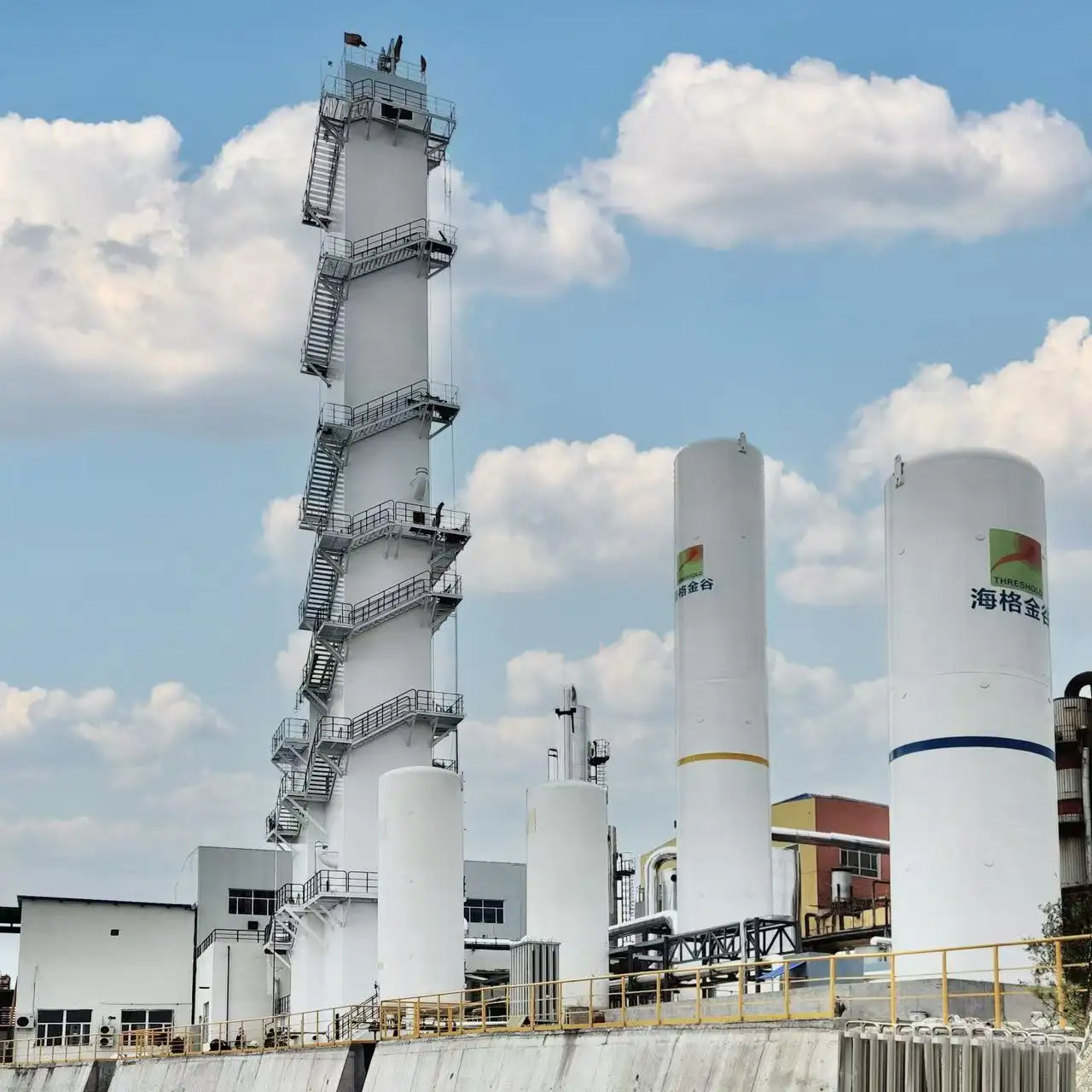
This lower purity requirement opens up supply options. Vacuum pressure swing adsorption (VPSA) systems can produce 90-95% oxygen at lower capital and operating costs than cryogenic air separation, though they are typically limited to smaller capacities. For larger mills, cryogenic ASUs remain the standard, producing oxygen at purities above 99.5% with the flexibility to also produce nitrogen and argon.
The oxygen injection system itself requires careful engineering. The oxygen must be delivered at sufficient pressure to overcome the blast furnace backpressure, typically 3 to 5 bar. The injection lances must be designed to withstand the high temperatures at the tuyere level—around 2,000°C—and the oxygen flow must be controlled precisely to maintain the desired enrichment level.
Safety Considerations in Oxygen Handling
Oxygen enrichment introduces safety considerations that deserve attention. Oxygen supports combustion more vigorously than air, and any leak or unintended contact with hydrocarbons can create a fire hazard. The oxygen injection piping must be designed to oxygen service standards, with strict cleanliness requirements and appropriate materials of construction.
Industry standards address these concerns directly. The Compressed Gas Association's CGA G-4.1 provides comprehensive guidance on oxygen system cleaning and design. ASME B31.3 covers piping requirements for oxygen service, including material selection and joint design.
Facilities implementing oxygen enrichment should conduct a thorough hazard review before startup, covering potential leak scenarios, emergency shutdown procedures, and operator training. The risks are manageable with appropriate engineering controls and operating procedures.
When Oxygen Enrichment Makes Sense—and When It Doesn't
Oxygen enrichment isn't universally beneficial. The economics depend on oxygen cost, coke price, and the value of additional production. Mills with on-site oxygen production—particularly those with excess ASU capacity—are natural candidates. Mills without existing oxygen supply face a capital decision: install an ASU or VPSA system, or accept the lower productivity of natural air operation.
There are also furnace-specific considerations. Blast furnaces operating near their maximum production capacity may have limited upside from oxygen enrichment—the bottleneck shifts to downstream processes like basic oxygen furnaces or continuous casting. In these cases, oxygen enrichment might not deliver the expected productivity gain.
For furnaces with constraints on coke supply or high coke prices, the economics become more attractive. Every ton of coke saved is a ton that doesn't need to be purchased, transported, or charged into the furnace.
Greenfir supplies cryogenic air separation equipment for steel mill oxygen production, with a track record of installations in integrated steelmaking operations across Asia.
Table of Contents
- The Oxygen Advantage in Modern Steelmaking
- How Oxygen Changes the Furnace Thermodynamics
- Productivity Gains: What the Data Shows
- A Real-World Implementation: Northern China Integrated Mill
- Oxygen Supply Considerations for Blast Furnace Injection
- Safety Considerations in Oxygen Handling
- When Oxygen Enrichment Makes Sense—and When It Doesn't