 EN
EN

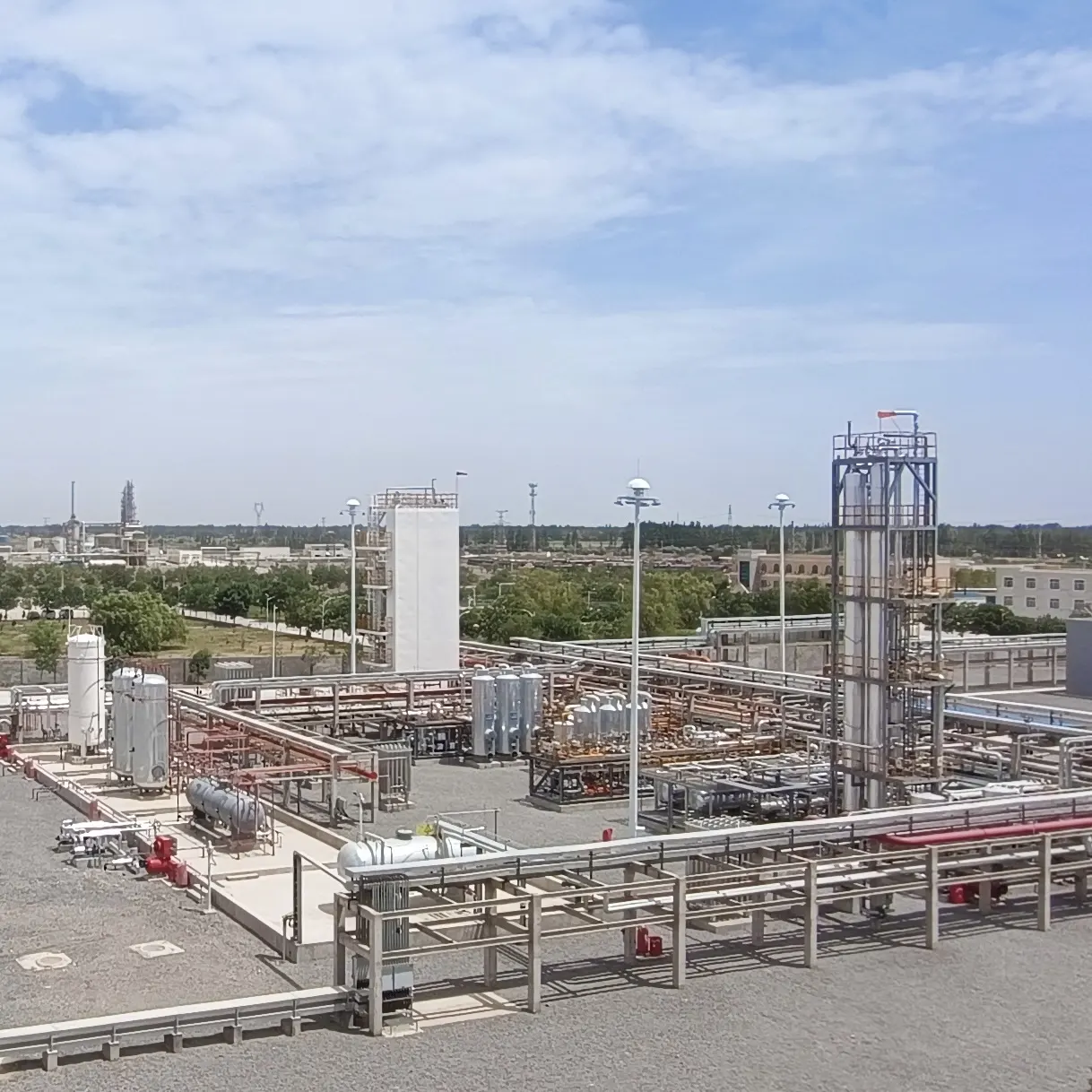
The Turnkey Question: Why Owners Are Shifting Away from Piecemeal Procurement
Building a gas processing plant has traditionally meant managing a web of separate contracts—one for engineering, another for equipment supply, a third for construction, and yet another for commissioning. Each contract comes with its own schedule, its own set of interfaces, and its own risk profile. The owner ends up playing air traffic controller, coordinating between parties that have no incentive to make each other's jobs easier.
A growing number of project owners are asking a different question: what if one entity handled everything? The turnkey approach—where a single supplier takes responsibility for design, procurement, construction, and commissioning—has moved from a niche delivery model to a mainstream expectation. The logic is straightforward: single-point accountability reduces owner risk, compresses schedules, and eliminates the finger-pointing that plagues multi-contractor projects.
What Turnkey Actually Delivers
Turnkey means different things to different people. In the gas plant context, a true turnkey solution encompasses the full project lifecycle. Engineering covers process design, equipment specification, and detailed piping and instrumentation diagrams. Procurement includes sourcing all major equipment—compressors, heat exchangers, vessels, valves, and instrumentation—along with long-lead items that can make or break a schedule. Construction involves site preparation, module installation, and field assembly. Commissioning covers pre-startup testing, performance verification, and operator training.
The value proposition isn't just convenience. It's risk transfer. When a single entity owns the entire delivery chain, there's no room for the classic contractor excuse: "that's not our scope." The turnkey supplier owns the outcome, not just a piece of it.
The Cost and Schedule Case for Turnkey Delivery
The numbers support the shift. Independent analysis of gas plant projects completed between 2018 and 2023 shows that turnkey-delivered facilities experienced cost overruns averaging 8% of budget, compared to 22% for conventionally procured projects. Schedule performance tells a similar story: turnkey projects came in within 10% of planned duration on average, while multi-contractor projects averaged 35% schedule slips.
| Project Metric | Turnkey Delivery | Conventional Multi-Contract |
|---|---|---|
| Average cost overrun | ~8% | ~22% |
| Average schedule slip | ~10% | ~35% |
| Owner engineering effort | Low | High |
| Interface coordination | Supplier-managed | Owner-managed |
| Single point of accountability | Yes | No |
These aren't theoretical advantages. They reflect the practical reality that interface management is where most projects lose money and time. In a multi-contractor environment, every interface between scopes is a potential failure point. The turnkey model internalizes those interfaces, making them the supplier's problem rather than the owner's.
A Case in Point: Remote Gas Development in Southeast Asia
A project in Myanmar's central gas fields illustrated the turnkey advantage in stark terms. The operator needed a 30 MMscfd gas processing facility at a site with limited local infrastructure, no nearby fabrication support, and a tight window for first gas delivery. The conventional approach—sending out separate tenders for engineering, equipment, and construction—would have required at least 28 months from project authorization to startup.
The turnkey solution delivered the facility in 19 months. The single supplier handled everything: process design in their home office, equipment fabrication at their manufacturing facility, modular construction that minimized on-site work, and a commissioning team that stayed through performance testing. The operator's project team was small—they didn't need to manage dozens of subcontractor relationships or mediate disputes between engineering and construction.
The key differentiator wasn't just speed. It was certainty. The operator knew from the start that one organization was accountable for the entire outcome. When issues arose—and they always do—there was no debate about who should fix them.
Where Turnkey Works Best
Turnkey delivery isn't the right answer for every project. Very large baseload facilities—those exceeding 500 MMscfd—often benefit from specialized contractors for different process units. The scale justifies the coordination overhead, and the owner's project management resources can absorb the interface management burden.
Where turnkey shines is in mid-scale projects, remote locations, and situations where the owner lacks deep in-house project execution capability. Small-scale LNG plants, associated gas processing units, and CNG stations are natural fits. The modular, standardized designs that turnkey suppliers bring to these projects deliver predictability that bespoke engineering cannot match.
There's also a financing angle worth noting. Lenders look favorably on turnkey delivery because it reduces project risk. A single contract with a single supplier, backed by performance guarantees, is easier to underwrite than a patchwork of separate agreements. For project sponsors, that translates to better financing terms and faster financial close.
The Execution Challenge: Making Turnkey Work
Turnkey delivery sounds simple in concept but requires disciplined execution. The supplier must have in-house engineering capability, manufacturing capacity, and construction management expertise. Few organizations possess all three. Those that do—like Greenfir—have built their business models around integrated delivery.
The critical success factor is front-end loading. Turnkey projects that succeed are those where the engineering team spends adequate time defining the process, selecting the right equipment, and planning the construction sequence before any steel gets ordered. Skimping on front-end work inevitably shows up during construction as change orders, rework, and schedule delays.
For owners evaluating turnkey proposals, the key questions aren't about price alone. They're about capability: does the supplier have reference projects of similar scale and complexity? Do they have the manufacturing capacity to meet the schedule? Have they delivered turnkey projects in similar geographic and logistical conditions? The answers to these questions matter more than the bottom-line number.
Greenfir has delivered turnkey gas plants across multiple geographies, from Southeast Asia to the Middle East, with engineering and manufacturing capabilities that support integrated project delivery from concept through commissioning.