 EN

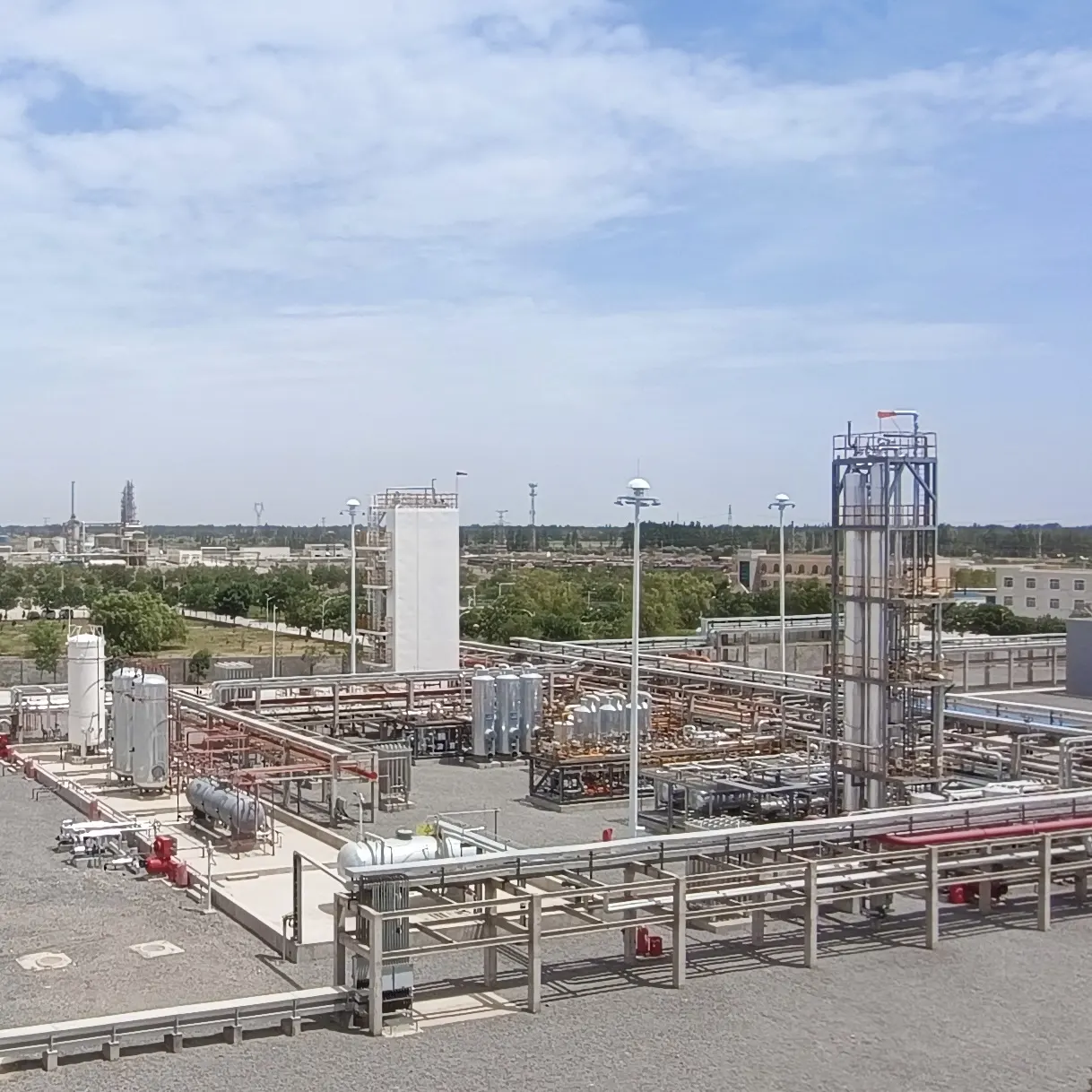
A natural gas processing plant is not a catalog purchase. It is a tightly coupled assembly of cryogenic exchangers, pressure vessels, compressors, dehydration skids, and control logic, all engineered to tolerate whatever the inlet gas happens to carry that day. The entity that builds it carries the project’s technical fate in its hands. And yet, in far too many procurement cycles, the shortlisting logic collapses into a single question: who quoted the lowest number?
That question has a place. It just cannot be the organizing principle. A natural gas plant supplier that wins on price while losing on relevant delivery history creates costs that never appear on the bid tab: commissioning delays, capacity shortfalls, third-party troubleshooting fees, and production months that cannot be recovered. The global oil and gas EPC market was valued at roughly USD 54.5 billion in 2024 and is projected to reach USD 83 billion by 2034, with LNG liquefaction and regasification terminals accounting for more than a quarter of global EPC contract value. Capital is moving fast. The scrutiny applied to supplier selection has not kept pace.
Relevant delivery history beats a long project list
Every serious fabrication shop has a project portfolio. The useful distinction sits one layer deeper: has this supplier completed projects of comparable size, with comparable feed gas composition, and comparable product slate, within the last five years?
A supplier that has built twenty refinery-based gas treating units may still stumble on a cryogenic liquefaction train. The competencies overlap on paper. The execution details do not. Thermal contraction behavior, cool-down sequencing, refrigerant makeup control, and the metallurgy required for service near minus 160 degrees Celsius separate a cryogenic plant from a warm-service processing skid. The International Energy Agency recorded more than 90 billion cubic meters per year of new LNG liquefaction capacity sanctioned in 2025 alone, a record pace that has stretched engineering and fabrication capacity across the supply chain. In that environment, a supplier with three comparable trains delivered in the last three years is a fundamentally different proposition from one whose last relevant project was a smaller unit a decade ago.
The sharper interview question is not “how many plants have you built?” It is “walk through the last three projects of this capacity, with this feed composition, and tell me what went wrong.” Suppliers who have actually run projects will answer that question without flinching.
Certification is a floor, not a differentiator
ASME U-Stamp, CE marking, EAC certification, ISO 9001, ISO 14001, ISO 45001. The checklist is familiar. It is also routinely treated as a box-ticking exercise, which misses what these credentials actually verify.
The ASME Boiler and Pressure Vessel Code, Section VIII, Division 1 sets the minimum requirements for design, materials, fabrication, examination, testing, and certification of unfired pressure vessels operating above 15 psig. For gas processing equipment, that means separator bodies, knockout drums, and cryogenic containment shells live or die by the discipline behind that stamp. Section IX governs welding qualifications. The gap between a shop that tracks each welder’s certification expiration date and one that treats the paperwork as a formality shows up in the finished vessel, not in the audit binder. A single defective weld in cryogenic service can cost more to repair than the entire inspection budget allocated for the project.
Rotating equipment deserves the same depth of scrutiny. API 618 covers the minimum requirements for reciprocating compressors and their drivers in petroleum, chemical, and gas industry services, including design, procurement, and installation protection requirements. A supplier that can point to API 618 compliance on compressor packages, and explain how pulsation suppression was verified, is operating at a different level of engineering maturity than one that simply lists the standard on a brochure.
The manufacturing floor tells a story the brochure cannot
A natural gas plant supplier that owns and controls its fabrication shop, rather than brokering work through subcontractors, holds a different relationship with quality. Control over the manufacturing sequence means control over the inspection points: material traceability, weld mapping, dimensional verification, and pressure testing.
One useful test during a shop visit is to ask how third-party inspection is handled. A credible fabricator will have an established workflow for independent inspectors, not a last-minute scramble when the client announces an audit. In a mid-sized LNG project in Southeast Asia, a plant owner selected a contractor with strong downstream refinery experience but no cryogenic reference, assuming the licensed process technology would carry the technical risk. The project finished 22 months late and 47 percent over budget; the licensed process worked, but the contractor lacked the cryogenic engineering depth to integrate the package with the balance of plant. The lesson is not that licensed technology is unreliable. It is that integration competence lives in the fabricator’s engineering and manufacturing team, not in the process license alone.
Material selection for cold service is another place where shop-floor discipline matters. Low-temperature steels, weld consumables, and heat treatment procedures all influence whether a vessel stays leak-tight through years of thermal cycling. A supplier that can show in-house material verification records, with independent third-party sign-off, is showing something more valuable than a certificate: a habit of proof.
Commissioning support is where cheap suppliers become expensive
The commercial terms that matter most at the bid stage are often not the ones printed in bold. Lead time, startup support, and spare parts strategy sit quietly in the fine print and then dominate the operating experience.
A supplier’s quoted lead time means very little without a milestone schedule behind it. The date for approved process design, the date for long-lead item release, the date for pressure test, the date for documentation turnover, and the ship date should all be visible. A single “delivery in eight months” statement is not a schedule. It is a hope. When a maintenance shutdown is planned and the gas plant sits idle waiting on a replacement exchanger, the cost of a vague lead-time commitment becomes very real, very quickly.
Commissioning is the other pressure point. A supplier that manufactures and then walks away leaves the operator to reconcile design assumptions with actual gas composition. A supplier that supports startup through the first performance test, with engineers who understand the dehydration and liquefaction sequence, shortens the path from mechanical completion to steady production. That support is not a warranty claim. It is engineering continuity.
The hidden math of supplier selection
The lowest bid and the lowest lifecycle cost rarely belong to the same supplier. The gap is not theoretical. It shows up in change orders, schedule recovery, and the operating compromises made when a plant cannot reach nameplate capacity.
| Evaluation area | Lowest-bid pattern | Full-cycle supplier pattern | Why it matters |
|---|---|---|---|
| Comparable project depth | Broad project count, narrow overlap in size or feed gas | Three to five closely comparable deliveries in the last five years | Predicts current execution competence, not historical activity |
| Certification substance | Certificates listed, welder qualification dates unmanaged | ASME Section VIII and Section IX records traceable to individual welders | A single weld defect in cold service can exceed the entire inspection budget |
| Manufacturing control | Heavy subcontracting, inspection reactive | In-house fabrication with documented third-party inspection workflow | Quality is built into the sequence, not inspected in at the end |
| Schedule transparency | Single delivery statement, no milestone baseline | Milestone schedule with process design, long-lead release, and test dates | Reveals whether the lead time is engineered or estimated |
| Startup involvement | Handover at mechanical completion | Engineering support through first performance test | Reduces the gap between design assumptions and actual operating conditions |
| Change-order behavior | High frequency, scope assumptions undisclosed | Assumptions broken out: utilities, labor productivity, material escalation | Indicates whether the bid price reflects the actual scope |
A practical way to use this table is to request the underlying data for the first three rows before technical evaluation begins. A supplier that cannot produce comparable project references, welder qualification tracking, and a manufacturing inspection workflow is not ready for a natural gas plant scope, regardless of the price.
Where Jianyang Greenfir fits into this evaluation
Jianyang Greenfir New Energy Equipment operates from a manufacturing base in Sichuan, China, and holds the ASME U-Stamp authorization for pressure vessel fabrication, along with ISO 9001 quality management certification. The product scope covers natural gas purification and liquefaction plants, wellhead gas recovery units, cryogenic heat exchangers, reciprocating compressors, and integrated gas processing systems, with engineering and fabrication kept under one roof rather than dispersed across subcontractors.
For buyers running a supplier evaluation against the criteria above, that manufacturing integration is the relevant starting point. It means the inspection sequence, the weld qualification records, and the pressure test documentation are controlled by the same organization that signs the performance commitment. The conversation can move past brochure claims and into the project-specific detail that actually determines whether a gas plant starts up on schedule.
Table of Contents
- Relevant delivery history beats a long project list
- Certification is a floor, not a differentiator
- The manufacturing floor tells a story the brochure cannot
- Commissioning support is where cheap suppliers become expensive
- The hidden math of supplier selection
- Where Jianyang Greenfir fits into this evaluation