 EN

Why the Two Terms Keep Getting Blurred
Raw field gas is rarely clean enough to ship, and the cleanup work gets described with two words people keep swapping: sweetening and desulfurization. The habit is understandable, since in many sour fields hydrogen sulfide is exactly what makes the gas sour. But the terms sit at different levels. Gas treating is the broader effort that brings raw gas up to sales or downstream quality, which can mean cutting CO2, water, and sometimes mercury or heavier hydrocarbons, not just sulfur. Desulfurization is the narrower task of pulling sulfur compounds, mainly H2S, down to what the contract allows. Projects go sideways when those scopes get conflated, because the hardware that strips CO2 is not the hardware that strips H2S.
Sweetening Covers More Than Sulfur
The old field test for sweet gas was a lead acetate strip that told you whether H2S was present. The word stuck, and now sweetening gets used loosely for the whole cleanup train. Fine for casual conversation, but the engineering spans several processes. Amine units handle acid gas removal through a reversible reaction that lets the solvent regenerate with heat and get reused for years. Glycol dehydration pulls out water. Membranes, physical solvents, and cryogenic separation all earn their place under specific conditions. A stream with a couple of percent CO2 and almost no sulfur can fail the same sales spec as a stream with 50 ppm H2S, yet the two call for completely different hardware.
The point worth holding onto: the design starts from the full composition, not a single contaminant. Carbon dioxide lowers heating value and turns corrosive when water condenses, while H2S brings toxicity and sulfide stress cracking risk even at trace levels. Both have to go, but at different stages, sometimes different pressures. So when a project brief says "sweeten the gas," the first question should be: to what spec, and which contaminants stand in the way?
Desulfurization Zeroes In on Sulfur Compounds
Desulfurization is the part of the job that deals with sulfur, and it tends to be the most safety-critical. Sales gas pipeline tariffs in many regions cap H2S at 0.25 grain per 100 scf, roughly 4 ppmv, and downstream units are often stricter. Cryogenic plants can require sulfur in the low parts per million, while LNG feed typically needs to be essentially sulfur-free. The process selection follows the loading. Amine treating is the workhorse when H2S runs in the hundreds to thousands of ppm range, because the solvent regenerates and operating cost stays manageable. At small flow rates and light loadings, iron-based scavengers and caustic scrubbers win on simplicity, even though the chemistry is consumed and has to be replaced or disposed of. Some streams also carry mercaptans and carbonyl sulfide, which do not behave like H2S in an amine contactor.
A Field Lesson from a Sour Gas Retrofit
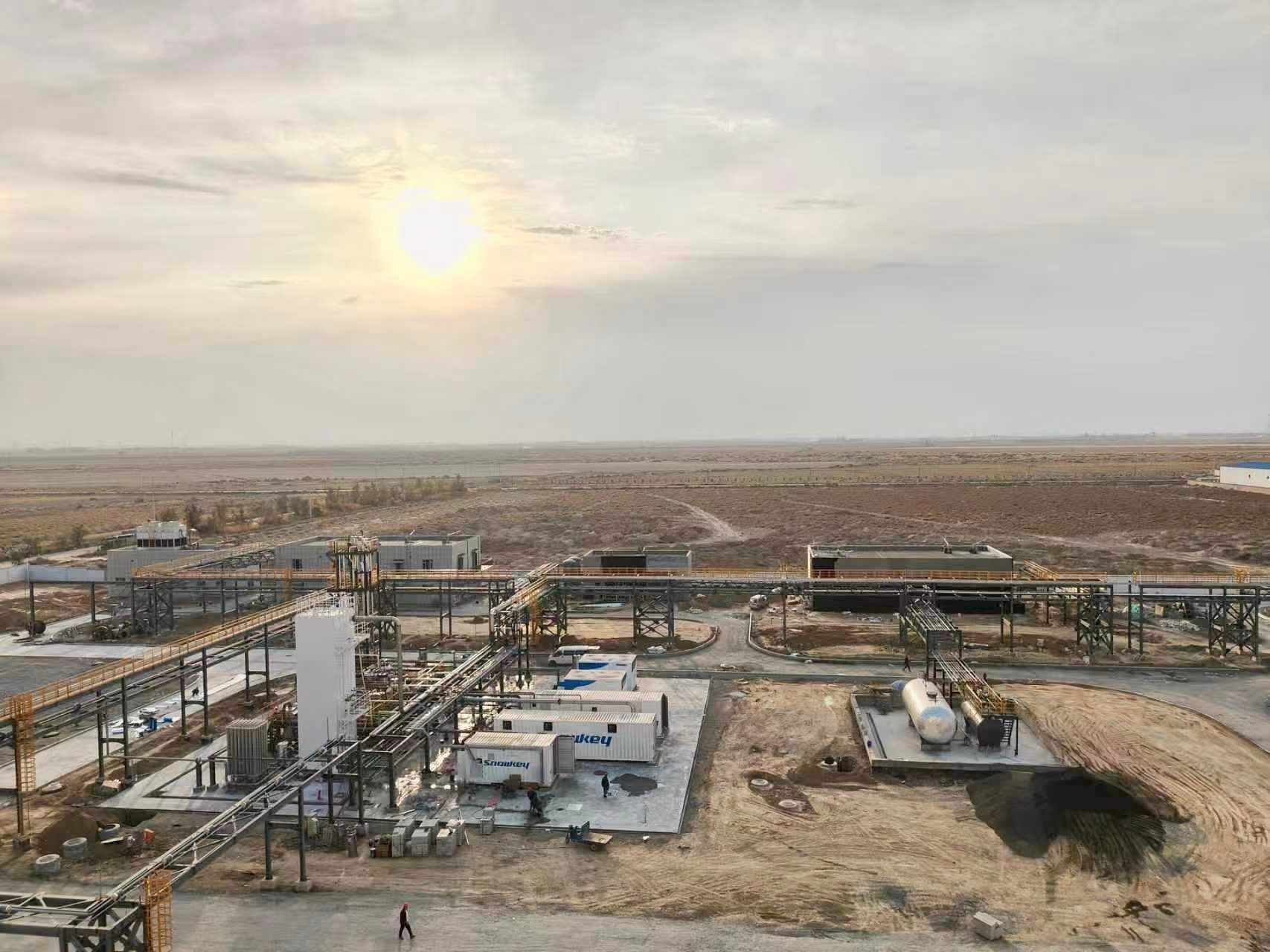
At a modest gas processing site in southern China, a small scavenger-based setup had treated the same sour stream for years. It met the old sales spec, but reservoir pressure had dropped and the composition shifted, with H2S creeping upward and a little CO2 where there had been none. The scavenger bed changed out far more often than the operating budget liked, and every changeover meant downtime and disposal paperwork. The fix was not a bigger scavenger vessel. The team re-sampled the wellhead over several weeks, mapped the new composition, and split the problem: a compact amine loop took the bulk of the H2S, while a small polishing bed handled the final few ppm. Changeouts became rare, operating cost came down noticeably, and the site stopped treating the stream as a single-contaminant problem. Nothing exotic there, which is exactly the point. A good composition survey and a route matched to real conditions beat an oversized version of whatever was already installed.
Side-by-Side: What Each Route Handles
Putting the two scopes side by side helps when a project team argues over the flow diagram. The table shows the practical differences without pretending every job fits the same mold.
表格
| Aspect | Natural Gas Sweetening | Desulfurization |
|---|---|---|
| Primary targets | CO2, H2S, water, sometimes mercaptans and heavy ends | H2S and related sulfur species, mainly H2S |
| Main driver | Sales spec, heating value, downstream feed quality | Toxicity, corrosion, pipeline sulfur limits |
| Typical hardware | Amine units, glycol dehydrators, membranes, cryogenic units | Amine contactors, iron scavengers, caustic scrubbers |
| Regeneration | Often regenerative, with heat used to recycle solvent | Mixed, from regenerative amine loops to throwaway media |
| Typical outlet level | CO2 down to a few percent or lower, depending on spec | H2S often down to single-digit ppm or below |
| Waste streams | Acid gas, reclaiming sludge, spent filter media | Spent scavenger beds, spent caustic, elemental sulfur options |
Guardrails for the Next Sour Gas Project
A few habits separate smooth projects from ones that keep generating change orders. First, sample the stream across seasons rather than trusting one lab report, because composition drifts with reservoir decline and well interventions. Second, decide early whether the waste stream is manageable. Amine systems produce an acid gas that has to go somewhere, spent scavengers must be disposed of, and both carry cost and logistics that belong in the economic comparison, not the fine print. Third, resist the urge to oversize. A scavenger sized for peak H2S runs all year at an average load that does not justify it, while an amine loop built for a stream that barely needs it carries heat and maintenance burden that never pays off.
The GPSA Engineering Data Book remains the go-to reference for this kind of design work, and the acid gas removal section is worth reading before the vendor calls start. That said, equipment supply matters as much as chemistry. Fabricators with an in-house factory and design team, such as GreenFir, tend to catch practical details early, from skid layout to weld quality, and their modular approach shortens field installation in a way that shows up in the schedule, not on the drawing board. A sour gas project is rarely won or lost on a single technology choice, but usually on matching the treating route to the real stream and working with a supplier who has built enough of these units to know where the traps are.