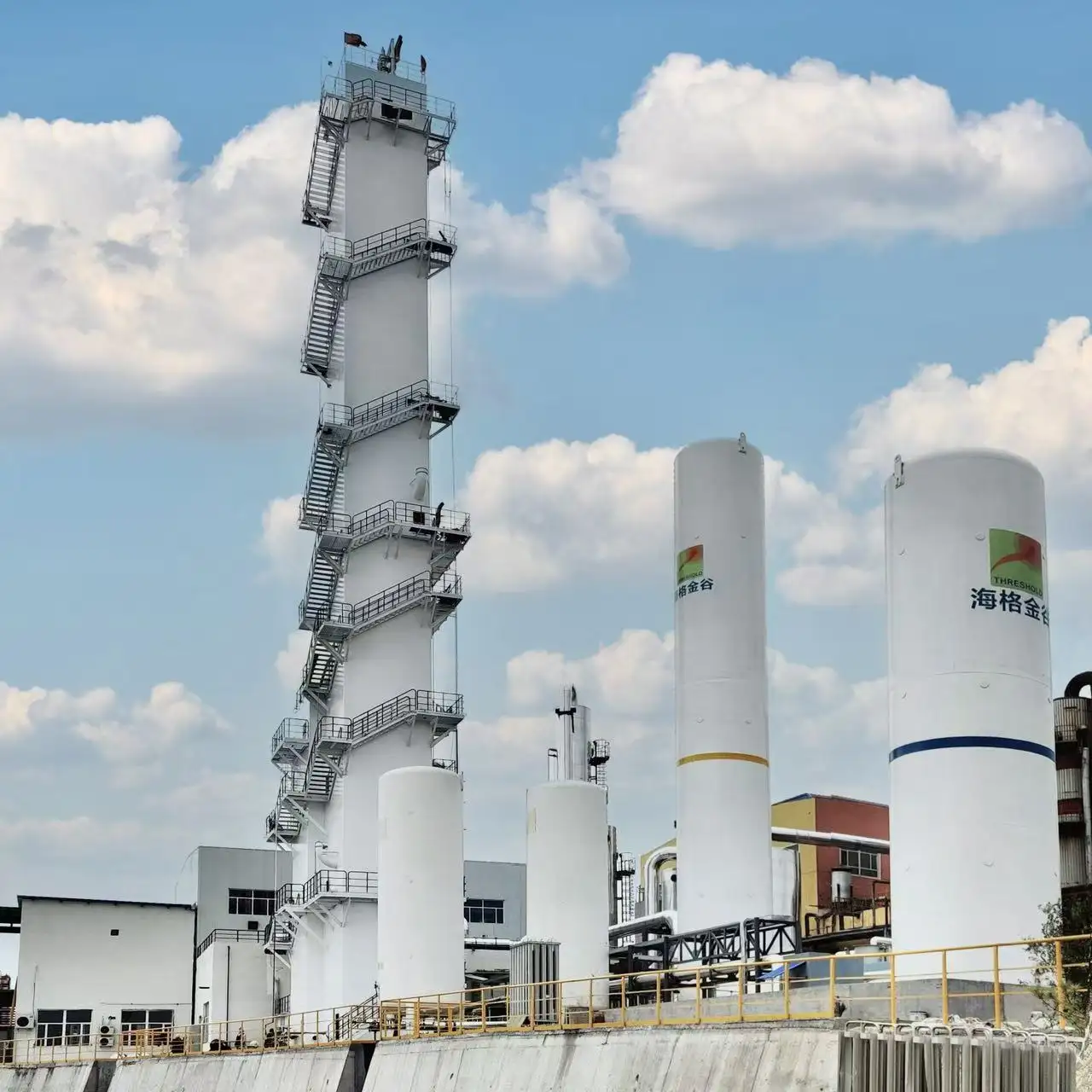
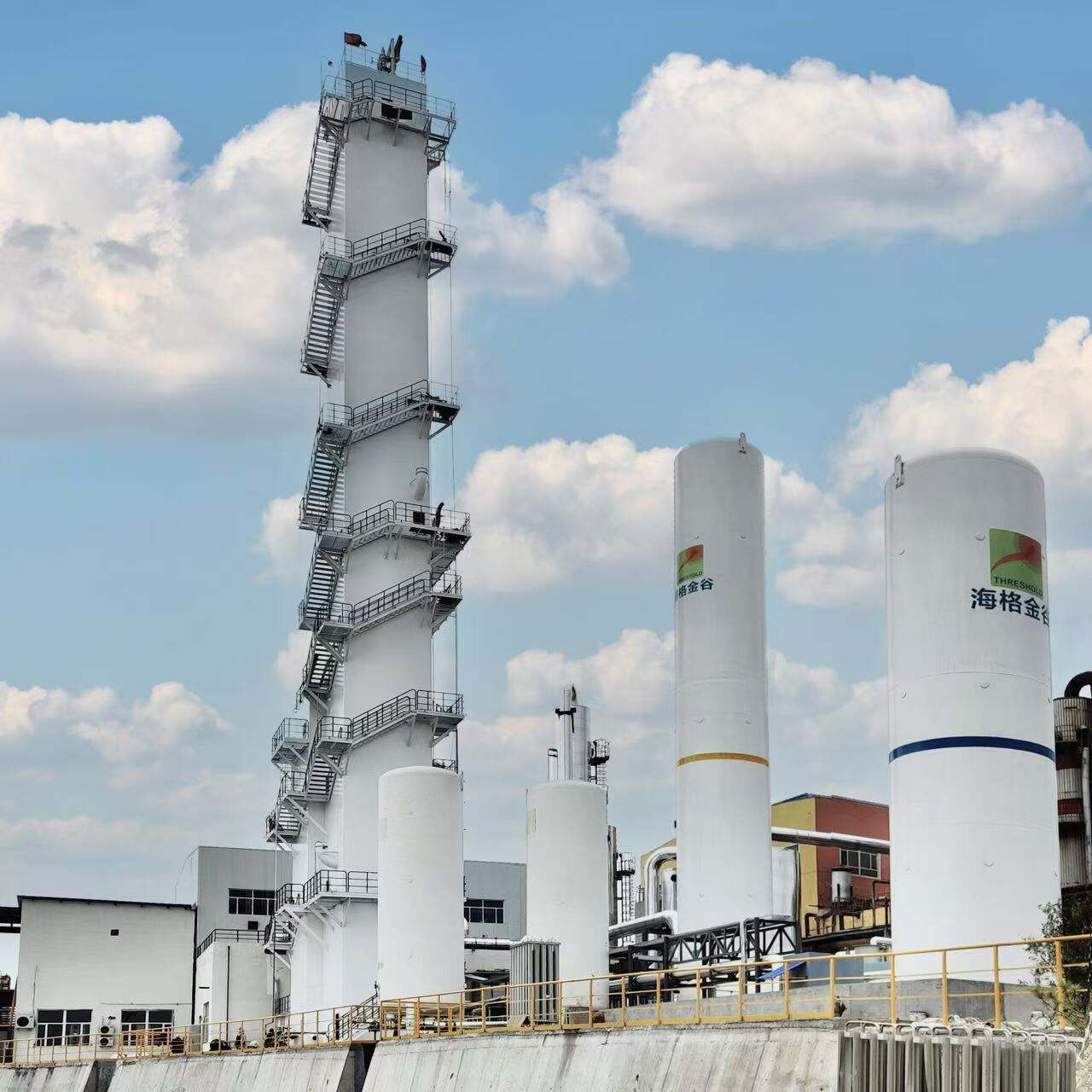
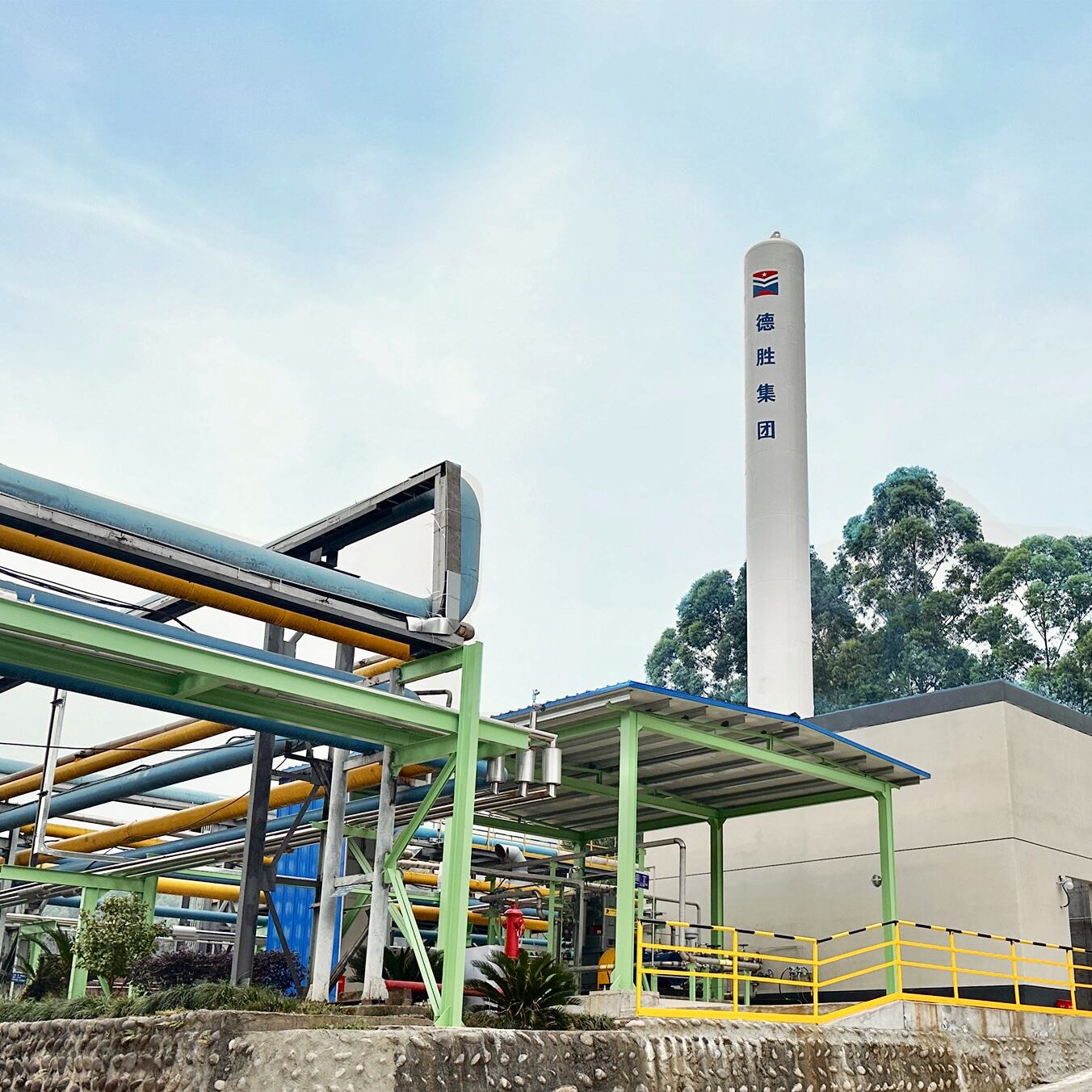
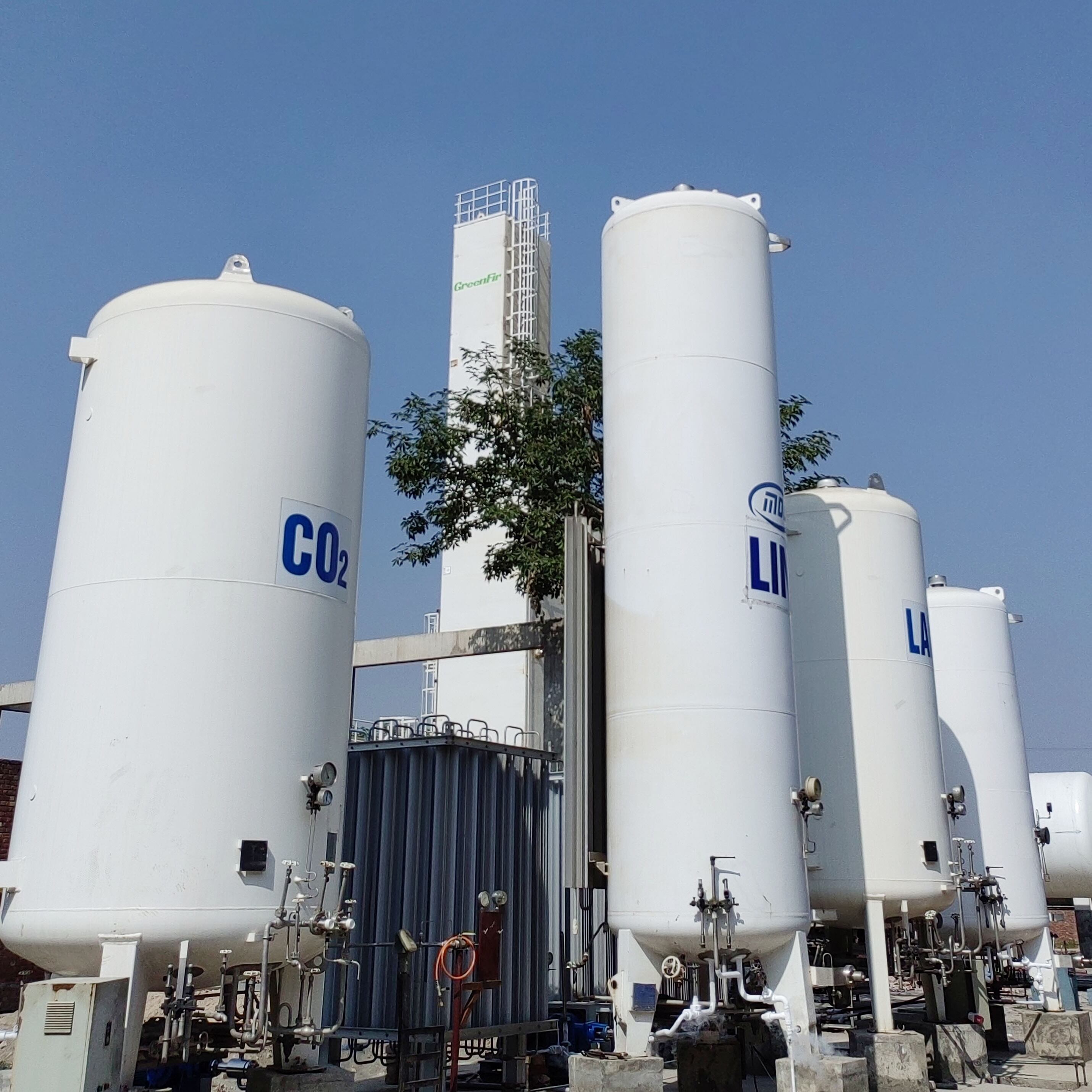
Air undergoes pressurization and filtration, preliminary cooling and initial dehydration, followed by deep dehydration via PPU. One portion enters the booster for pressurization, after which a fraction is extracted to pass through the expander for pressurization and cooling. It then enters the main heat exchanger of the cold box for further cooling before entering the expander for expansion refrigeration. Subsequently, it enters the lower column to participate in distillation. Another portion is cooled to a liquid phase via the main heat exchanger and enters the lower column for distillation. The remaining air directly enters the main heat exchanger, cooled to the dew point, and enters the lower column for distillation. After distillation in the lower column, liquid oxygen is extracted from the top, while lean liquid air and oxygen-rich liquid air are extracted from the lower sections. These three streams enter different sections of the upper column as reflux liquids to participate in distillation. Ultimately, product oxygen is obtained at the bottom of the upper column, and product nitrogen is obtained at the top. After reheating via the heat exchanger, the products are discharged from the cold box. Unlike conventional processes, this flow includes an argon enrichment column. Argon-enriched fractions are extracted from the mid-lower section of the upper column and enter the argon enrichment column. Through distillation in the argon enrichment column, argonrich gas is discharged from the top, and a fraction with higher oxygen concentration is obtained at the bottom and returned to the upper column for distillation.