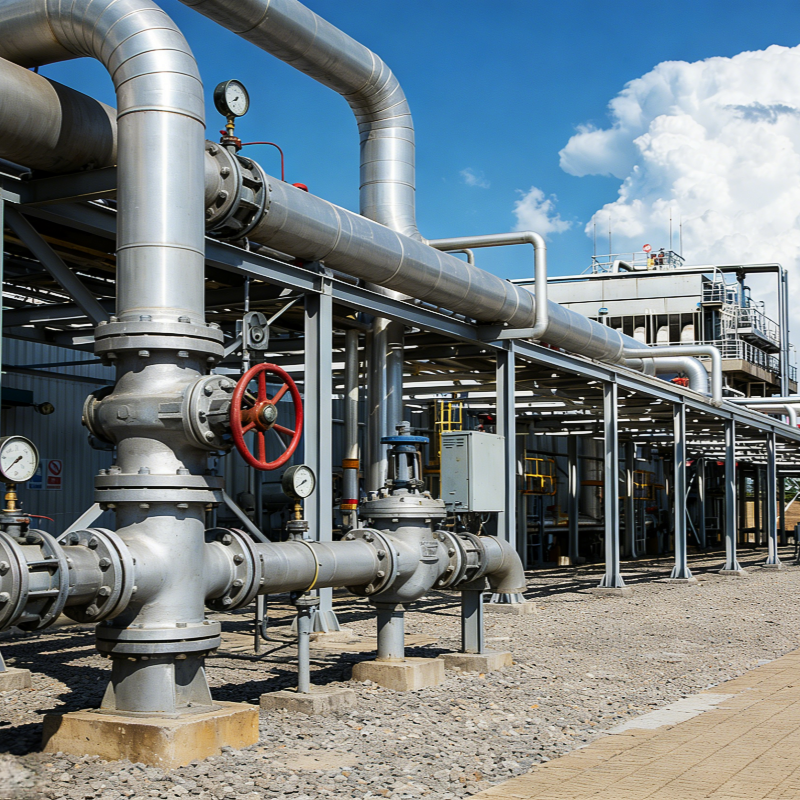
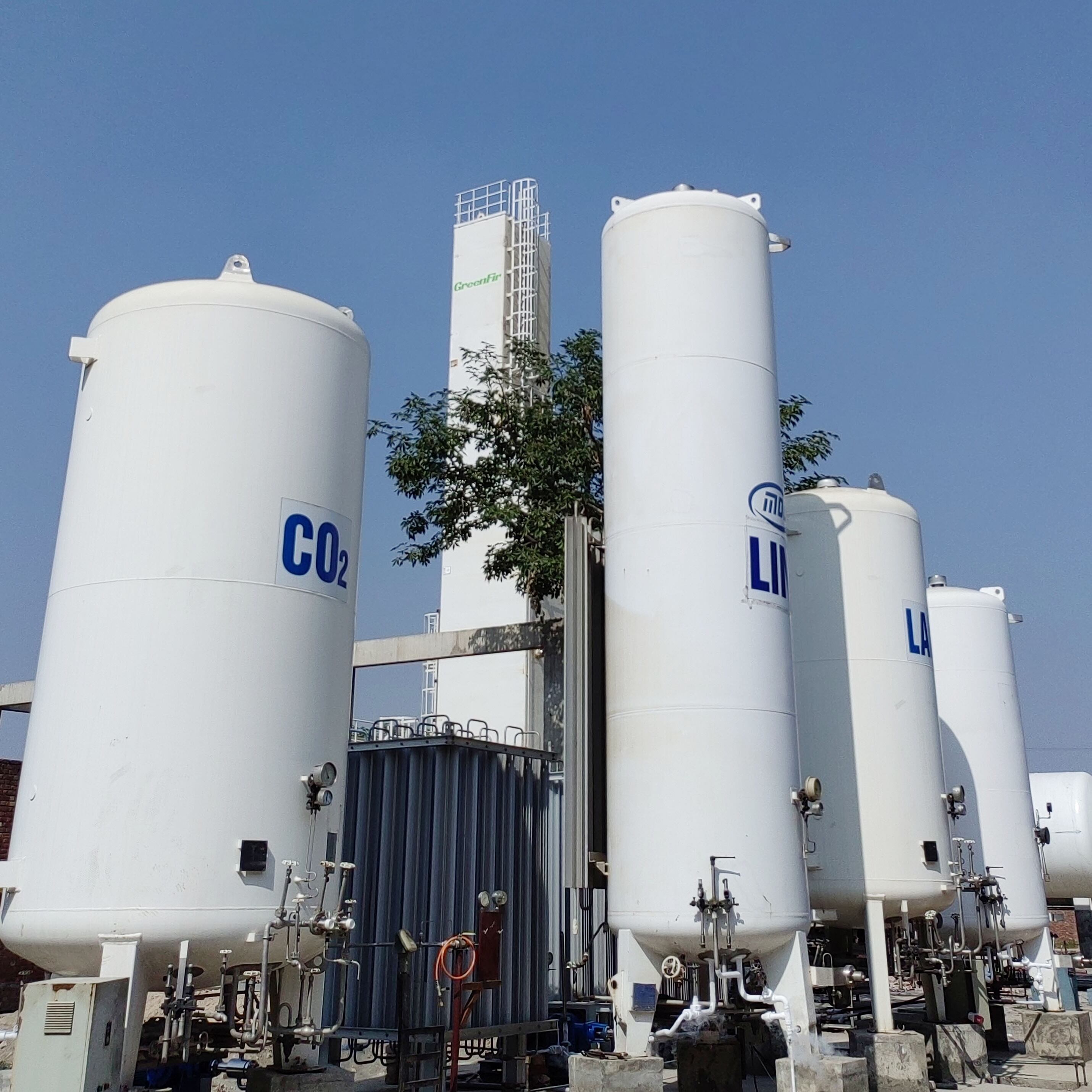
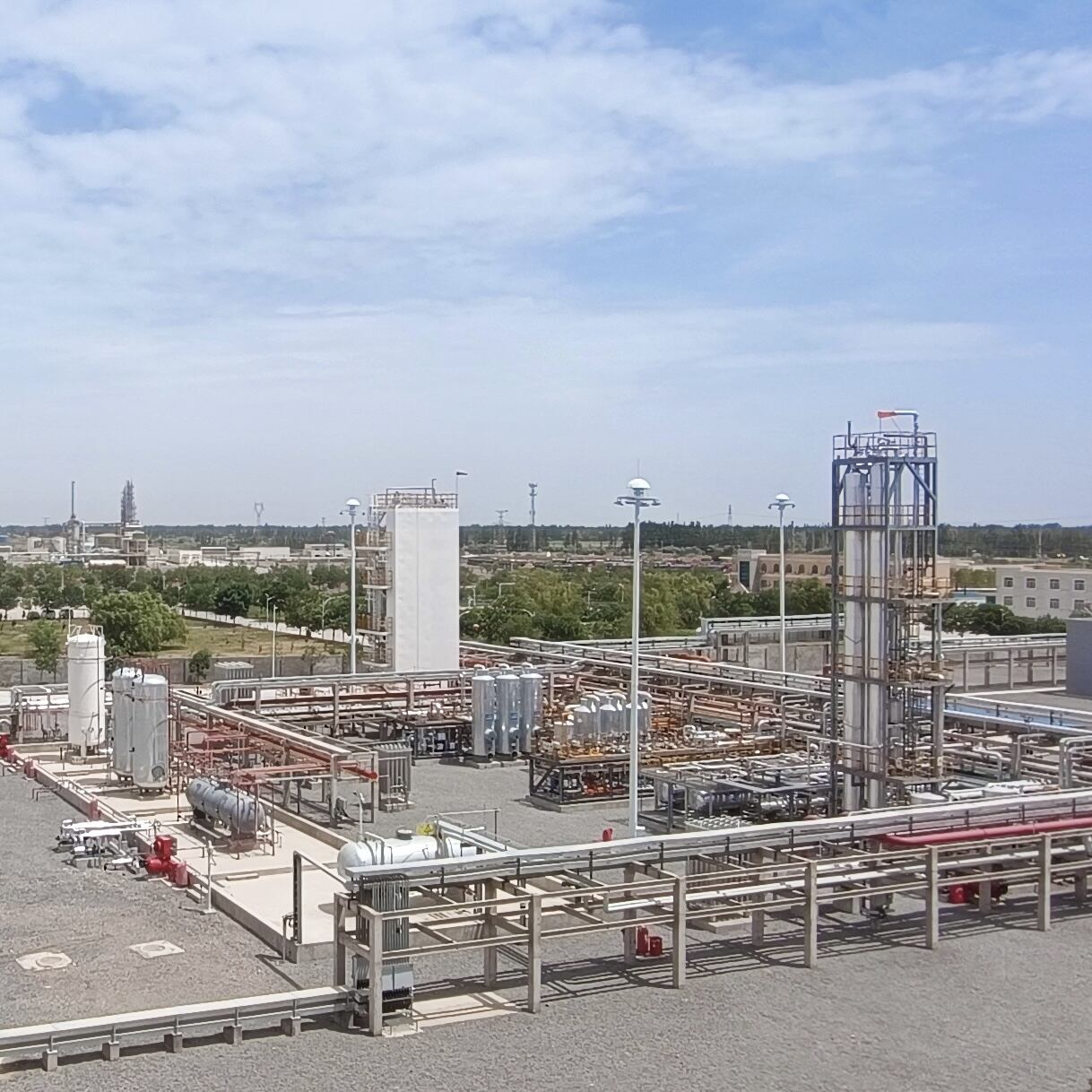
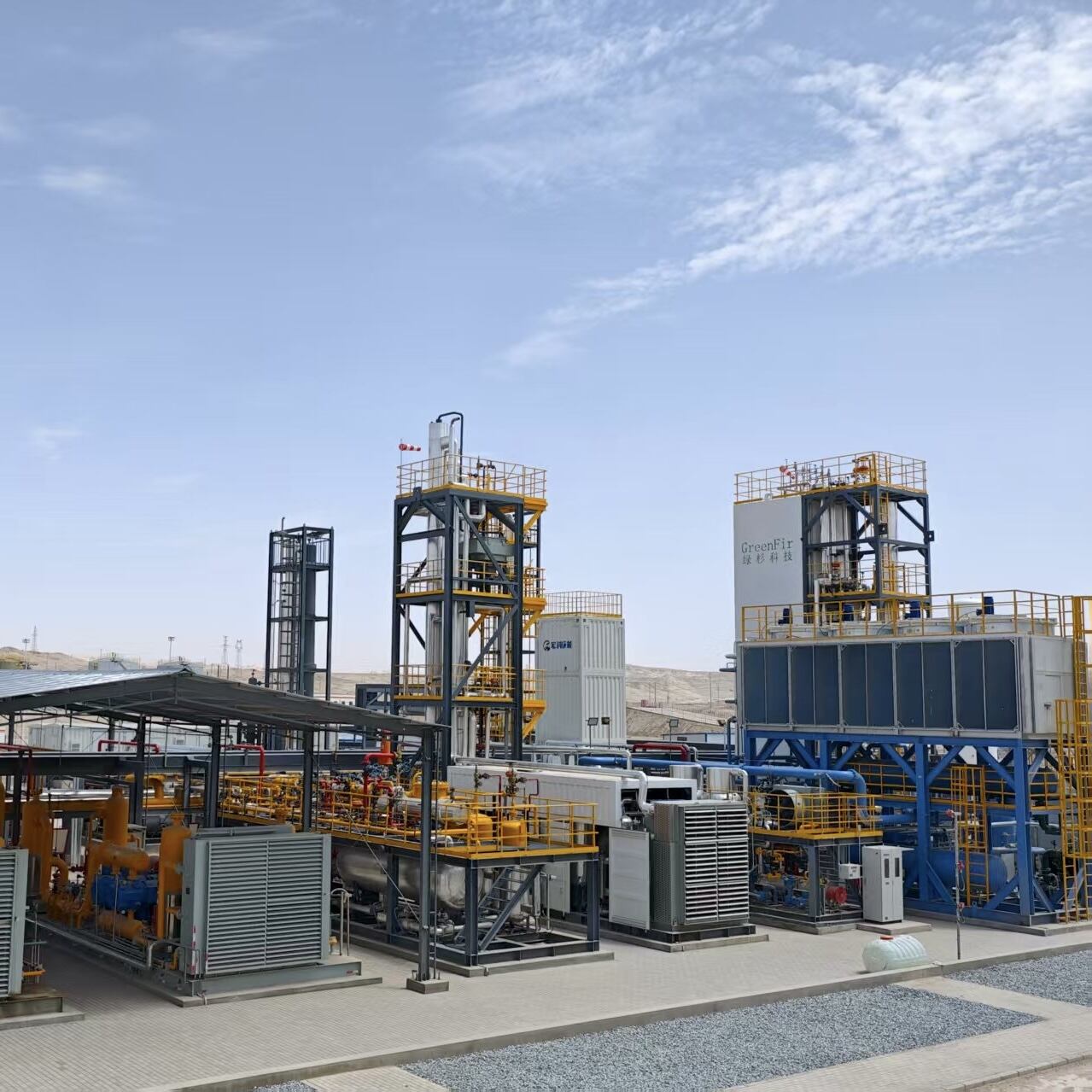
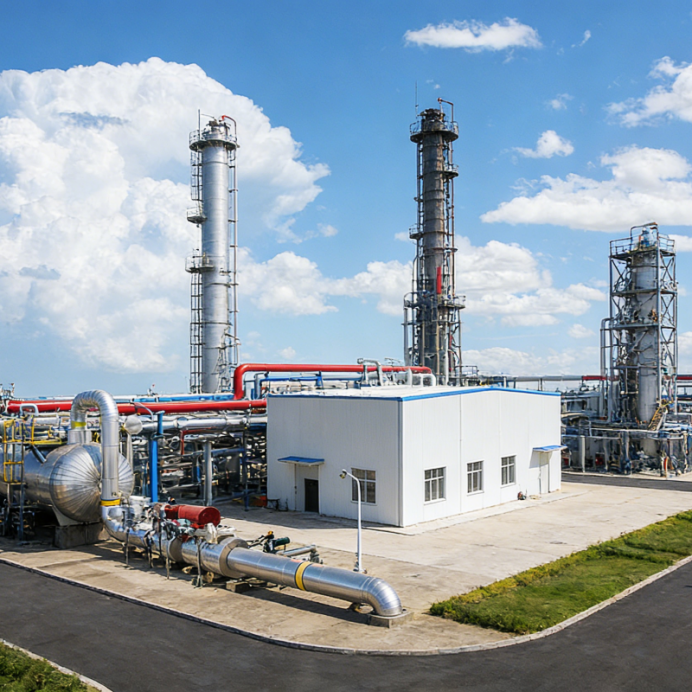
After decarbonization, the raw gas enters adsorption Tower A, where water is selectively adsorbed by the molecular sieve bed. The outlet dry gas has a water dew point ≤ -60°C and is sent downstream. After adsorption saturation, Tower B switches to the regeneration process: dry gas or nitrogen is heated in a heater and used for reverse purging of the molecular sieve bed. The desorbed water is condensed and separated in a cooler. Subsequently, cold dry gas is used for forward cooling of the bed to 40°C, completing regeneration for standby. The dual towers automatically switch via programmed valves, with a cycle time of 8–12 hours.
·Low-Temperature + Temperature Swing Adsorption (TSA) Process Description:
After molecular sieve dehydration, the raw gas enters a plate-fin heat exchanger for precooling, causing partial condensation of C₅+ heavy hydrocarbons. It is then deeply cooled by a turbo-expander or mixed refrigerant, and oil phase (recovering LPG/NGL) is separated in a low-temperature separator. Residual heavy hydrocarbons in the gas phase enter the TSA molecular sieve adsorption tower, where heavy hydrocarbons are selectively adsorbed. The outlet gas, with heavy hydrocarbon content ≤ 20 mg/Nm³, is sent to the liquefaction unit. After adsorption saturation, heated purified gas is used for reverse purging regeneration. The desorbed heavy hydrocarbons are cooled and recovered, and the regeneration gas is used as fuel gas.
·Cryogenic Distillation for Nitrogen Removal:
After dehydrocarbonization, the raw gas exchanges heat with top nitrogen and bottom methane in the precooling section to lower its temperature and partially remove heavy hydrocarbons. It then enters the main cooler, where it is deeply cooled to -162°C by a DMR mixed refrigerant and enters the middle of the nitrogen removal tower. The top nitrogen is fully refluxed in the condenser, while the bottom methane is vaporized in the reboiler and rises, completing distillation separation. The bottom methane is reheated to ambient temperature and exported as product gas. The top pure nitrogen gas is used as fuel gas after recovering cold energy in the expander, achieving self-balance of cold energy.
·Manufacturing, Installation, and Commissioning Period:
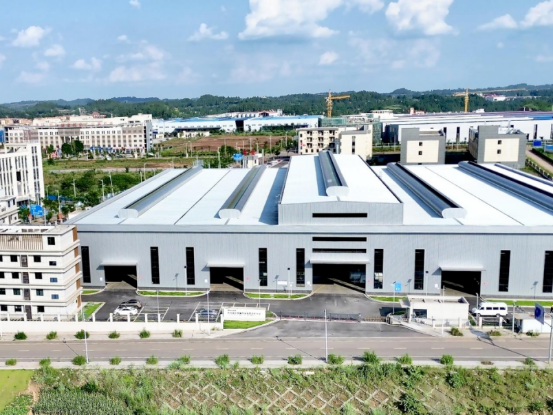
Modularized for factory assembly and on-site installation, ensuring efficient product delivery. The total project duration from contract signing to successful commissioning is 7 months.
 EN
EN