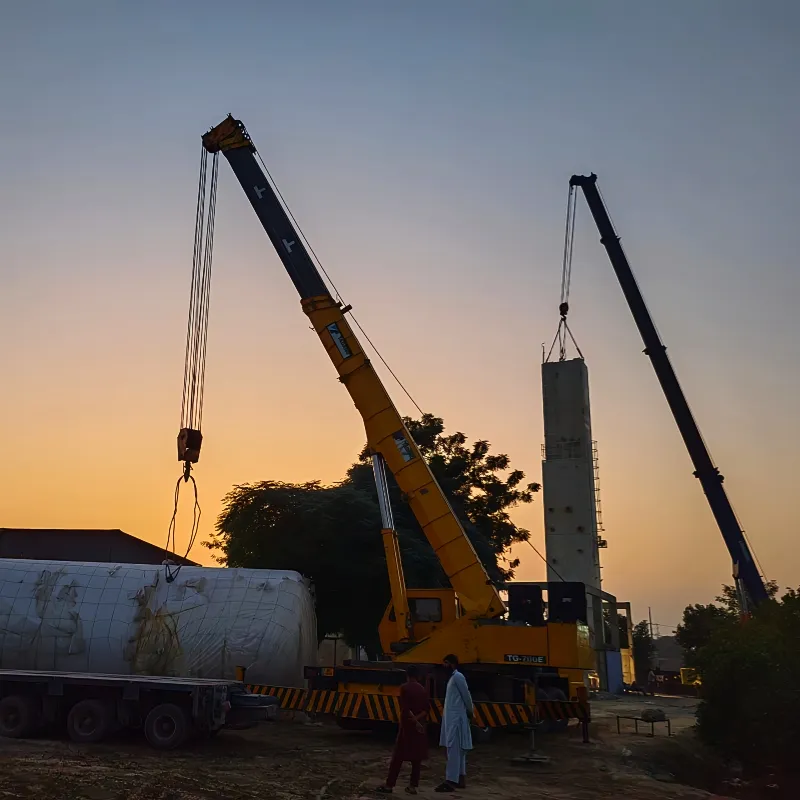
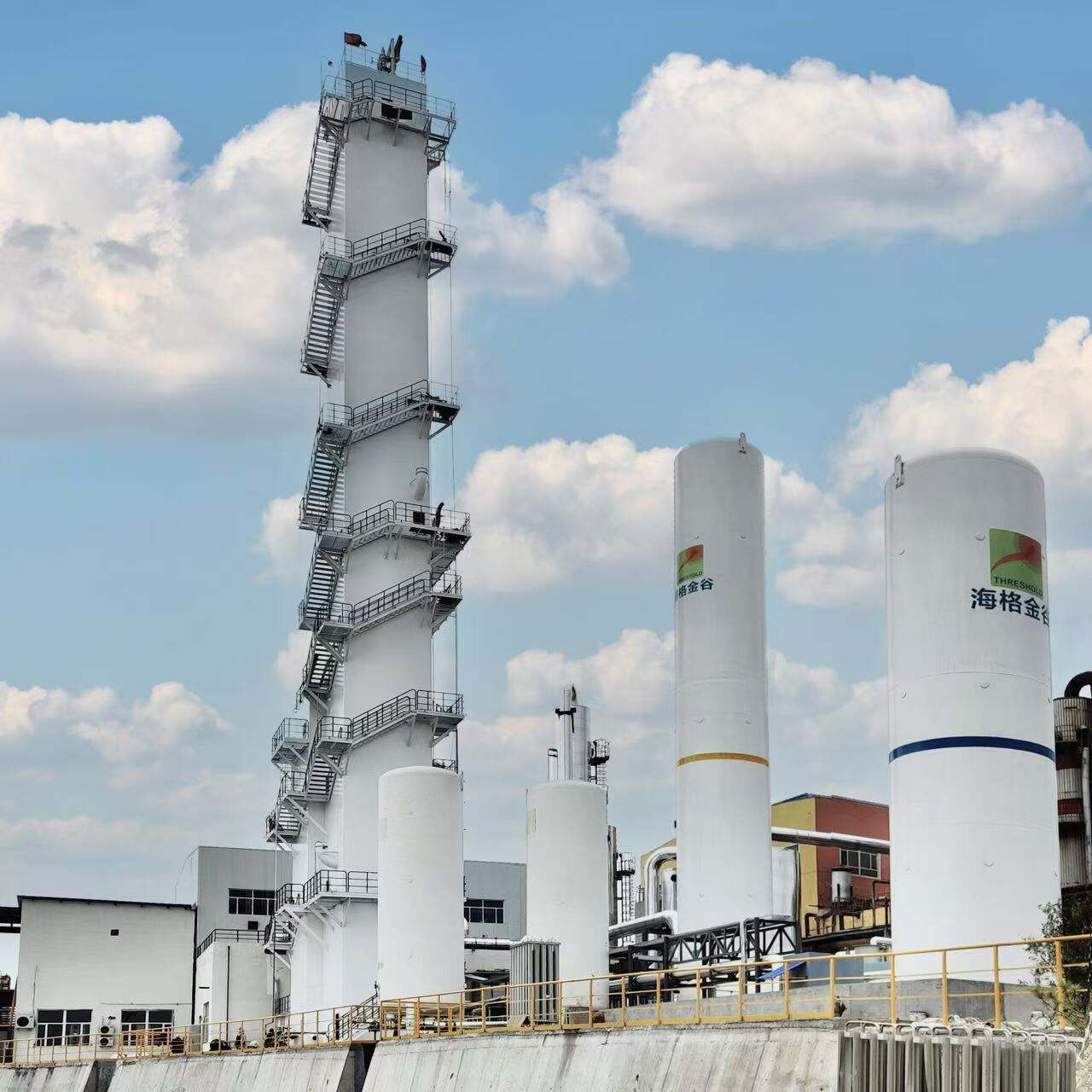
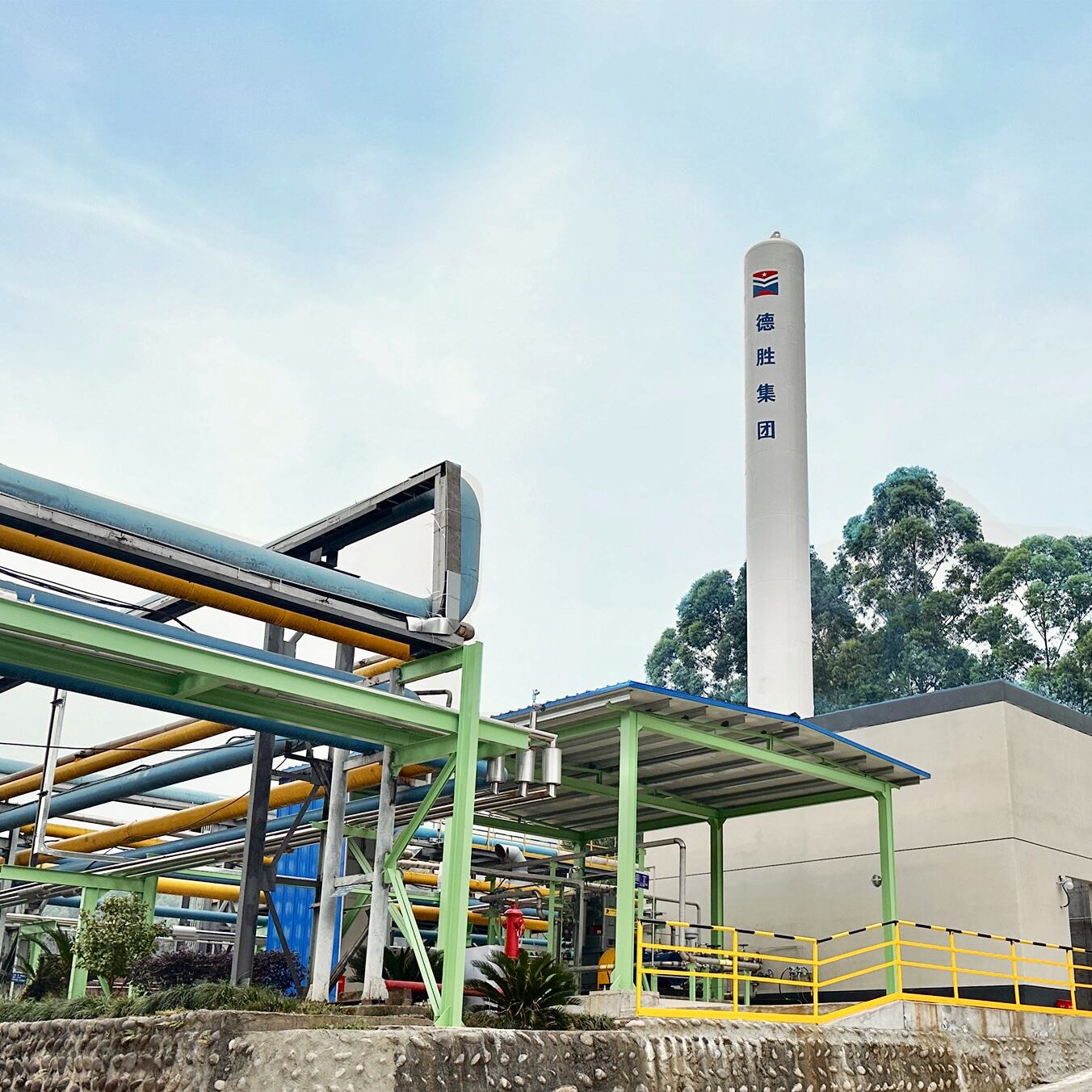
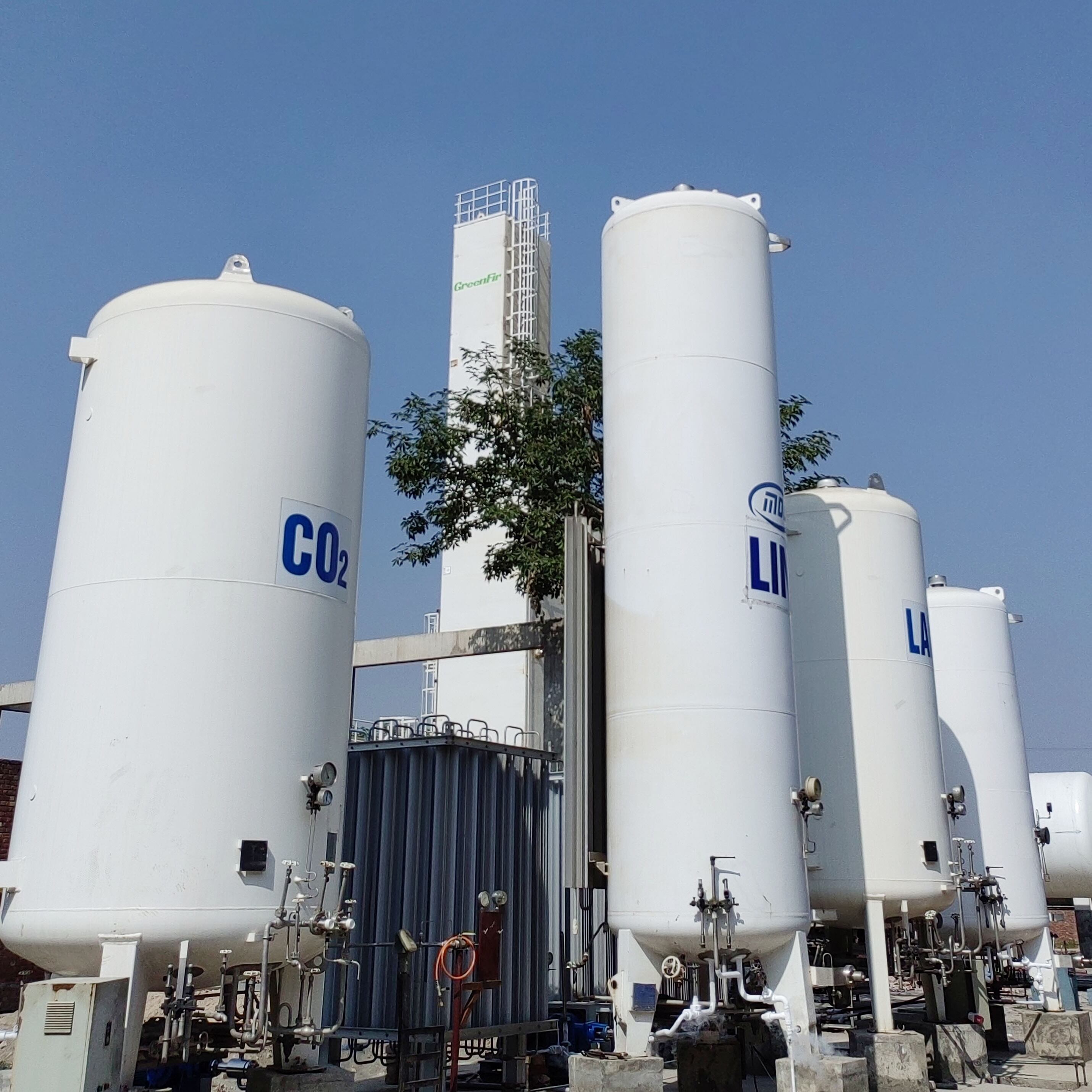
Air undergoes pressurization and filtration, preliminary cooling and initial dehydration, followed by deep dehydration via PPU. It then enters the cold box and is cooled to near 0°C via the heat exchanger. It enters a low-temperature chiller to obtain partial cooling capacity, then reenters the main heat exchanger. A small portion is extracted from the middle of the heat exchanger, enters the expander for refrigeration, and then enters the upper column for distillation. The majority is extracted from the bottom and enters the lower column for distillation. Preliminary separation in the lower column yields liquid nitrogen and liquid air, both of which enter the upper column as reflux liquids for distillation. Finally, liquid oxygen is obtained from the bottom of the upper column.
·Manufacturing, Installation, and Commissioning Period: This is an overseas project excluding installation. We provide pure skid mounted supply. The period from contract signing to equipment delivery from the factory is <5 months.
·Advantages: Cryogenic air separation employs efficient distillation and refrigeration technologies, capable of simultaneously producing various gases and liquid products such as oxygen, nitrogen, and argon, with high product purity and comprehensive components. Operation is stable and reliable, with significant advantages in large-scale production and low energy consumption per unit product.
·Why It Is a Classic Case: This unit adopts a special process. Through the application of pinch technology, a low-temperature chiller is added to provide cooling capacity for the unit, reducing the operating load of the compressor. Compared to conventional processes without a low-temperature chiller, energy consumption is reduced by 5%, demonstrating our company's outstanding technical strength.。